



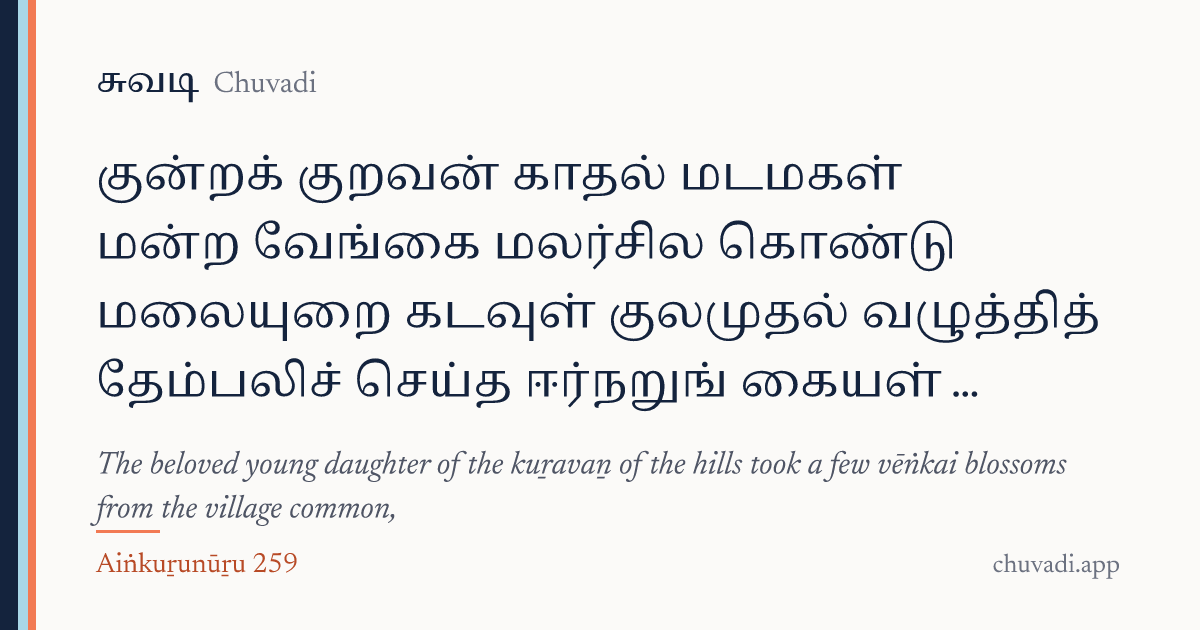

ஐங்குறுநூறு 259 · குன்றக் குறவன் பத்து
பாடல் · The poem
Tap a word to see where else it occurs.
பொருள் · Meaning in TamilAI
மலைநாட்டுக் குறவனின் அன்புக்குரிய இளமகள், ஊர்ப்பொதுவிடத்தில் உள்ள வேங்கை மரத்தின் சில மலர்களைப் பறித்துக்கொண்டு, மலையில் உறையும் தன் குலமுதல்வனான தெய்வத்தைப் போற்றினாள். தேனைப் படைத்து வழிபட்டதால் ஈரமும் நறுமணமும் கொண்ட கைகளை உடையவளாய், மலர்ந்த காந்தள் போல மணந்து, கவிழ்ந்த கண்களுடன் நின்றாள்; என்னை வருத்தியவள் அவளே.
குறிஞ்சித் திணை; தலைவன் தோழனிடமோ தன் நெஞ்சிடமோ கூறுவதாகக் கொள்ளலாம். தெய்வத்தை வழிபடும் நாணமுள்ள பெண்ணே தன்னைத் தெய்வம் போல் பற்றி வருத்தினாள் என்பது இதன் நயம். குலமுதல் என்பதன் சரியான பொருள் உறுதியாகத் தெரியவில்லை.
ஆங்கிலம் · English translationAI
Translation
- The beloved young daughter of the kuṟavaṉ of the hills
- took a few vēṅkai blossoms from the village common,
- praised the god who dwells on the mountain, the first of her clan,
- and with hands moist and fragrant from the honeyed offering,
- smelling of the opened kāntaḷ,
- she of the lowered eyes is the one who has struck me down.
What the poem says
The hero tells his companion, or his own heart, where and how he was overcome. He saw the girl at worship: she picked a few vēṅkai flowers from the tree on the common ground, praised the mountain god honoured as the head of her clan, and made an offering with honey. Her hands were still damp and fragrant from it, smelling of kāntaḷ, and her eyes were cast down.
That a modest girl at prayer should be the one who "afflicted" him (aṇaṅkiyōḷ) is the poem's quiet irony: the language of divine seizure is turned on the worshipper herself.
The vēṅkai (Indian kino tree) on the common ground is a familiar kuṟiñci feature. "The first of her clan" (kulamutal) seems to describe the god as the clan's ancestral deity; the exact sense is not certain.