




ஐங்குறுநூறு 27 · கள்வன் பத்து
பாடல் · The poem
Tap a word to see where else it occurs.
பொருள் · Meaning in TamilAI
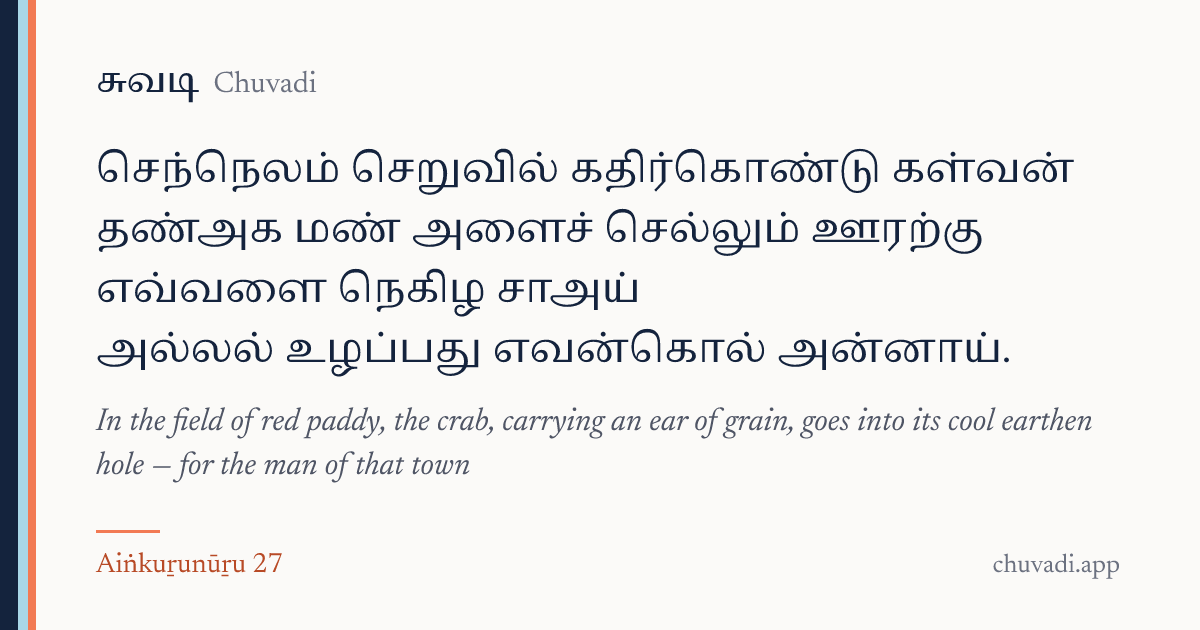
செந்நெல் விளையும் வயலில் நெற்கதிரைக் கவர்ந்துகொண்டு நண்டு குளிர்ந்த மண்வளைக்குள் செல்லும் ஊரைச் சேர்ந்தவனுக்காக, எங்கள் வளையல்கள் நெகிழ்ந்து கழல, நாங்கள் மெலிந்து துன்பப்படுவது ஏனோ, அன்னையே?
மருதத் திணை; தோழி தலைவியோடு சேர்ந்து கூறுவதாகக் கொள்ளலாம். கதிரைக் கவர்ந்து தன் வளையில் சுகமாக இருக்கும் நண்டு, வளமாக இன்பம் நுகரும் தலைவனைக் குறிக்கிறது; அதே நேரத்தில் தலைவி வருந்துகிறாள். பதிப்பில் உள்ள "கதி" என்பதைக் "கதிர்" என்று படிக்க வேண்டும்.
ஆங்கிலம் · English translationAI
Translation
- In the field of red paddy, the crab, carrying an ear of grain,
- goes into its cool earthen hole — for the man of that town
- our bangles slip loose, we waste away;
- why must we suffer such distress, mother?
What the poem says
The crab takes a stalk of grain from the paddy field and carries it into its cool hole of earth. The speaker, perhaps the friend speaking with the heroine as 'we', asks why they should grieve and waste away because of the hero, whose bangles slip from thinning arms.
The crab hoarding grain in its home can be read as the hero enjoying the wealth of the land, comfortable and well-provided, while the heroine suffers. The contrast between his ease and her distress gives the question its force.
The edition's கதிகொண்டு should be read கதிர்கொண்டு, 'taking an ear of grain'. எவ்வளை is எம் வளை, 'our bangles'.