




ஐங்குறுநூறு 28 · கள்வன் பத்து
பாடல் · The poem
Tap a word to see where else it occurs.
பொருள் · Meaning in TamilAI
இவளுக்குத் தொடர்ந்து இருக்கும் இந்த நோய் நீர்த்துறையில் உறையும் அணங்கால் வந்தது என்றால், குளிர்ந்த சேற்றில் நண்டு கோடுகள் கீறும் ஊரைச் சேர்ந்தவனுக்காக, ஒளிரும் வளையல்கள் கழல மெலிந்து, இவளுடைய மென்மையான தோள்கள் பசலை அடைவது ஏனோ, அன்னையே?
மருதத் திணை; தோழி தாயிடம் தலைவியைப் பற்றிக் கூறுவதாகக் கொள்ளலாம். இந்நோய் அணங்கால் வந்ததன்று, தலைவன் மேல் கொண்ட காதலால் வந்தது என்பதைத் தோழி குறிப்பாக உணர்த்துகிறாள். முதல் அடியின் அமைப்பு சுருக்கமாக இருப்பதால் இப்பொருள் ஒரு வாய்ப்பான விளக்கமே.
ஆங்கிலம் · English translationAI
Translation
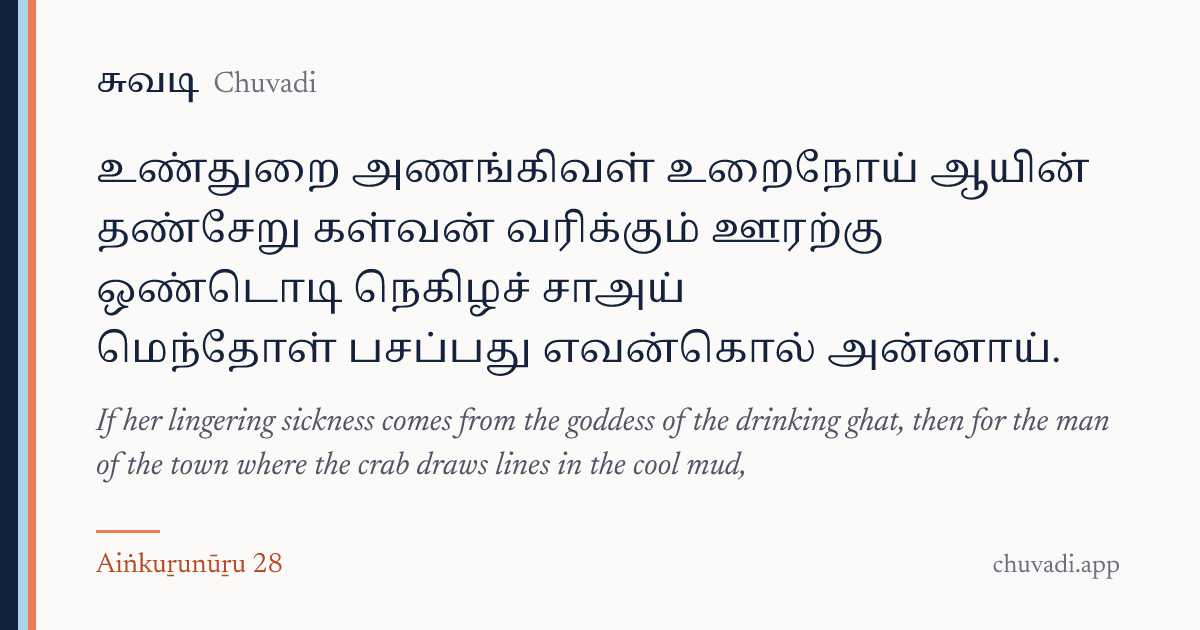
- If her lingering sickness comes from the goddess of the drinking ghat,
- then for the man of the town where the crab draws lines in the cool mud,
- her bright bangles slipping, wasting away,
- why do her soft shoulders grow pale, mother?
What the poem says
This poem points more clearly to the friend speaking to the mother about the heroine (ivaḷ, 'she'). The family seems to think the girl's long illness comes from an aṇaṅku, the spirit or goddess haunting the bathing and drinking place by the river. The friend turns the idea round. If it were the goddess, why would the girl waste away and turn pale for the hero in particular? The cause, she implies, is love.
That the mother and household may blame a deity for a girl's lovesickness is a recurring theme in Sangam poetry, especially in kuṟiñci. Its appearance here may suggest a premarital situation, which is unusual for marutam.
The crab drawing lines in the soft mud is a small, vivid detail; whether it carries a hidden meaning is unclear. The first line's syntax is compressed, and the reading given here is one possible construction.