




ஐங்குறுநூறு 3
பாடல் · The poem
Tap a word to see where else it occurs.
பொருள் · Meaning in TamilAI
ஆதன் வாழ்க, அவினி வாழ்க! பால் மிகுதியாகச் சுரக்கட்டும், உழவு மாடுகள் பெருகிச் சிறக்கட்டும் என்று எங்கள் தாய் வேண்டிக்கொண்டாள். நாங்களோ, விதைத்த உழவர்கள் நெல்லோடு வீடு திரும்பும், பூக்கள் நிறைந்த ஊரைச் சேர்ந்த தலைவனின் இல்லற வாழ்க்கை செழிக்கட்டும் என்று வேண்டிக்கொண்டோம்.
மருதத் திணை; தோழி தலைவியோடு சேர்ந்து கூறுவதாகக் கொள்ளலாம். விதைத்தவர் விளைச்சலோடு திரும்புவது, தொடங்கிய இல்லறமும் நல்ல பயன் தர வேண்டும் என்ற எண்ணத்தைக் குறிப்பாக உணர்த்துகிறது. பதிப்பில் சில சொற்கள் பிழையாக அச்சாகியுள்ளன; பூக்கஞல் ஊரன், எனவேட்டேமே என்றே படிக்க வேண்டும்.
ஆங்கிலம் · English translationAI
Translation
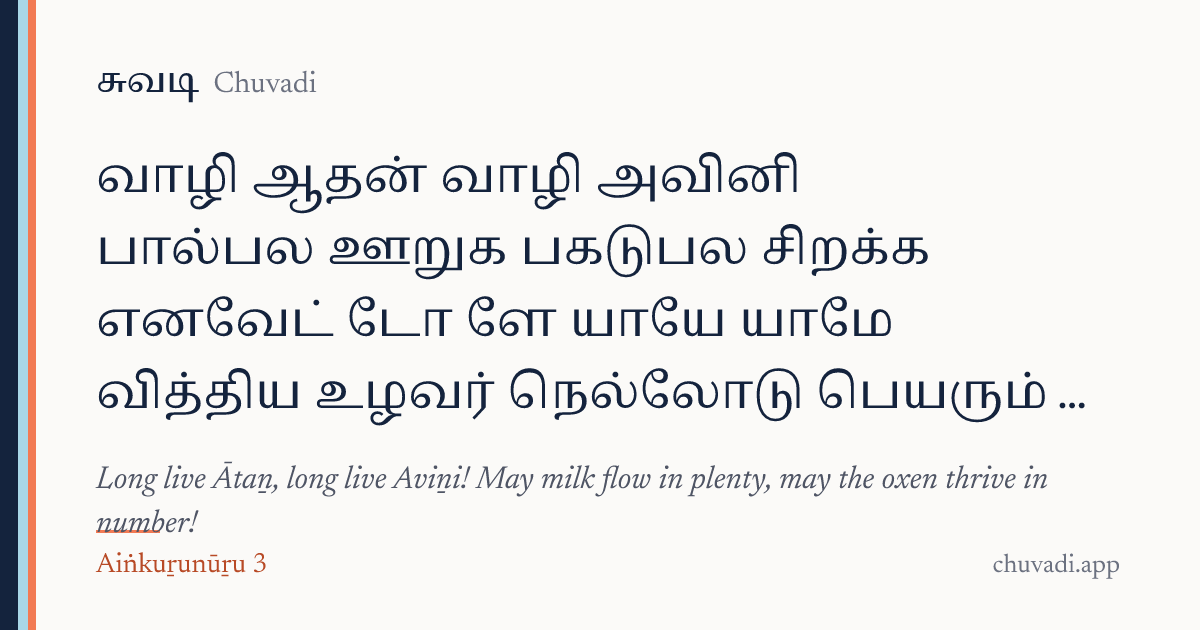
- Long live Ātaṉ, long live Aviṉi!
- May milk flow in plenty, may the oxen thrive in number!
- So our mother wished. And we,
- where the ploughmen who sowed go home with paddy,
- for the man of the flower-crowded town, may his household
- life flourish: so we wished.
What the poem says
Here the mother's prayer is for the wealth of a farming country: milk and strong draught oxen. The young women, speaking as 'we' (most likely the friend with the heroine), pray instead for the hero's home life (maṉai vāḻkkai), the settled married household that marutam poems so often see threatened by his visits to other women.
The landscape line pictures ploughmen who sowed seed returning home with grain: labour that has paid off. Set beside the wish for a flourishing household, it suggests that what has been sown in the marriage should also bear fruit. The suggestion rests on the placing of the images, not on any explicit statement.
The edition's spelling of two words looks garbled: பூக்கஞு லூரன் is evidently the formula பூக்கஞல் ஊரன், 'man of the town crowded with flowers', which recurs in this section, and என்வேட்டேமே stands for the refrain எனவேட்டேமே.