



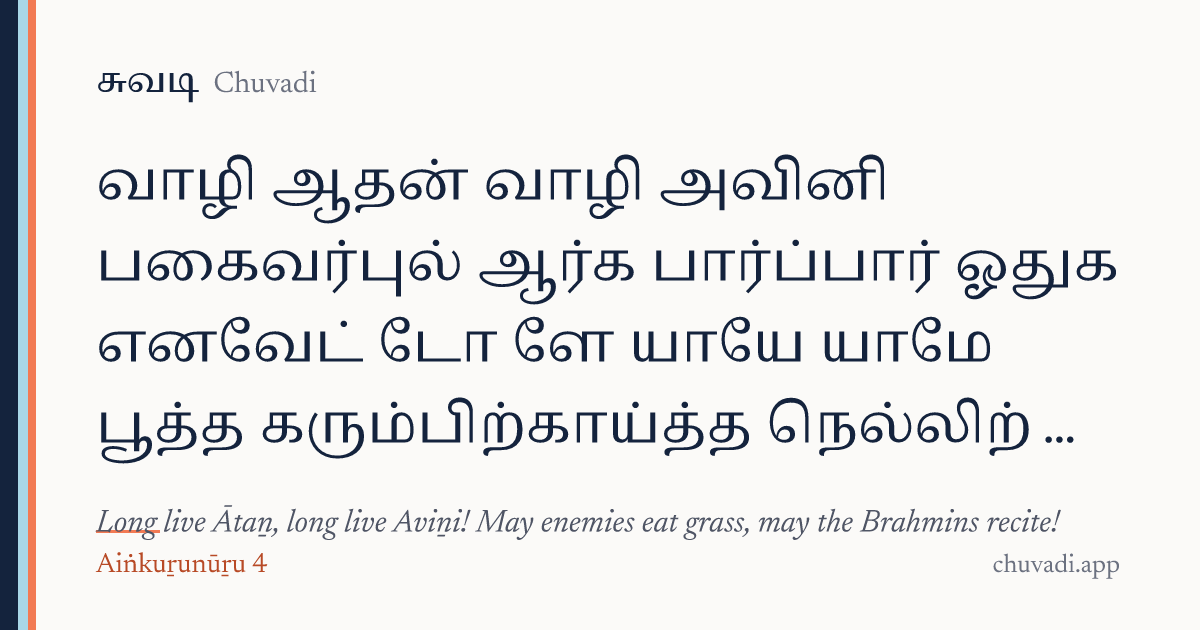

ஐங்குறுநூறு 4
பாடல் · The poem
Tap a word to see where else it occurs.
பொருள் · Meaning in TamilAI
ஆதன் வாழ்க, அவினி வாழ்க! பகைவர்கள் தோற்றுப் புல்லைத் தின்னட்டும், அந்தணர்கள் வேதம் ஓதட்டும் என்று எங்கள் தாய் வேண்டிக்கொண்டாள். நாங்களோ, பூத்த கரும்பும் விளைந்த நெல்லும் உள்ள வயல்கள் சூழ்ந்த ஊரைச் சேர்ந்த தலைவனின் மார்பு, எல்லாருக்கும் பொதுவான நிலம் போல ஆகிவிடக் கூடாது என்று வேண்டிக்கொண்டோம்.
மருதத் திணை; தோழி தலைவியோடு சேர்ந்து கூறுவதாகக் கொள்ளலாம். தலைவனின் மார்பு பரத்தையர் பலருக்கும் உரியதாகிவிடக் கூடாது, அவன் தலைவிக்கு மட்டுமே உரியவனாக இருக்க வேண்டும் என்பதே இதன் உட்பொருள். பகைவர் புல் தின்பது தோல்வியுற்றுப் பணிவதைக் குறிப்பதாகக் கொள்ளப்படுகிறது. பதிப்பில் உள்ள "பழன் மாகற்க" என்பதைப் "பழனம் ஆகற்க" என்று படிக்க வேண்டும்.
ஆங்கிலம் · English translationAI
Translation
- Long live Ātaṉ, long live Aviṉi!
- May enemies eat grass, may the Brahmins recite!
- So our mother wished. And we,
- with flowering sugarcane and ripening paddy,
- of the man of that town of fields, may the chest
- never become a common field: so we wished.
What the poem says
The mother wishes for victory and for proper order: that enemies be brought so low they 'eat grass', which is generally understood as a picture of defeated foes reduced to the state of cattle, and that the Brahmins (pārppār) carry on their recitation. The young women's wish is sharper. They ask that the hero's chest should not become paḻaṉam, common land open to all.
That word carries the point of the poem. In the marutam setting the hero's chest, where a woman rests in his embrace, is constantly being shared with courtesans. To wish that it not become 'common ground' is a wish that he stay faithful, said with a farming image that suits the land of fields and sugarcane.
The edition prints பழன் மாகற்க, which should be read as பழனம் ஆகற்க. The speaker, as in the rest of the decade, is most likely the friend speaking with the heroine.