




ஐங்குறுநூறு 304 · செலவு அழுங்குவித்த பத்து
பாடல் · The poem
Tap a word to see where else it occurs.
பொருள் · Meaning in TamilAI
படிப்பறியாத இடையர்கள் தம் கோலால் தோண்டிய, பசுக்கள் நீர் பருகும் சிறு பள்ளத்தையும் யானைகள் பறித்துக்கொள்ளும். அத்தகைய கற்கள் நிறைந்த, பல கிளைகளாகப் பிரியும் வழியில் நீ சென்றால், மென்மையான இயல்பும் மழைமேகம் போன்ற நீண்ட கூந்தலும் உடைய இவள் தனிமையில் வருந்துவாள். புலி போன்ற வலிமையுடைய தலைவனே, பிரிந்து செல்லும் கல்நெஞ்சத்தை நீ கொள்ளாதே.
பாலைத் திணை; தோழி தலைவனைத் தடுக்கிறாள். இடையர் தோண்டிய நீரையும் யானை பறிக்கும் காட்சி, வழியின் கொடுமையைக் காட்டுகிறது. மழைமேகம் போன்ற கூந்தல், அந்த வறண்ட நிலத்தில் இல்லாத குளிர்ச்சியை நினைவூட்டுகிறது.
ஆங்கிலம் · English translationAI
Translation
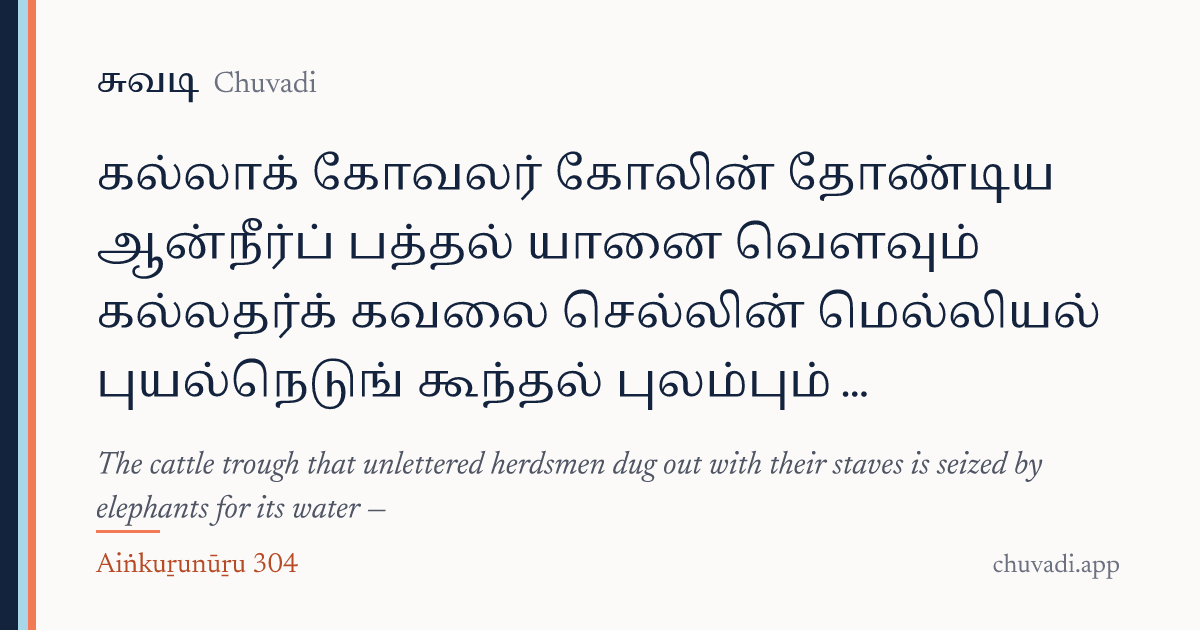
- The cattle trough that unlettered herdsmen dug out with their staves
- is seized by elephants for its water —
- if you go by the forking stony paths, she of gentle nature,
- with long hair dark as rain clouds, will grieve;
- lord strong as a tiger, do not harden yourself to it.
What the poem says
The friend describes the road the hero means to take. Even the humble water-holes that herdsmen scrape out for their cattle with their sticks are taken over by thirsty elephants; there is not enough water for anyone. The herdsmen are 'unlettered', a plain description of rough country people, not an insult.
Against that harsh scene she sets the heroine: gentle in nature, her long hair like a rain cloud. The cloud image quietly recalls the rain that this dry land lacks.
The closing verb, vallātīmē, means roughly 'do not be capable of it', a polite way of saying 'do not make yourself hard enough to go'. The hero is addressed as a noble man with the strength of a tiger, a flattering title that also asks him to use his strength to stay.