



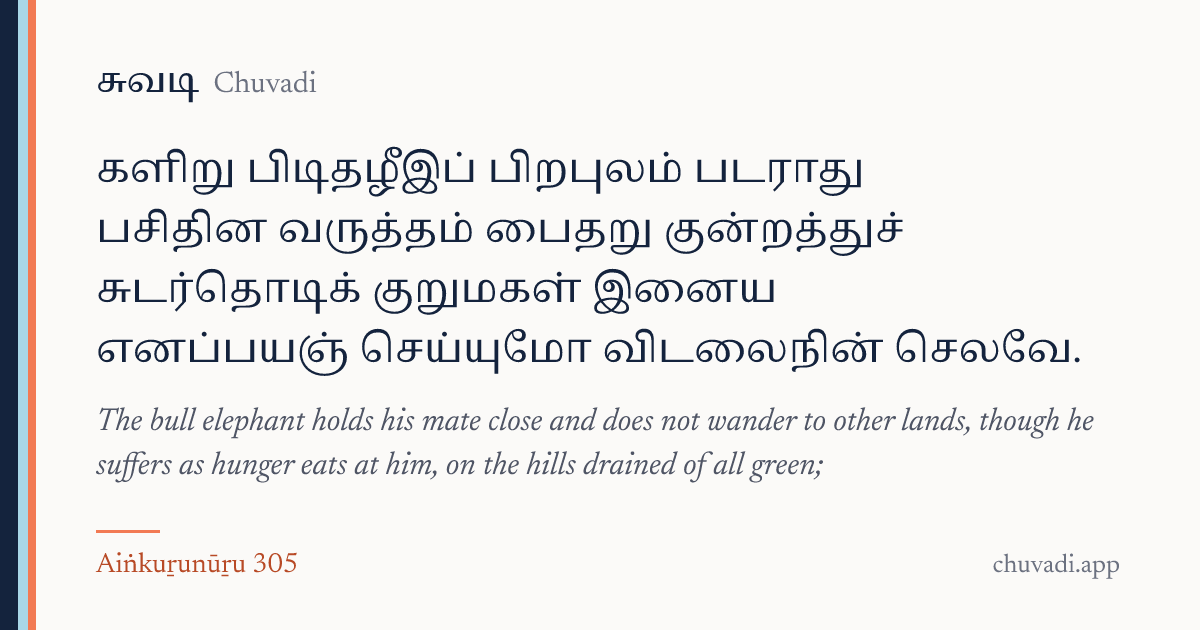

ஐங்குறுநூறு 305 · செலவு அழுங்குவித்த பத்து
பாடல் · The poem
Tap a word to see where else it occurs.
பொருள் · Meaning in TamilAI
ஆண்யானை தன் பெண்யானையைத் தழுவியபடியே, வேறு நிலங்களுக்குச் செல்லாமல், பசுமை அற்றுப்போன குன்றில் பசி தன்னை வாட்ட வருந்தி நிற்கும். இளைஞனே, ஒளிவீசும் வளையல் அணிந்த இந்த இளம்பெண் வருந்தும்படி நீ செல்வதால் என்ன பயன் விளையப்போகிறது?
பாலைத் திணை; தோழி கூற்று. பசியிலும் துணையைப் பிரியாத யானை உள்ளுறையாக நிற்கிறது: விலங்கே துணையைப் பிரியாதபோது நீ பொருளுக்காகப் பிரிவது தகுமோ என்று கேட்கிறாள். இரண்டாம் அடியில் உள்ள ‘வருத்தம்’ என்ற பாடம் ‘வருந்தும்’ என்ற பொருளில் கொள்ளப்பட்டது.
ஆங்கிலம் · English translationAI
Translation
- The bull elephant holds his mate close and does not wander to other lands,
- though he suffers as hunger eats at him, on the hills drained of all green;
- making the girl of bright bangles grieve,
- what good will it bring, young man, this going of yours?
What the poem says
The friend points to an animal that behaves better than the hero means to. On the parched hills, where all moisture is gone, the bull elephant stays with his cow even while hunger wears him down; he does not leave for richer ground.
This is the poem's uḷḷuṟai, the hidden comparison typical of akam verse: if a starving elephant will not leave his mate, why should a man leave the heroine merely to gain wealth? The friend then puts the question directly: what profit can there be in a journey that makes her suffer?
The printed text reads varuttam in the second line; the sense requires something like 'suffering', and it is taken that way here. The 'bright bangles' of the heroine are a stock detail, but in pālai poems they also remind us that bangles slip from a woman's wrists as she wastes away in separation.