



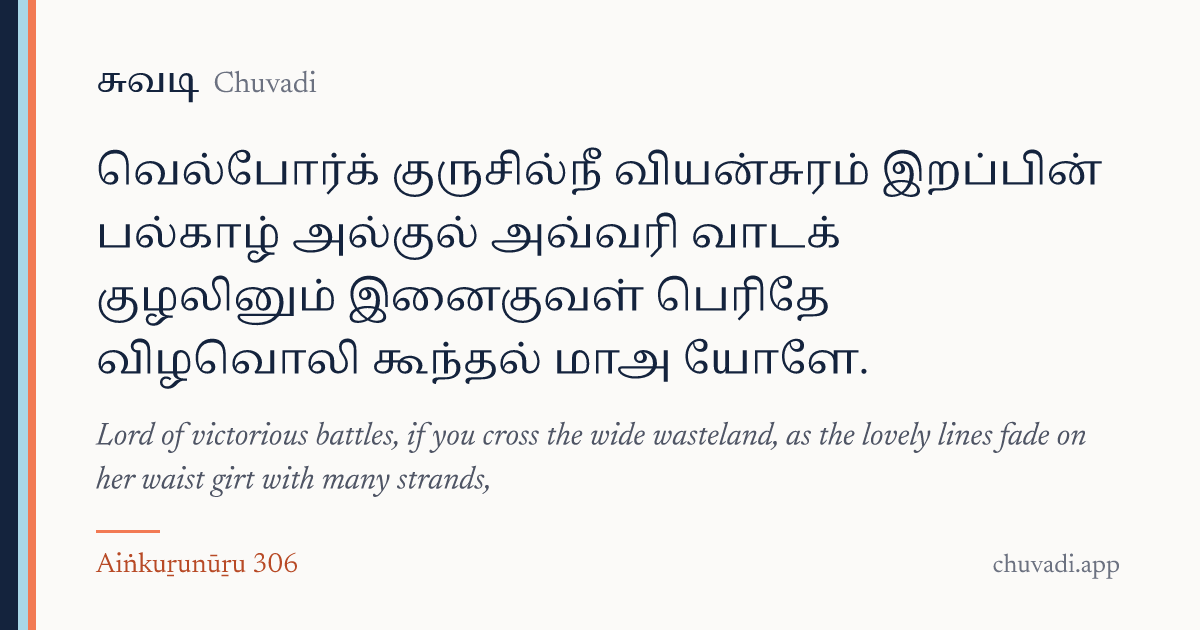

ஐங்குறுநூறு 306 · செலவு அழுங்குவித்த பத்து
பாடல் · The poem
Tap a word to see where else it occurs.
பொருள் · Meaning in TamilAI
வெற்றிப் போர்களில் சிறந்த தலைவனே, நீ அகன்ற பாலை வழியைக் கடந்து சென்றால், பல வடம் கொண்ட மேகலை அணிந்த இவளுடைய இடையின் அழகிய வரிகள் வாடிப்போகும். திருவிழாவைப் போலச் செழித்த கூந்தலை உடைய இந்த மாநிறத்தவள், குழலின் இசையை விடவும் மிகுதியாக வருந்துவாள்.
பாலைத் திணை; தோழி தலைவனைத் தடுக்கிறாள். குழலோசையின் சோகத்தை விடவும் இவளுடைய அழுகை மிகும் என்பது அவளுடைய துயரத்தின் ஆழத்தைக் காட்டுகிறது. ‘விழவொலி கூந்தல்’ என்பதன் சரியான பொருள் உறுதியாகத் தெரியவில்லை; செழித்த கூந்தல் என்ற அளவில் கொள்ளப்பட்டது.
ஆங்கிலம் · English translationAI
Translation
- Lord of victorious battles, if you cross the wide wasteland,
- as the lovely lines fade on her waist girt with many strands,
- she will lament more than a flute, and greatly,
- the dark-skinned one, with her hair thick as a festival crowd.
What the poem says
The friend speaks to the hero, giving him the title kuruci, 'lord', and praising him as a winner of battles. If he goes, she says, the heroine will fade: the fine lines on her waist, a mark of beauty in this poetry, will wither, and she will grieve more mournfully than a flute.
The comparison with the flute (kuḻal) is striking. The flute's sound was heard as plaintive, and in later poems it often marks the lonely evening. Here her lament is said to go beyond even that.
The last line is not fully clear. Viḻav-oli kūntal may mean hair 'thick' or 'luxuriant' (oli) like a festival, or hair decked as for a festival; the general sense of abundant, lovely hair is safe, the exact image less so. Māyōḷ, 'the dark one', praises her dark complexion, a standard term of beauty.