




ஐங்குறுநூறு 309 · செலவு அழுங்குவித்த பத்து
பாடல் · The poem
Tap a word to see where else it occurs.
பொருள் · Meaning in TamilAI
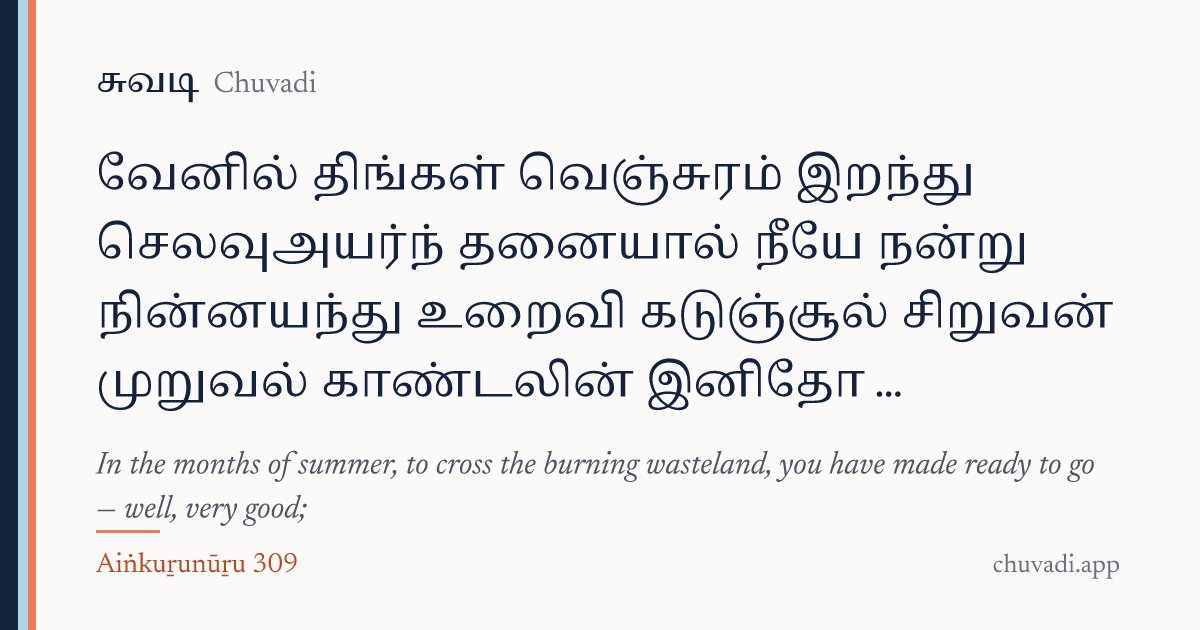
வேனிற்கால மாதங்களில் கொடிய வெப்பமான பாலை வழியைக் கடந்து செல்ல நீ ஆயத்தமாகிவிட்டாய்; நல்லது! செங்குத்தான மலைகள் நிறைந்த நாட்டை உடையவனே, உன்னை விரும்பி வாழும் இவள் முதல் கருவைச் சுமந்திருக்கிறாள். பிறக்கப்போகும் அந்தச் சிறுவனின் புன்னகையைக் காண்பதைவிட, நீ தொலைவு சென்று ஈட்டும் பொருள் இனியதோ?
பாலைத் திணை; தோழி தலைவனைத் தடுக்கிறாள். ‘நன்று’ என்பது இகழ்ச்சிக் குறிப்புடன் கூறப்பட்டது. குழந்தையின் புன்னகையையும் பொருளையும் ஒப்பிட்டு, அன்பே பெரிது என்று உணர்த்துகிறாள்.
ஆங்கிலம் · English translationAI
Translation
- In the months of summer, to cross the burning wasteland,
- you have made ready to go — well, very good;
- she who lives loving you is carrying her first child; that little son's
- smile — would it be sweeter than seeing that,
- O man of the land of sheer cliffs, the wealth you go far to make?
What the poem says
This is one of the most direct poems in the decade. The heroine is pregnant with her first child (kaṭuñcūl), and the friend asks whether any wealth earned far away could be sweeter than seeing his own little son smile. The 'well, very good' of the second line is plainly ironic.
The question works because it sets something the hero can count, wealth, against something he cannot: the first sight of his child. Choosing summer for the journey makes it worse, since the road is at its most dangerous.
The hero is addressed as man of a country of steep cliffs (iṟuvarai), a hill-land title. The poem names the coming child as a son (ciṟuvaṉ); this is the speaker's expectation, not something the poem lets us check.