




ஐங்குறுநூறு 310 · செலவு அழுங்குவித்த பத்து
பாடல் · The poem
Tap a word to see where else it occurs.
பொருள் · Meaning in TamilAI
புதிய பொன்னால் செய்த வட்டக் காசுகள் வரிசையாகக் கோத்த மேகலை அணிந்த இடையும், ஒளிவீசும் வளையல்கள் அணிந்த மென்மையான தோள்களும் உடைய இவளின் அணிகலன்கள் நிலைகெட்டு நெகிழும்படி, இளைஞனே, இவளைப் பிரிந்து செல்லும் வன்மை உனக்கு இருக்குமானால், இவளுடைய அழகிய நெற்றியின் எழில் நிலைத்திருப்பது அரிதாகும்.
பாலைத் திணை; தோழி கூற்று. பிரிவால் உடல் மெலிந்து அணிகலன்கள் நெகிழ்வது பாலைப் பாடல்களில் வழக்கமாக வரும் அடையாளம். பிரிவைத் தலைவன் தன்மேல் வலிந்து ஏற்கும் கடுமையாகத் தோழி காட்டுகிறாள்.
ஆங்கிலம் · English translationAI
Translation
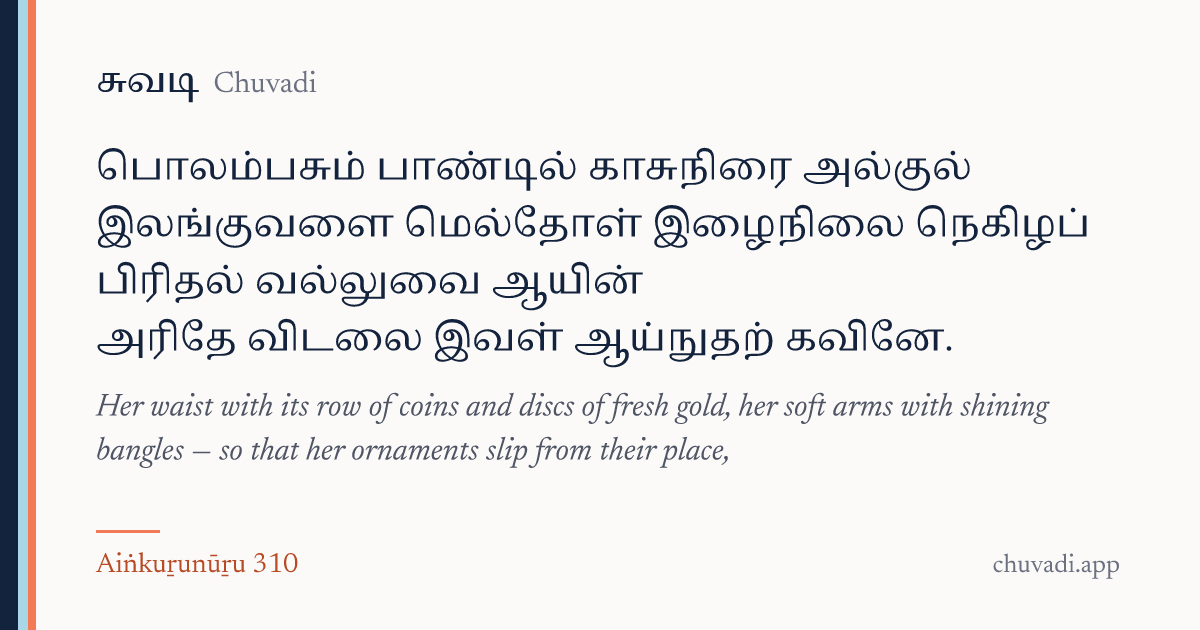
- Her waist with its row of coins and discs of fresh gold,
- her soft arms with shining bangles — so that her ornaments slip from their place,
- if you have the strength to part from her,
- hard to keep, young man, will be the beauty of her fine brow.
What the poem says
The friend closes the decade with a warning about the heroine's body. She describes her finery: a girdle hung with gold coins and gold discs (pāṇṭil), bright bangles on soft arms. If the hero leaves, these ornaments will loosen and slip as she wastes with grief, and the beauty of her forehead will not last.
The slipping of bangles and girdle is the classic sign of a woman pining in separation, used throughout pālai poetry. The friend speaks of it as a certainty, not a possibility.
The phrase 'if you have the strength to part' (pirital valluvai āyiṉ) echoes the earlier poems: parting is presented as a kind of hardness the hero would have to force on himself.