




ஐங்குறுநூறு 312 · செலவுப் பத்து
பாடல் · The poem
Tap a word to see where else it occurs.
பொருள் · Meaning in TamilAI
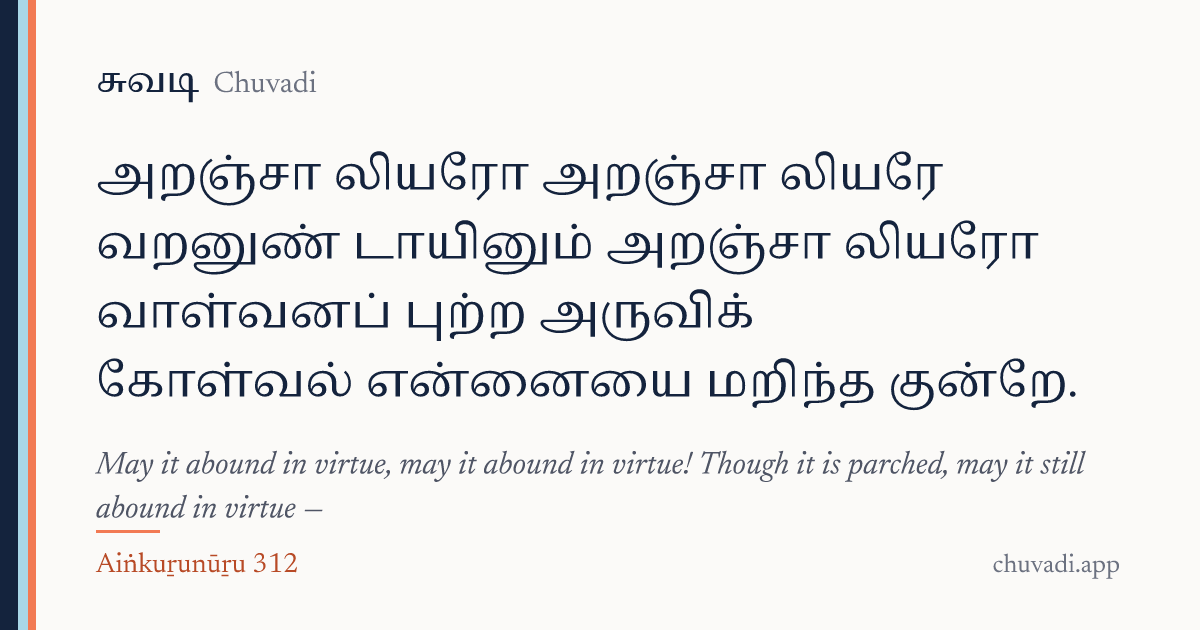
அறம் நிறைந்து விளங்குவதாக! அறம் நிறைந்து விளங்குவதாக! வறட்சி உண்டானாலும் அறம் நிறைந்து விளங்குவதாக! வாள் போல ஒளிரும் அருவிகளை உடைய அந்தக் குன்று, வேட்டையில் வல்லவனான என் தலைவனை என் கண்ணிலிருந்து மறைத்துவிட்டது.
பாலைத் திணை; தலைவி கூற்றாகக் கொள்ளலாம். தலைவனை மறைத்த மலை அவனுக்குத் தீங்கு செய்யாமல் அறத்துடன் நடந்துகொள்ள வேண்டும் என்று அவள் வேண்டுவதாகத் தோன்றுகிறது. ‘மறிந்த’ என்ற பாடத்தின் பொருள் உறுதியாகத் தெரியவில்லை; ‘மறைந்த’ என்று கொள்ளப்பட்டது.
ஆங்கிலம் · English translationAI
Translation
- May it abound in virtue, may it abound in virtue!
- Though it is parched, may it still abound in virtue —
- the hill with waterfalls bright as swords,
- that has hidden from my sight my lord, so strong in the chase.
What the poem says
The heroine, or perhaps her friend, repeats a blessing three times over the hill behind which the hero has disappeared. The repetition gives the poem the feel of an incantation.
Why bless the hill that took him from sight? One reasonable reading is that she wishes the hill to be kind and righteous toward him while he crosses it: let it be dry if it must, but let it not harm him. Another possibility is that the blessing carries a bitter edge. The poem does not settle which, and the warmth of 'my lord' (eṉṉai) favours the first.
The word printed as maṟinta is uncertain. It is taken here as maṟainta, 'hid'; maṟi- can also mean 'turn back' or 'block', which would give 'the hill that stands between us'. The waterfalls 'bright as swords' sit oddly beside a parched hill, and may describe the hill as it usually is rather than as it is now.