




ஐங்குறுநூறு 313 · செலவுப் பத்து
பாடல் · The poem
Tap a word to see where else it occurs.
பொருள் · Meaning in TamilAI
உன் மகளின் ஏக்கம் சுட்டெரிக்கிறது! மிகுந்த துயரமும் வேதனையும் கொண்டு, உயிர் போவது போல அவள் மெலிந்து வாடுகிறாள்; பாழான அவள் நெஞ்சம் துயரம் அழுத்தக் கலங்குகிறது. பல நாடுகள் இடையே குறுக்கிட்டு நிற்கும் நிலப்பரப்பைத் தாண்டி, நம் காதலன் காட்டைக் கடந்து சென்றுவிட்டான்.
பாலைத் திணை; ‘நும்மகள்’ என்பதால் தோழி செவிலித்தாயிடம் கூறுவதாகக் கொள்ளலாம். ‘இறந்தனள்’ என்ற பெண்பால் வினை, ‘காதலோன்’ என்ற எழுவாயுடன் பொருந்தவில்லை; அது ‘இறந்தனன்’ என்பதன் பிழையாக இருக்கலாம். கூற்று யாருடையது என்பதும் முழுதும் உறுதியில்லை.
ஆங்கிலம் · English translationAI
Translation
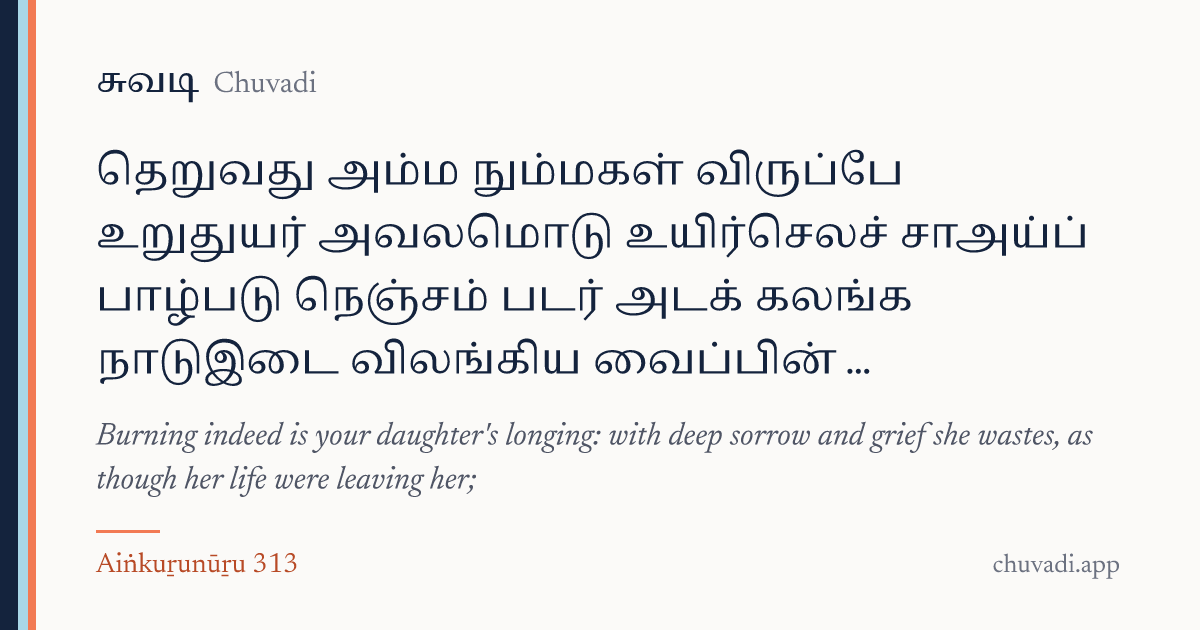
- Burning indeed is your daughter's longing:
- with deep sorrow and grief she wastes, as though her life were leaving her;
- her ruined heart is shaken as anguish overwhelms it —
- across the land where countries lie between us,
- he has crossed the forest, our beloved.
What the poem says
Here the speaker addresses a mother ('your daughter'), so this is most probably the friend telling the foster-mother how the heroine is suffering now that the hero has left. The description is intense: her desire 'burns', she wastes away as if dying, her heart is laid waste.
The fourth line pictures the distance: the hero's road runs through regions where whole countries come between him and home.
Two things in the text are uncertain. The last verb is printed iṟantaṉaḷ, a feminine form, which would mean 'she crossed the forest'; but the decade is about the hero's departure, and the subject is 'our beloved' (kātalōṉ), a masculine noun, so the form is most likely a slip for iṟantaṉaṉ. Also, the friend calling the hero 'our beloved' when speaking to the mother is a little unusual, and the speaker is therefore not quite certain.