




ஐங்குறுநூறு 315 · செலவுப் பத்து
பாடல் · The poem
Tap a word to see where else it occurs.
பொருள் · Meaning in TamilAI
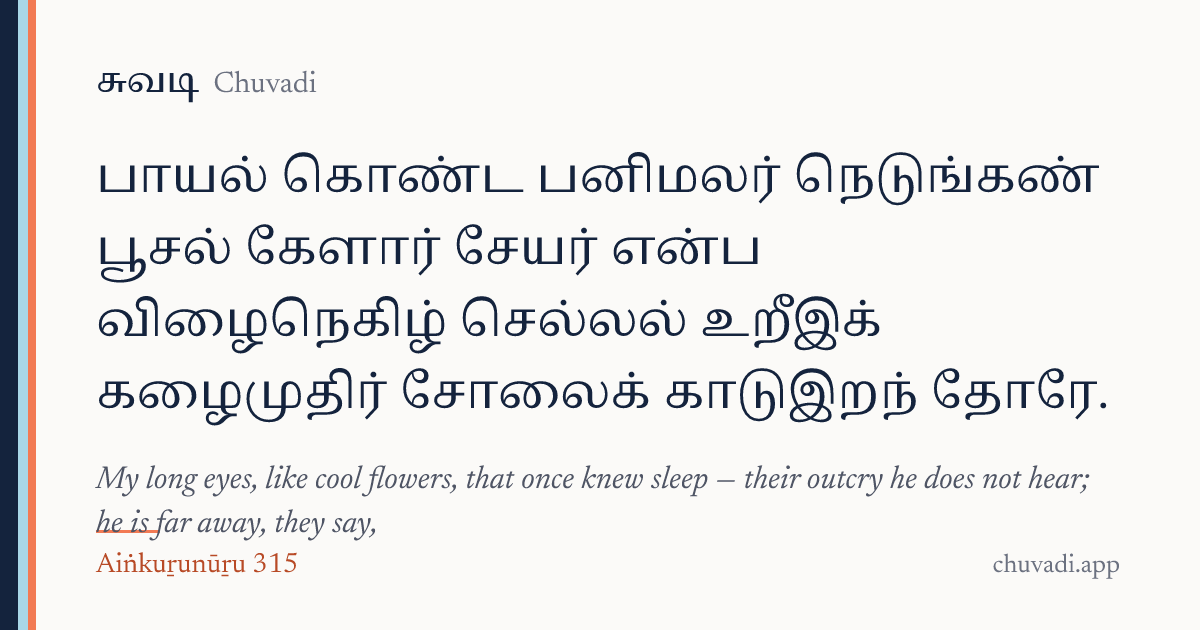
குளிர்ந்த மலர் போன்ற என் நீண்ட கண்கள் முன்பு அமைதியாக உறங்கின; இப்போது அவை அழுது கதறுகின்றன. அந்தக் கதறலை அவர் கேட்பதில்லை; அவர் வெகு தொலைவில் இருக்கிறார் என்று சொல்கிறார்கள். என் அணிகலன்கள் நெகிழும்படியான துயரத்தை எனக்குத் தந்துவிட்டு, முற்றிய மூங்கில் சோலைகள் நிறைந்த காட்டைக் கடந்து சென்றவர் அவர்.
பாலைத் திணை; தலைவி கூற்று. உறக்கம் இழந்து அழும் கண்களும், நெகிழும் அணிகலன்களும் பிரிவுத் துயரத்தின் அடையாளங்கள். முற்றிய மூங்கில், நீரற்ற வேனிற்கால நிலத்தைக் குறிக்கிறது. ‘பாயல் கொண்ட’ என்பதை ‘முன்பு உறக்கம் கொண்ட’ என்று கொண்டு பொருள் கூறப்பட்டுள்ளது.
ஆங்கிலம் · English translationAI
Translation
- My long eyes, like cool flowers, that once knew sleep —
- their outcry he does not hear; he is far away, they say,
- having brought me the grief that makes my jewels slip,
- he who crossed the forest with its groves of ripened bamboo.
What the poem says
The heroine speaks of her eyes. Once they slept peacefully; now they cry out, and the 'outcry' (pūcal) is her weeping. But the one who caused it cannot hear: he is far away, people tell her.
The phrase pāyal koṇṭa, literally 'that took to the bed', is read here as eyes that once had sleep, now lost through grief. It is a compact expression and could be understood in other ways, but the contrast between past rest and present weeping is clear.
The forest he crossed is one of 'ripened bamboo' groves: old, dry bamboo, a sign of the hot season and of a land without water. The loosening of her jewels is again the familiar sign of a woman wasting in separation.