




ஐங்குறுநூறு 316 · செலவுப் பத்து
பாடல் · The poem
Tap a word to see where else it occurs.
பொருள் · Meaning in TamilAI
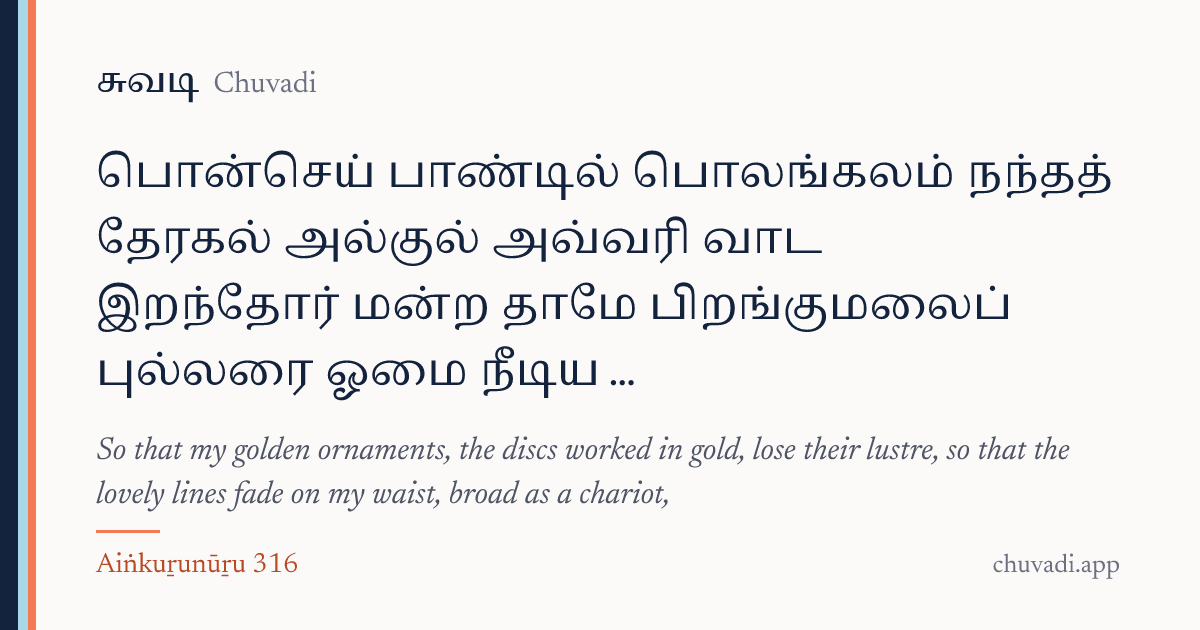
பொன்னால் செய்த வட்டக் காசுகளும் பொன் அணிகலன்களும் ஒளி இழக்கும்படியும், தேர்த்தட்டு போல அகன்ற என் இடையின் அழகிய வரிகள் வாடும்படியும், அவர் உண்மையாகவே சென்றுவிட்டார். ஒளிவீசும் கொத்துகளும் வறண்ட அடிமரமும் உடைய ஓமை மரங்கள் ஓங்கி நிற்கும், புலிகள் நடமாடும் வழிகளை உடைய காட்டின் வழியே அவர் சென்றார்.
பாலைத் திணை; தலைவி கூற்று. அணிகலன்கள் ஒளி இழப்பதும் இடையின் வரிகள் வாடுவதும் பிரிவால் வந்த மெலிவைக் காட்டுகின்றன. ஓமை மரமும் புலியும் பாலை நிலத்தின் கொடுமையை உணர்த்துகின்றன.
ஆங்கிலம் · English translationAI
Translation
- So that my golden ornaments, the discs worked in gold, lose their lustre,
- so that the lovely lines fade on my waist, broad as a chariot,
- he has surely gone away, he himself — where, with bright clusters,
- the dry-trunked ōmai trees stand tall,
- in the forest whose paths are walked by tigers.
What the poem says
The heroine describes what his departure has done to her: her gold ornaments have lost their shine and the lovely lines on her waist have faded. 'Broad as a chariot' is a standard, admiring comparison for a woman's hips in this poetry.
The second half of the poem follows him into the forest. The ōmai tree, with its rough dry bark and clusters of fruit, is one of the typical trees of the pālai landscape, and the paths there are used by tigers.
The word maṉṟa, 'surely', and the emphatic tāmē, 'he himself', give the poem a tone of bitter certainty: he really has gone, and he has gone of his own choice.