



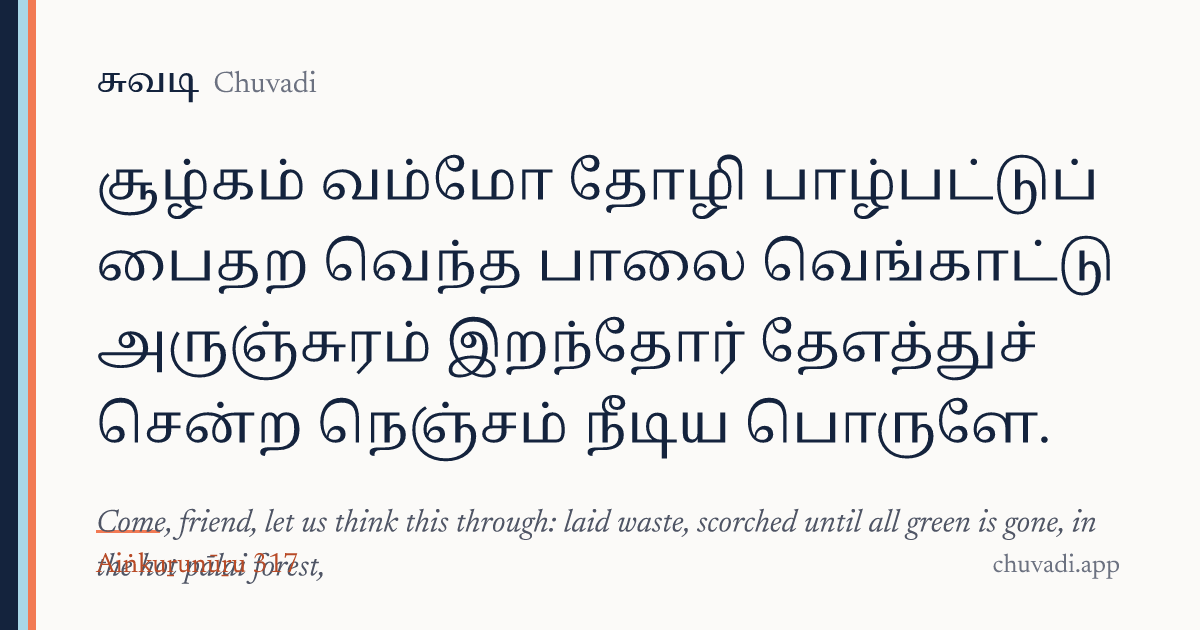

ஐங்குறுநூறு 317 · செலவுப் பத்து
பாடல் · The poem
Tap a word to see where else it occurs.
பொருள் · Meaning in TamilAI
தோழி, வா, நாம் இதைப் பற்றி ஆராய்வோம். பாழ்பட்டு, பசுமை முழுதும் அற்றுப்போகும்படி வெந்துபோன, வெப்பமான பாலைக் காட்டின் கொடிய வழியைக் கடந்து சென்றவருடைய நாட்டிற்கு என் நெஞ்சம் சென்றது. அது அங்கே இவ்வளவு நாள் தங்கியிருப்பதற்குக் காரணம் என்ன?
பாலைத் திணை; தலைவி தோழியிடம் கூறுகிறாள். காதலனைத் தொடர்ந்து சென்ற நெஞ்சம் திரும்பி வரவில்லை என்பது பிரிவின் ஏக்கத்தைக் காட்டுகிறது. ‘பொருள்’ என்ற சொல் ‘காரணம்’ என்றும் ‘செல்வம்’ என்றும் பொருள்படுவதால், தலைவன் தேடிச் சென்ற செல்வத்தையும் அது குறிப்பாகச் சுட்டலாம்.
ஆங்கிலம் · English translationAI
Translation
- Come, friend, let us think this through: laid waste,
- scorched until all green is gone, in the hot pālai forest,
- to the country of him who crossed the hard wasteland
- my heart has gone — why has it stayed away so long?
What the poem says
The heroine calls her friend to think with her. Her heart, she says, went after the hero into the land he has crossed, and has not come back. What is the reason (poruḷ) it lingers there so long?
The idea of the heart leaving the body to follow the beloved is common in Sangam poetry. Here it is given a slightly puzzled, reflective turn: she asks her friend to 'consider' (cūḻkam) the matter with her, as if it were a problem to be solved.
The landscape is described in the plainest pālai terms: ruined, burned dry, a hot forest. The word poruḷ at the end can also mean 'wealth', and it is possible the poem plays on this, since it was wealth that drew the hero away. That would be a quiet double sense, not something the text insists on.