



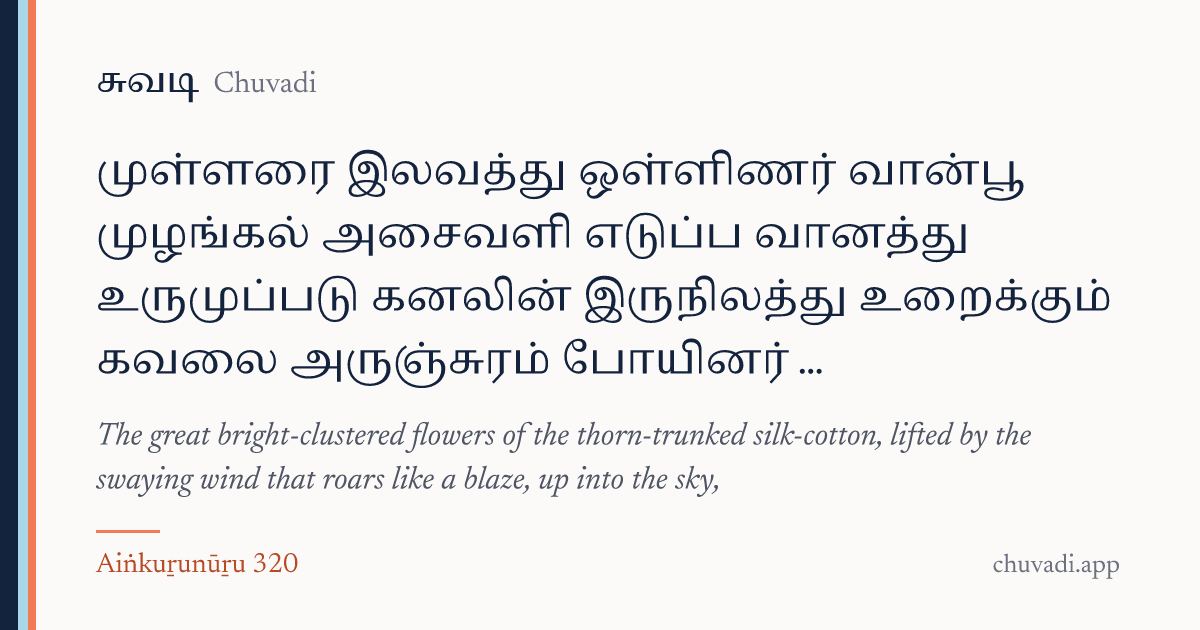

ஐங்குறுநூறு 320 · செலவுப் பத்து
பாடல் · The poem
Tap a word to see where else it occurs.
பொருள் · Meaning in TamilAI
முள் நிறைந்த அடிமரம் உடைய இலவ மரத்தின் ஒளிவீசும் கொத்துகளாக மலர்ந்த பெரிய மலர்களை, தீயைப் போல முழங்கி வீசும் காற்று வானில் தூக்கி எறிய, அவை இடி விழுந்து சிதறிய தீக்கங்குகளைப் போலப் பெரிய நிலத்தில் வந்து விழுகின்றன. நீங்காத கொடிய நோயை எனக்குத் தந்தவர், பல கிளைகளாகப் பிரியும் அத்தகைய கொடிய பாலை வழியில் சென்றுவிட்டார்.
பாலைத் திணை; தலைவி கூற்று. தீக்கங்கு போல விழும் இலவம் பூ, அவன் செல்லும் வழியின் வெம்மையைக் காட்டுகிறது. இரண்டாம் அடியில் உள்ள ‘முழங்கல்’ என்ற பாடம் ஐயத்திற்குரியது; ‘முழங்கு அழல்’ என்று கொண்டு பொருள் கூறப்பட்டுள்ளது.
ஆங்கிலம் · English translationAI
Translation
- The great bright-clustered flowers of the thorn-trunked silk-cotton,
- lifted by the swaying wind that roars like a blaze, up into the sky,
- fall like embers struck by thunder onto the wide earth —
- through such a forked, hard wasteland he has gone,
- he who brought upon me this endless, cruel sickness.
What the poem says
The silk-cotton tree (ilavam) blooms in the hot season with large red flowers on a thorny trunk. The heroine pictures the wind tearing them loose and scattering them so that they fall to earth like burning coals dropped by a thunderbolt. The red flowers become an image of fire raining down on the road he travels.
The last line names her condition: an 'endless, hard disease' (taval-il aru-nōy), the love-sickness that separation brings, and she says he is the one who caused it.
The second line is uncertain. The text prints muḻaṅkal acaivaḷi; it is read here as muḻaṅku aḻal, 'roaring fire', describing the wind, but the original wording may have been different, and the exact relation of 'sky' and 'wind' in this line is not clear.