



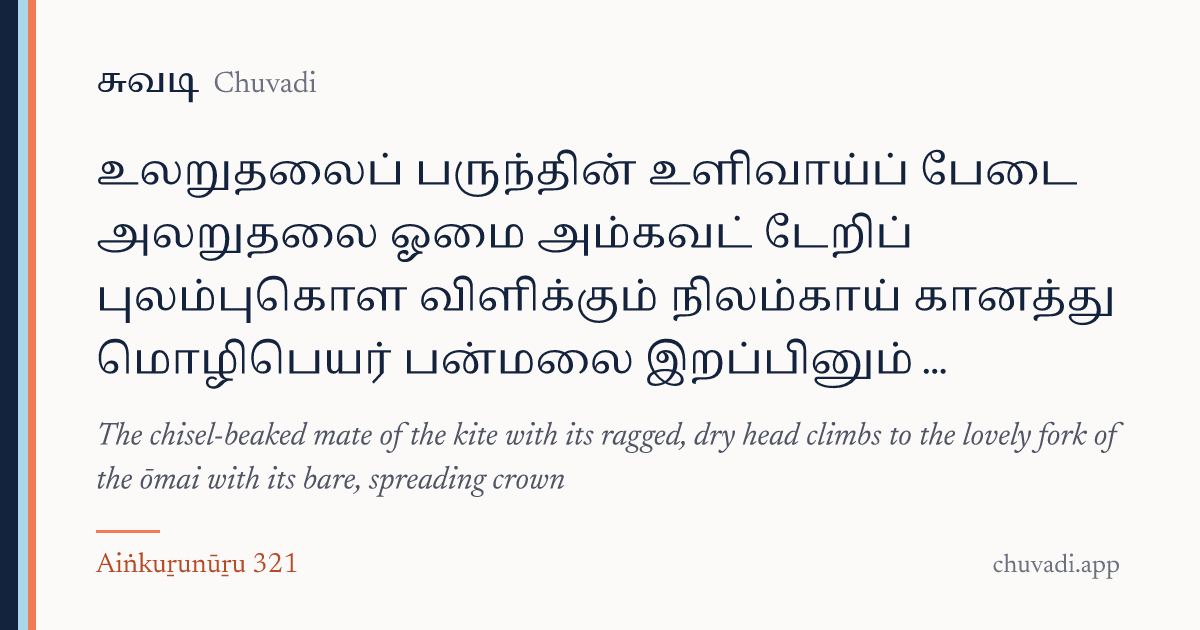

ஐங்குறுநூறு 321 · இடைச்சுரப் பத்து
பாடல் · The poem
Tap a word to see where else it occurs.
பொருள் · Meaning in TamilAI
வறண்ட தலையை உடைய பருந்தின் உளி போன்ற அலகுடைய பெண்பறவை, கிளைகள் விரிந்து பரந்த உச்சியுடைய ஓமை மரத்தின் அழகிய கவட்டில் ஏறி, தனிமை உணர்வு எழும்படி கூவி அழைக்கும். நிலம் காய்ந்து கிடக்கும் அந்தக் காட்டில், மொழி மாறும் பல மலைகளை நான் கடந்து சென்றாலும், ஒளிவீசும் வளையல் அணிந்தவளின் நற்பண்பு என்னை விட்டு நீங்குவதில்லை.
பாலைத் திணை; பொருள் தேடிச் செல்லும் தலைவன் வழியில் தன் நெஞ்சுக்குக் கூறுவதாகக் கொள்ளலாம். துணையை அழைக்கும் பருந்தின் குரல் அவனுடைய ஏக்கத்தைக் குறிப்பாகக் காட்டுகிறது. ‘மொழிபெயர் மலை’ தமிழ்நாட்டு எல்லைக்கு அப்பால் வேறு மொழி பேசும் நிலத்தைக் குறிக்கிறது.
ஆங்கிலம் · English translationAI
Translation
- The chisel-beaked mate of the kite with its ragged, dry head
- climbs to the lovely fork of the ōmai with its bare, spreading crown
- and calls, making all things lonely, in the forest where the ground burns;
- though I cross many mountains where the language changes,
- it never leaves me, the goodness of her with bright bangles.
What the poem says
This decade, 'the ten in the midst of the wasteland', gives the hero's voice as he travels. The speaker is not named, but the first person and the praise of 'her with bright bangles' show that it is the hero, thinking of the heroine he has left.
The opening scene is pure pālai: a female kite with a beak like a chisel perches in a bare ōmai tree and cries, and the cry fills the burning land with loneliness. The bird's call to its mate mirrors his own longing.
The phrase 'mountains where the language changes' (moḻipeyar) refers to lands beyond the Tamil country, where another speech is heard. It shows how far his journey takes him. Yet distance does not help: her goodness (kuṇam) stays with him.