



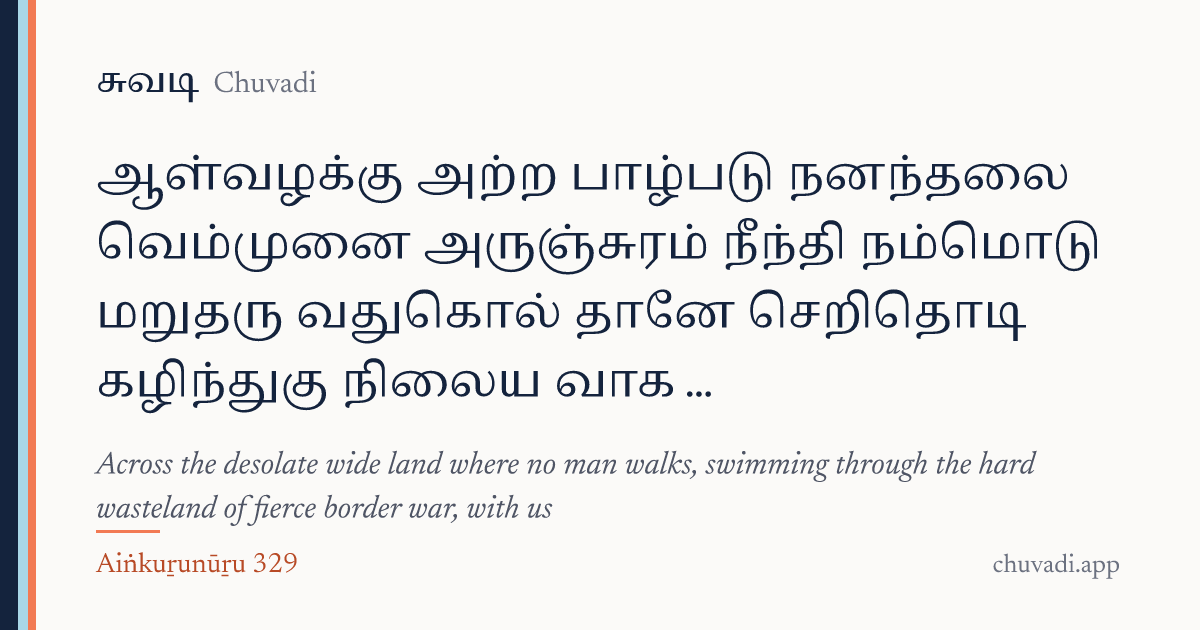

ஐங்குறுநூறு 329 · இடைச்சுரப் பத்து
பாடல் · The poem
Tap a word to see where else it occurs.
பொருள் · Meaning in TamilAI
மனிதர் நடமாட்டமே இல்லாத பாழான அகன்ற நிலத்தையும், கடும் போர் நடக்கும் எல்லைப்புறக் கொடிய பாலை வழியையும் நீந்திக் கடந்து, என் வலிய நெஞ்சம் நம்முடன் திரும்பி வருமோ? அப்படி வந்தால், நெருக்கமாக அணிந்த அவள் வளையல்கள் கழன்று விழும் நிலை ஏற்படுமே! பிரிந்து வீட்டில் இருப்பவள் என் நெஞ்சத்தைக் கவர்ந்து வைத்துக்கொண்டிருக்கிறாள்.
பாலைத் திணை; தலைவன் கூற்று. அவன் நெஞ்சம் தலைவியிடமே தங்கியிருக்கிறது. அது திரும்பி வந்தால் அவள் மெலிந்து வளையல்கள் நெகிழும் என்று அவன் அஞ்சுவதாகத் தோன்றுகிறது. நடு அடிகளின் சொற்றொடர் அமைப்பு கடினமானது; இங்குக் கூறிய பொருள் ஐயத்துடனே கொள்ளப்பட்டது.
ஆங்கிலம் · English translationAI
Translation
- Across the desolate wide land where no man walks,
- swimming through the hard wasteland of fierce border war, with us
- will it come back, then — so that her close-set bangles
- may slip and fall away —
- my strong heart, which she, left behind, has taken?
What the poem says
The hero asks a strange, sad question about his own heart. That heart, 'strong' (uraṅkeḻu) though it is, has been taken by the heroine and stayed with her. Will it come back across the empty wasteland and the dangerous border country, where war is fought (vemmuṉai)?
The middle lines are the most difficult. 'So that her close-set bangles may slip and fall' seems to describe the result if his heart left her: she would waste away, her bangles slipping. The hero would then be wishing his heart to stay with her for her sake. The syntax allows other readings, and this one is offered with caution.
The idea of the heart staying with the beloved while the body travels appears in the heroine's poems too (as in 317), but here it is the man's heart that remains behind.