




ஐங்குறுநூறு 330 · இடைச்சுரப் பத்து
பாடல் · The poem
Tap a word to see where else it occurs.
பொருள் · Meaning in TamilAI
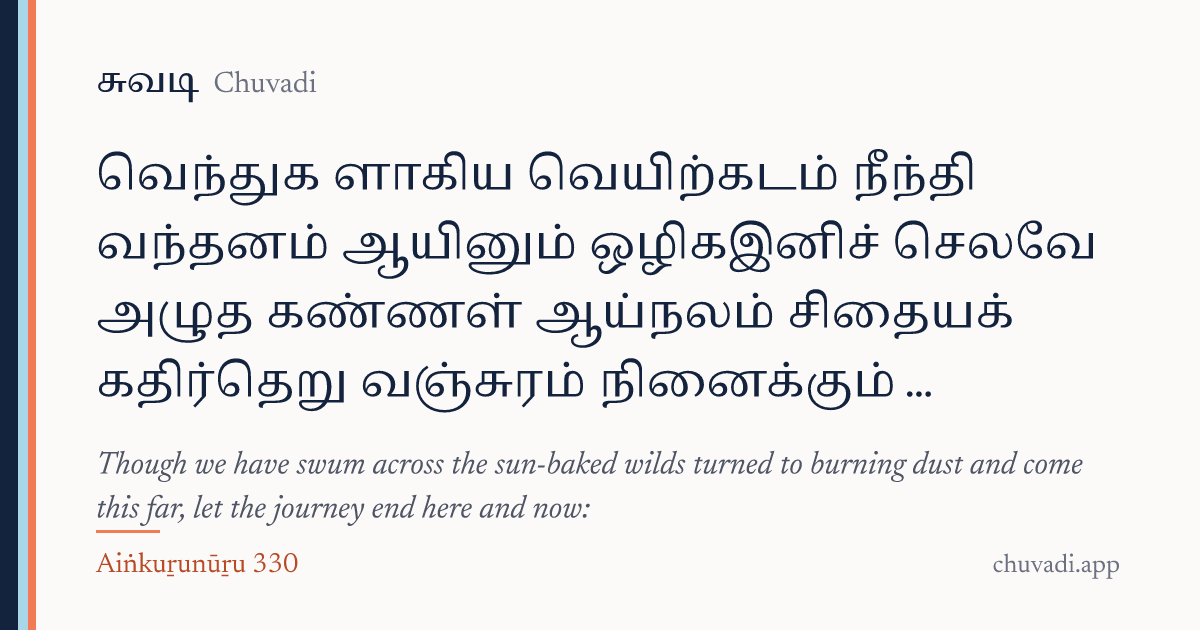
வெப்பமான புழுதியாகிவிட்ட, வெயில் காயும் காட்டை நீந்திக் கடந்து இவ்வளவு தூரம் வந்துவிட்டோம்; ஆனாலும் இனி இந்தப் பயணம் இங்கேயே முடியட்டும். அழுத கண்களுடன், தன் சிறந்த அழகு சிதைந்துபோக, கதிர்கள் சுட்டெரிக்கும் இந்த வெப்பமான பாலை வழியை அவள் நினைத்துக்கொண்டிருப்பாள். ஒளிவீசும் அழகிய வளையல் அணிந்தவளின் உள்ளத்தில் உள்ள துயரம் அத்தகையது.
பாலைத் திணை; தலைவன் கூற்று. காதலியின் துயரத்தை நினைத்து அவன் பயணத்தைக் கைவிடத் துணிகிறான்; இது இப்பத்தை நிறைவு செய்யும் பொருத்தமான முடிவு. ‘அவிர்கொல்’ என்ற பாடத்தின் பொருள் உறுதியாகத் தெரியவில்லை.
ஆங்கிலம் · English translationAI
Translation
- Though we have swum across the sun-baked wilds turned to burning dust
- and come this far, let the journey end here and now:
- with weeping eyes, her fine beauty ruined,
- she thinks of the hot wasteland the sun's rays scorch —
- such is the grief in the heart of her with fine, bright bangles.
What the poem says
The hero, already well into the wasteland, decides to turn back. He has crossed the scorched country, but he now says 'let the going end' (oḻika iṉic celavu). The reason is the heroine: he imagines her weeping, her beauty spoilt, thinking anxiously about the burning road he is on.
This makes a fitting close to the decade. Throughout these ten poems her memory has gone with him; here it finally outweighs the purpose of the journey.
The last line is uncertain. Avirkol āytoṭi is unclear as printed; it is taken as avir āytoṭi, 'her of bright, fine bangles', with kol possibly a particle of doubt ('perhaps'), which would give 'such, perhaps, is the grief in her heart'. The second line also prints vañcuram for veñcuram, 'hot wasteland', and veyir for veyil, 'sun'.