



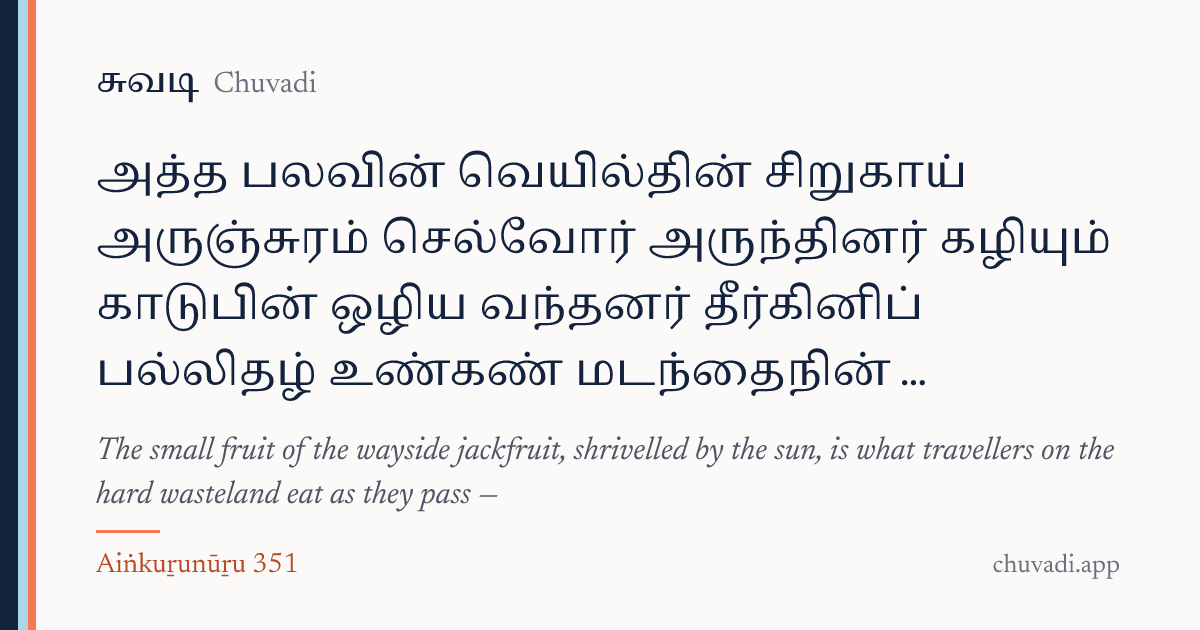

ஐங்குறுநூறு 351 · வரவுரைத்த பத்து
பாடல் · The poem
Tap a word to see where else it occurs.
பொருள் · Meaning in TamilAI
பாலை வழியில் நிற்கும் பலா மரத்தின், வெயிலால் வாடிச் சுருங்கிய சிறிய காய்களைத்தான், கடத்தற்கரிய சுரத்தைக் கடந்து செல்பவர்கள் தின்றுவிட்டுப் போவார்கள். அத்தகைய காட்டைப் பின்னே விட்டுவிட்டு அவர் வந்துவிட்டார். பல இதழ்களை உடைய மலர் போன்ற மையுண்ட கண்களை உடைய பெண்ணே, உன் அழகிய இடை வாடிப்போன நிலை இனி நீங்கட்டும்.
இது பாலைத் திணை; பொருள் தேடிப் பிரிந்த தலைவன் திரும்பி வந்ததைத் தோழி தலைவிக்குச் சொல்லும் பாடல். வெயிலில் கருகிய சிறு பலாக்காய் அவன் கடந்த வழியின் கொடுமையைக் காட்டுகிறது. அத்தகைய வழியைக் கடந்து அவன் வந்ததால் தலைவியின் மெலிவு தீரும் என்கிறாள் தோழி.
ஆங்கிலம் · English translationAI
Translation
- The small fruit of the wayside jackfruit, shrivelled by the sun,
- is what travellers on the hard wasteland eat as they pass —
- leaving that forest behind, he has come; let it end now,
- girl with kohl-dark eyes like many-petalled flowers, your
- lovely waist's wasted state.
What the poem says
This decade, the ten "telling of the return", opens with the heroine's friend bringing good news: the man who left to earn wealth has come back. The first two lines show the road he took. In that country even the fruit of the jackfruit tree is small and burnt by the sun, and travellers can only snatch it as they hurry on.
The friend tells the heroine that her own wasting, shown in the faded beauty of her waist (alkul), can now stop. In pālai convention the woman left behind grows thin and pale; the man's return is what restores her.
The word read here as "let it end now" (tīrka iṉi) is written joined in the edition as tīrkiṉi. The reading is natural, but the line division makes the syntax compressed.