




ஐங்குறுநூறு 352 · வரவுரைத்த பத்து
பாடல் · The poem
Tap a word to see where else it occurs.
பொருள் · Meaning in TamilAI
சிறந்த அம்புகளைத் தொடுக்கும் மறவர்கள் வில்லால் எய்ததால் இறந்துபோனவர்களுக்கு நட்ட, எழுத்துப் பொறித்த நடுகல்லைப் போல, சொரசொரப்பான தோலும் பெரிய துதிக்கையும் உடைய யானை தன் கடுஞ்சினத்தைக் கொட்டும் கொடிய சுரம் அது. அதைக் கடத்தற்கு அரியது என்று எண்ணாமல், தோழி, நம் காதலர் வந்துவிட்டார்.
தலைவன் மீண்டு வந்ததைத் தோழி தலைவிக்கு உரைக்கிறாள்; பாலைத் திணை. நடுகல்லும் சினந்த யானையும் வழியின் கொடுமையைக் காட்டுகின்றன. அத்தகைய வழியையும் பொருட்படுத்தாமல் வந்தான் என்பதால் அவனுடைய அன்பின் ஆழம் புலப்படுகிறது. மூலத்தில் "நடுகிஅல்" என்று இருப்பது "நடுகல்" என்பதன் பிழையான வடிவம்.
ஆங்கிலம் · English translationAI
Translation
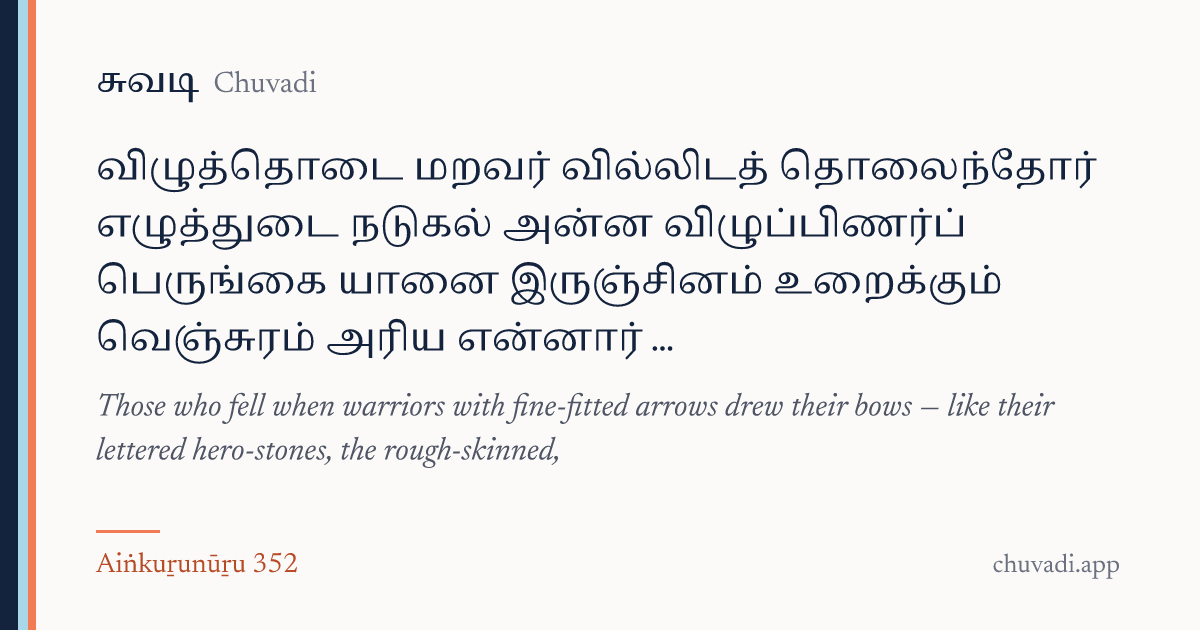
- Those who fell when warriors with fine-fitted arrows drew their bows —
- like their lettered hero-stones, the rough-skinned,
- great-trunked elephant pours out its dark fury there —
- that burning wasteland he did not call too hard;
- he has come, friend, the one we love.
What the poem says
The friend again tells the heroine that the hero has returned. The road he crossed is drawn with a grim picture. In the wasteland stand hero-stones (naṭukal), carved with the names of men killed by bowmen, and an elephant with rough skin and a great trunk stands among them like one of those stones, raging.
Hero-stones for fallen fighters were a real feature of the Tamil countryside, and they often appear in pālai poems as signs of the danger of the road. The line says the elephant is "like" the inscribed stone, probably for its grey, rough, motionless bulk; it could also be read as a comparison of the elephant's fury with the violence the stones remember.
The point of the poem is in the fourth line: he did not say the road was too hard. His love outweighed the danger. The spelling naṭukiāl in the edition stands for naṭukal.