




ஐங்குறுநூறு 361 · முன்னிலைப் பத்து
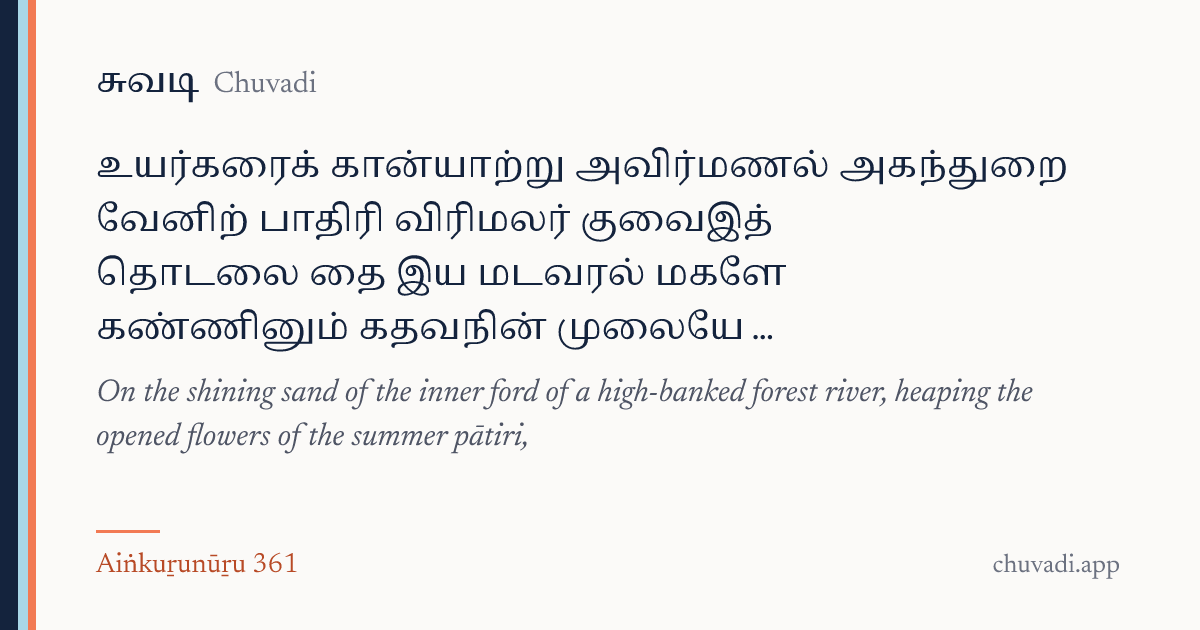
பாடல் · The poem
Tap a word to see where else it occurs.
பொருள் · Meaning in TamilAI
உயர்ந்த கரைகளை உடைய காட்டாற்றின் ஒளிவீசும் மணல் நிறைந்த உட்துறையில், வேனிற்காலப் பாதிரியின் விரிந்த மலர்களைக் குவித்து மாலை தொடுத்த இளம் பெண்ணே! உன் கண்களைவிட உன் முலைகள் வருத்துகின்றன; முலைகளைவிட உன் அகன்ற மென்மையான தோள்கள் இன்னும் வருத்துகின்றன.
தலைவன் தலைவியை நேரே நோக்கி அவள் அழகைப் புகழ்ந்து கூறுவது. வேனிற்காலமும் வறண்ட ஆறும் பாலைப் பின்புலத்தைக் காட்டினாலும், பாடலின் பொருள் பிரிவு அன்று, அழகுப் புகழ்ச்சியே; எனவே திணை முழுமையாகப் பொருந்தவில்லை. "கதவ" என்பது பார்ப்பவரை வருத்தும் அழகைக் குறிக்கிறது.
ஆங்கிலம் · English translationAI
Translation
- On the shining sand of the inner ford of a high-banked forest river,
- heaping the opened flowers of the summer pātiri,
- you innocent girl who have strung yourself a garland,
- fiercer than your eyes are your breasts,
- and fiercer than your breasts your broad, soft shoulders.
What the poem says
This decade is called "the ten of direct address": in each poem someone speaks face to face to another. Here a man, presumably the hero, addresses a young girl he has seen by a forest river in summer, heaping up pātiri flowers and stringing them into a garland.
His praise climbs in two steps: her eyes trouble him, her breasts trouble him more, her shoulders most of all. The word katava, "angry, fierce", is used in the sense of beauty that wounds the onlooker, a common turn in akam poems.
The setting is the dry season, with a river reduced to sand and the pātiri (trumpet-flower tree) in bloom, which places the poem in pālai's summer, but the content is a first meeting or a lover's praise rather than separation. The tiṇai label fits only loosely.