




ஐங்குறுநூறு 362 · முன்னிலைப் பத்து
பாடல் · The poem
Tap a word to see where else it occurs.
பொருள் · Meaning in TamilAI
பூமாலை அணிந்த மார்பை உடையவனே! கல் குவியல்கள் பரந்து கிடக்கும், விலகிச் செல்ல இடமில்லாத, பல கிளைகளாகப் பிரியும் வழியில், சிறிய கண்களை உடைய யானைகளின் கொடிய பகையை நினைக்காமல், அருள் நிறைந்த உன் நெஞ்சம் உன்னைச் செலுத்த, இருள் நெருங்கிச் செறிந்த இந்த இரவில் எப்படி வந்தாய்?
இரவில் வந்த தலைவனைத் தோழி நேரே நோக்கிக் கூறுவது. இரவுக்குறி குறிஞ்சிக்கு உரியது; இங்குச் சுர வழியின் கொடுமை பேசப்படுவதால் பாலைப் பின்புலம் அமைகிறது. அவன் துணிவைப் பாராட்டுவதோடு, இப்படி அஞ்சத்தக்க வழியில் வர வேண்டாம், மணந்துகொள் என்ற குறிப்பும் உள்ளது. "யாக்கு" என்பது "யாங்கு" என்பதன் பிழை.
ஆங்கிலம் · English translationAI
Translation
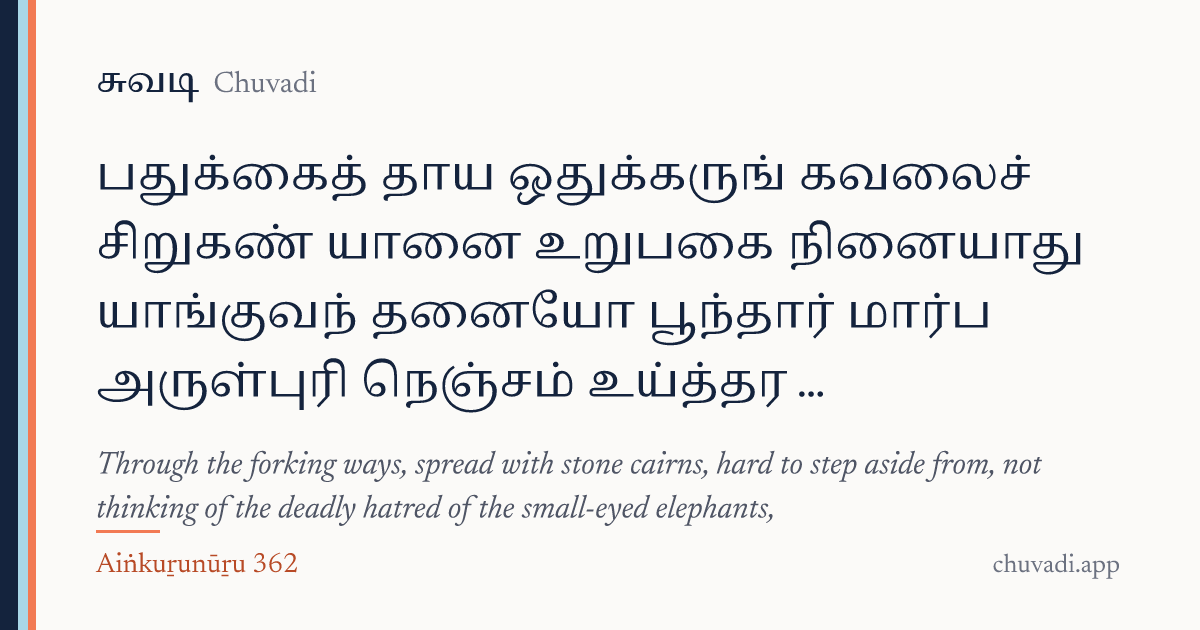
- Through the forking ways, spread with stone cairns, hard to step aside from,
- not thinking of the deadly hatred of the small-eyed elephants,
- how did you come, man with the flower garland on your chest,
- your heart, bent on kindness, driving you on,
- in this night where the darkness presses in?
What the poem says
The heroine's friend speaks to the hero, who has come at night. She asks how he dared the road: forked paths among stone cairns, where there is no room to turn aside, and wild elephants that would kill him. His heart, set on kindness to the heroine, pushed him on.
The cairns (patukkai) are heaps of stones raised over the dead, often travellers killed on the road; their mention makes the danger plain. The night "where the darkness fights" is a strong phrase for thick blackness.
Night visits are typical of kuṟiñci, the poetry of secret union, but the road here is that of the dry wasteland, which explains the pālai frame. The friend's question carries both admiration and reproach: she fears for him, and wants him to marry the heroine rather than keep risking such journeys. The edition's yākku is read as yāṅku, "how".