




ஐங்குறுநூறு 363 · முன்னிலைப் பத்து
பாடல் · The poem
Tap a word to see where else it occurs.
பொருள் · Meaning in TamilAI
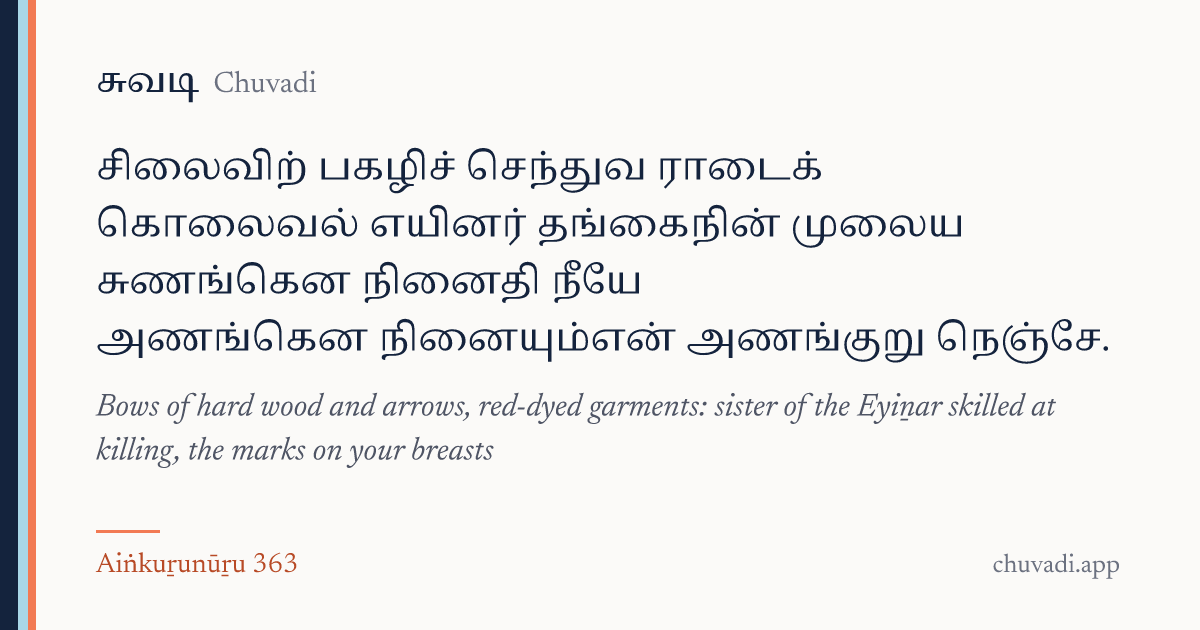
வலிய மரத்தாலான வில்லும் அம்பும் சிவந்த சாயம் ஏற்றிய ஆடையும் உடைய, கொலைத்தொழிலில் வல்ல எயினரின் தங்கையே! உன் முலைகளில் உள்ள புள்ளிகளை வெறும் சுணங்கு என்று நீ நினைக்கிறாய்; ஆனால் வருத்தமுற்ற என் நெஞ்சு அவற்றை வருத்தும் அணங்கு என்று நினைக்கிறது.
தலைவன் எயினர் குலப் பெண்ணான தலைவியை நேரே நோக்கிக் கூறுவது; பாலை நிலத்து மக்களான எயினர் பின்புலத்தால் பாலைத் திணை. "சுணங்கு", "அணங்கு" என்னும் ஒலியொத்த சொற்கள் பாடலின் அழகு: அவளுக்கு அழகுப் புள்ளி, அவனுக்கோ வருத்தும் தெய்வம்.
ஆங்கிலம் · English translationAI
Translation
- Bows of hard wood and arrows, red-dyed garments:
- sister of the Eyiṉar skilled at killing, the marks on your breasts
- you take to be no more than beauty spots, you;
- a tormenting goddess, my stricken heart takes them to be.
What the poem says
A man, the hero, speaks to a girl of the Eyiṉar, the hunting people of the dry country, whose men carry bows and arrows and wear red-dyed cloth. Her brothers are killers by trade; she herself is shown as innocent of her own power.
The poem turns on a pun. The yellowish spots on a young woman's breasts (cuṇaṅku) were thought a mark of beauty. She thinks of them as just that, cuṇaṅku; his heart thinks of them as aṇaṅku, a goddess or spirit that seizes and torments. The two words differ by one sound, and the English cannot keep the echo.
The pālai frame comes from the Eyiṉar setting; the content is praise and longing at an early stage of love.