



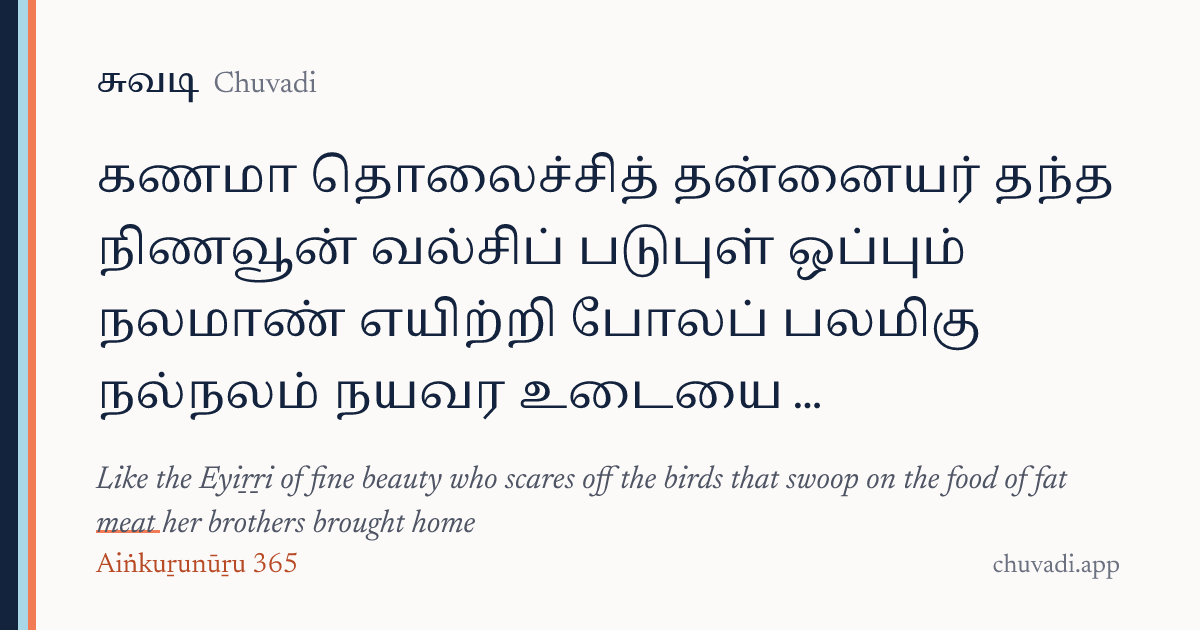

ஐங்குறுநூறு 365 · முன்னிலைப் பத்து
பாடல் · The poem
Tap a word to see where else it occurs.
பொருள் · Meaning in TamilAI
விலங்குக் கூட்டத்தைக் கொன்று தன் அண்ணன்மார் கொண்டுவந்த கொழுப்புடைய இறைச்சி உணவை நாடி வந்து விழும் பறவைகளை ஓட்டும், நல்ல அழகுடைய எயிற்றியைப் போல, மிகுந்த நல்ல அழகை, விரும்பத்தக்க வகையில் நீ பெற்றிருக்கிறாய். மாமரத்தின் இளந்தளிரே, இதற்காக நீ என்ன தவம் செய்தாய்?
தலைவன் மாந்தளிரை முன்னிலைப்படுத்திக் கூறுவது; தலைவியை நேரே புகழாமல், அவள் நிறத்தை ஒத்த தளிரைப் புகழ்கிறான். பெண்ணின் மேனி மாந்தளிர் போன்றது என்ற மரபை மாற்றி, தளிருக்கு அவள் அழகு கிடைத்தது தவப்பயன் என்கிறான். எயினர் வாழ்க்கைப் பின்புலத்தால் பாலைத் திணை.
ஆங்கிலம் · English translationAI
Translation
- Like the Eyiṟṟi of fine beauty who scares off the birds
- that swoop on the food of fat meat her brothers brought home
- after killing the herd of beasts — great, abounding
- good beauty, lovely to long for, you possess;
- what penance did you do, O tender shoot of the mango?
What the poem says
Here the hero speaks not to a person but to a young mango shoot. Its reddish, glossy colour reminds him of the girl he loves, an Eyiṉar woman who sits guarding the meat her brothers brought back from the hunt, chasing away the birds that dive at it. The shoot has the same beauty as she does, and he asks what penance (tavam) it performed to deserve it.
Comparing a woman's complexion to the young mango leaf is a well-known convention; the poem reverses it with playful wonder, as if the leaf had earned a share of her loveliness.
The order of the opening lines in Tamil is close-packed: the brothers' kill, the meat, the birds, then the girl. The English follows that order as far as it can. The pālai frame again comes from the Eyiṉar life.