



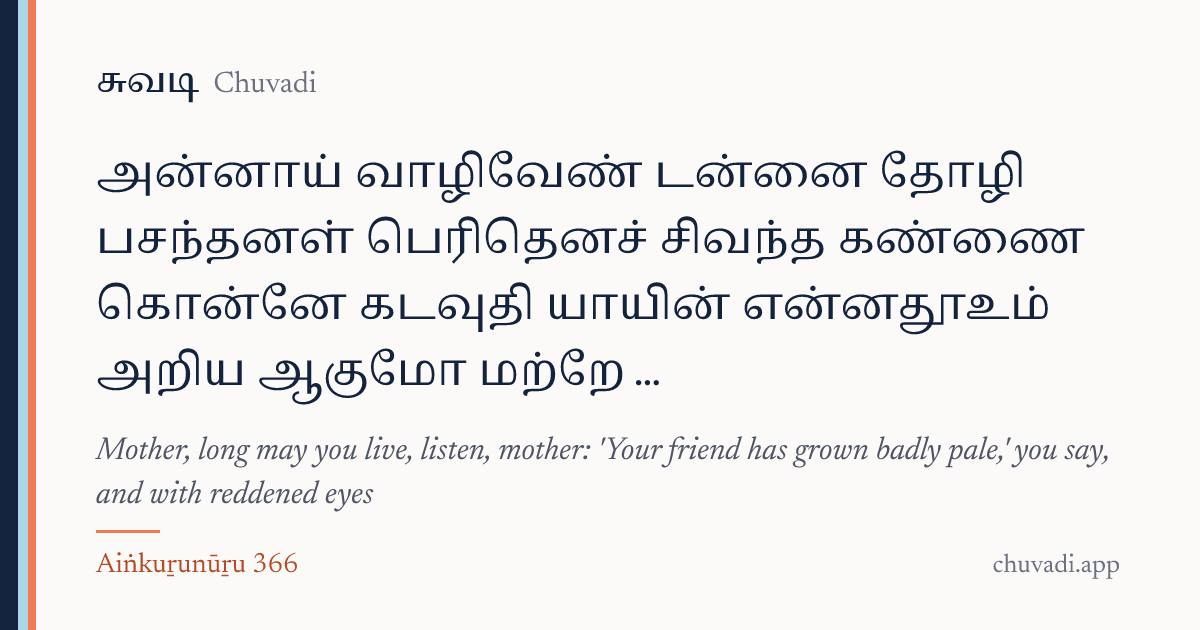

ஐங்குறுநூறு 366 · முன்னிலைப் பத்து
பாடல் · The poem
Tap a word to see where else it occurs.
பொருள் · Meaning in TamilAI
அன்னையே, நீ வாழ்க! கேள், அன்னையே! "உன் தோழி மிகவும் பசலை அடைந்தாள்" என்று சொல்லிச் சிவந்த கண்களோடு நீ என்னை வீணாகக் கேட்டுக்கொண்டிருந்தால், அதனால் ஏதாவது தெரிந்துவிடுமா? தளிர்களிடையே கொத்துக்களை உடைய கோங்க மரம் பூத்ததனால்தான் இப்படி ஆயிற்று.
தோழி செவிலியையோ நற்றாயையோ நோக்கிக் கூறுவது. தலைவியின் பசலைக்குக் காரணம் கேட்டுச் சினக்கும் தாயிடம், கோங்கு பூத்த பருவத்தைக் காரணமாகக் காட்டுகிறாள். பருவம் மாறியதால் வந்தது என்று மறைக்கிறாளா, தலைவன் வருவதாகச் சொன்ன பருவம் வந்தும் அவன் வராததைக் குறிக்கிறாளா என்பது உறுதியாகத் தெரியவில்லை.
ஆங்கிலம் · English translationAI
Translation
- Mother, long may you live, listen, mother:
- 'Your friend has grown badly pale,' you say, and with reddened eyes
- if you press me for nothing, can anything at all
- be found out that way? — this has come about
- because the koṅku with clusters among its shoots has borne its flowers.
What the poem says
The heroine's friend speaks to the mother (or foster-mother), who has noticed the girl's pallor and is questioning the friend angrily, her eyes red. The friend answers that harsh questioning will reveal nothing, and offers a reason: the koṅku tree has come into flower.
What she means is left half said. The koṅku blooms with yellow flowers in the dry season, and its colour resembles the pallor (pacappu) of a lovesick woman; the friend may be passing off the change in the girl as a thing of the season. Or the flowering may mark the season in which the hero promised to come, so that her pallor is longing. The poem gives no more.
This is the friend at the edge of revealing the secret love, defending the girl while hinting at the truth. The last line's exact sense is uncertain.