




ஐங்குறுநூறு 367 · முன்னிலைப் பத்து
பாடல் · The poem
Tap a word to see where else it occurs.
பொருள் · Meaning in TamilAI
பொரிந்த அடிமரத்தை உடைய கோங்க மரத்தின், பொன் என்று மயங்கும்படியான புதிய மலர்களை, விரிந்த கொத்துக்களை உடைய வேங்கை மலர்களோடு தனித்தனியாகத் தெரியும்படி சூடி, விரிந்த மலர்களை அணிந்தவனாக, வேனிற்காலக் காட்டாற்றின் வழியே தேரோடு நெருங்கி வந்தான் ஒருவன். அன்னையே, அவனுடைய பெயரோடு இவளுடைய உயிர் கலந்துவிட்டது.
தோழி தாயிடம் தலைவியின் காதலை வெளிப்படுத்தும் அறத்தொடு நிற்றல். கோங்கும் வேங்கையும் பூக்கும் வேனிற் பருவம் பின்புலம். "பெயரொடு புணர்ந்தன்று உயிர்" என்பது, அவன் பெயரைக் கேட்பதே அவளுக்கு உயிர் என்னும் அளவுக்கு அவள் காதல் ஆழமானது என்பதைக் காட்டுகிறது.
ஆங்கிலம் · English translationAI
Translation
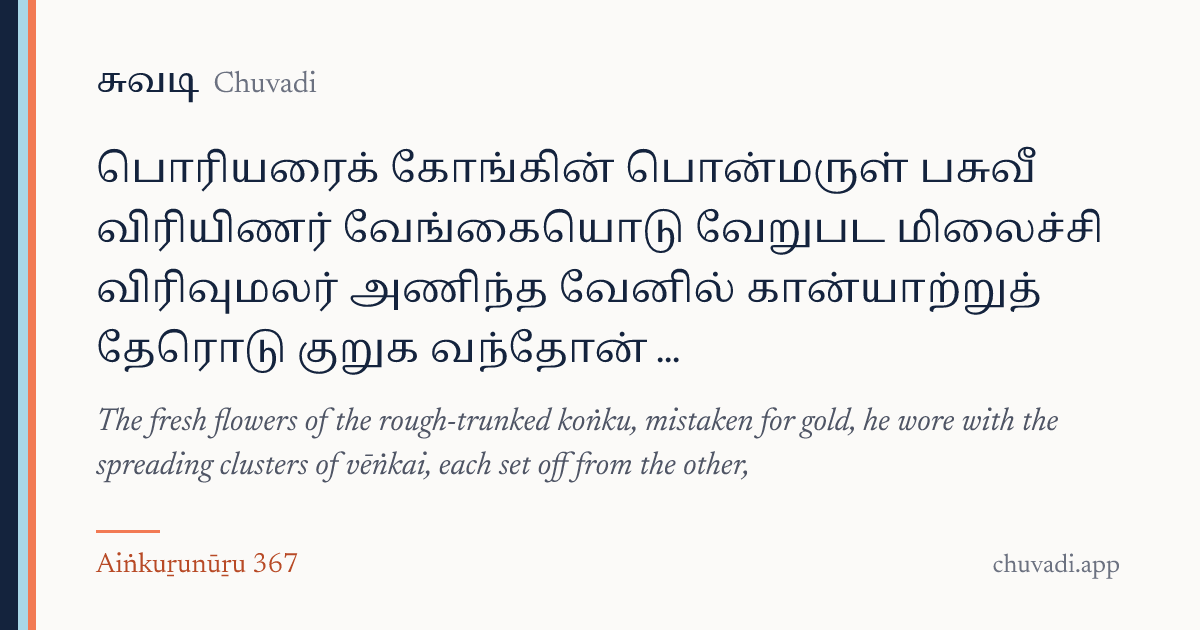
- The fresh flowers of the rough-trunked koṅku, mistaken for gold,
- he wore with the spreading clusters of vēṅkai, each set off from the other,
- adorned with full-blown blossoms; from the summer forest river
- he who came close to us in his chariot —
- with his name, mother, this girl's life has become one.
What the poem says
The friend speaks to the mother and now tells the truth plainly. A man came near in his chariot by the forest river, wearing yellow koṅku flowers that look like gold, set beside the spreading clusters of vēṅkai. The girl's life, the friend says, has become bound to his name. This is the friend's open disclosure of the love (aṟattoṭu niṟṟal), so that the family may consider the match.
The flowers fix the season, the dry summer when both trees bloom. Wearing a garland of mixed flowers marks the man as a hero of rank and grace.
Pērotu puṇarntaṉṟu, "has joined with his name", is a strong expression: she lives only by him, so that even his name sustains her. The first word poriyarai is taken as "with a rough, crackled trunk".