



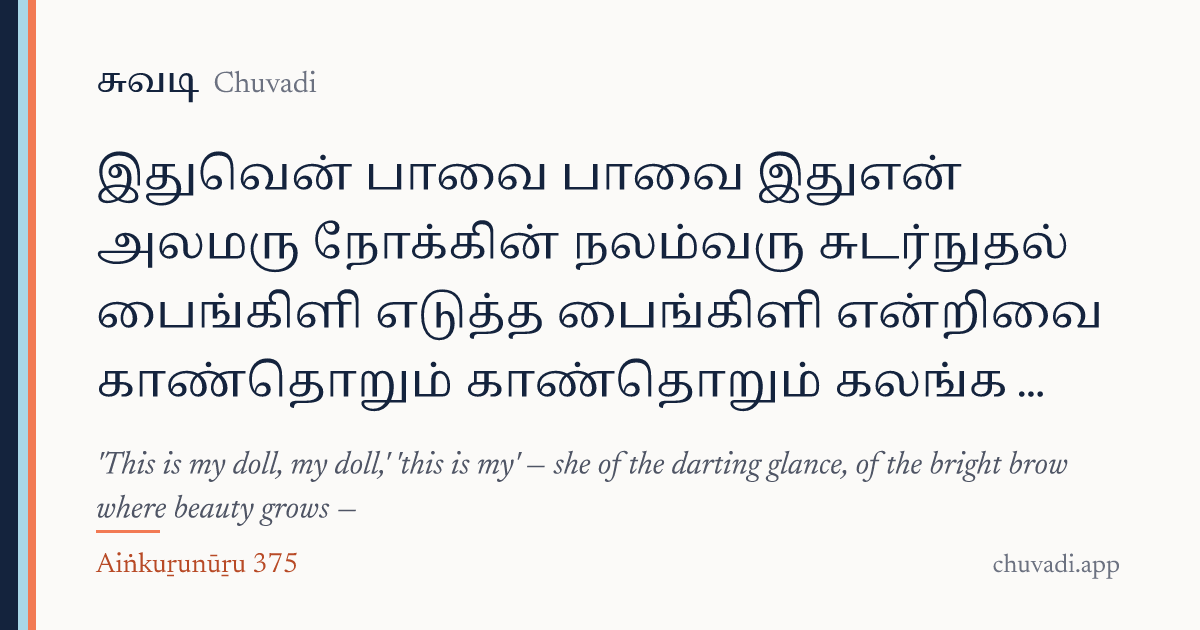

ஐங்குறுநூறு 375 · மகட் போக்கிய வழித் தாயிரங்கு பத்து
பாடல் · The poem
Tap a word to see where else it occurs.
பொருள் · Meaning in TamilAI
"இது என் பாவை, பாவை", "இது என்" என்றும், "நான் வளர்த்த பச்சைக்கிளி, பச்சைக்கிளி" என்றும் அவள் சொல்லிக்கொண்டிருந்த இவற்றைக் காணும்போதெல்லாம் காணும்போதெல்லாம் நான் கலங்குகிறேன். சுழலும் பார்வையையும் அழகு வளரும் ஒளிவீசும் நெற்றியையும் பூப்போன்ற கண்களையும் உடைய என் மகள் உண்மையிலேயே என்னைவிட்டுப் போய்விட்டாளோ?
உடன்போக்குச் சென்ற மகளின் பாவையையும் கிளியையும் கண்டு நற்றாய் இரங்குவது; பாலைத் திணை. மகளின் சொற்களே பாடலில் எதிரொலிப்பதால், தாயின் நினைவில் அவள் குரல் ஒலிப்பதை உணர முடிகிறது. பாவையும் கிளியும் அவளுடைய இளமைக்குச் சான்று.
ஆங்கிலம் · English translationAI
Translation
- 'This is my doll, my doll,' 'this is my'
- — she of the darting glance, of the bright brow where beauty grows —
- 'green parrot I raised, my green parrot': these things,
- each time I see them, each time I see them, I am shaken —
- has she really gone, my girl with eyes like flowers?
What the poem says
The mother looks at her daughter's things, the doll and the pet parrot, and hears again the girl's voice claiming them: "this is my doll", "this is the parrot I raised". Each sight of them unsettles her, and the last line breaks into disbelief: has she really gone?
The poem is built from fragments of speech, which gives it the feel of memory. The second line is a description of the girl set into the middle of her own words, her restless eyes and bright forehead, as if the mother sees her face while remembering her voice.
Dolls and pet parrots are the regular signs of girlhood in these poems, and they mark how young the daughter was when she left. The doubling of the words in lines one, three and four follows the Tamil exactly.