



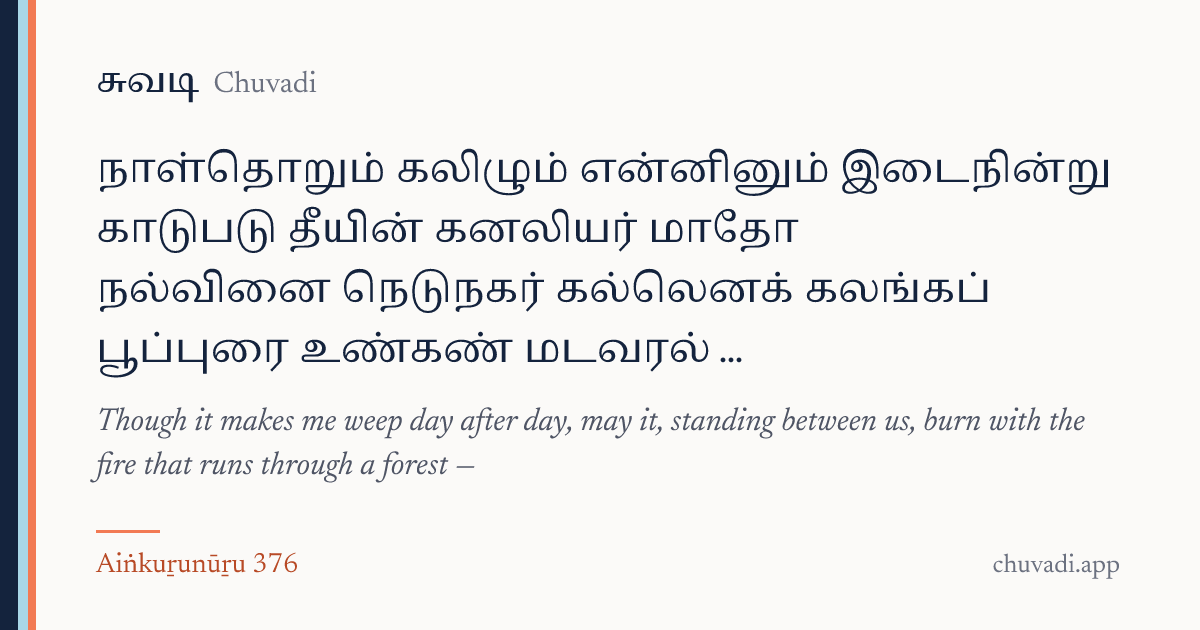

ஐங்குறுநூறு 376 · மகட் போக்கிய வழித் தாயிரங்கு பத்து
பாடல் · The poem
Tap a word to see where else it occurs.
பொருள் · Meaning in TamilAI
நாள்தோறும் என்னை அழ வைத்தாலும், நல்வினைகள் நிகழும் பெரிய வீடு ஆரவாரத்தோடு கலங்கும்படி, பூப்போன்ற மையுண்ட கண்களை உடைய என் இளமகளை அவனோடு சேர்த்து அனுப்பிவைத்த அறமற்ற ஊழ், எங்களுக்கு இடையே நின்ற அந்த ஊழ், காட்டில் பற்றும் தீயைப் போல எரிந்து போகட்டும்!
உடன்போக்குச் சென்ற மகளுக்காக நற்றாய், அவளைப் பிரித்த ஊழைச் சபித்து இரங்குவது; பாலைத் திணை. "பால்" என்பது காதலரைக் கூட்டிவைக்கும் ஊழ். "இடைநின்று" என்ற சொல்லுக்குப் பொருள் உறுதியாகத் தெரியவில்லை; தாய்க்கும் மகளுக்கும் இடையே வந்தது என்று கொள்ளப்பட்டது.
ஆங்கிலம் · English translationAI
Translation
- Though it makes me weep day after day, may it, standing between us,
- burn with the fire that runs through a forest —
- so that the tall house of good deeds is shaken with uproar, my
- innocent girl whose kohl-lined eyes are like flowers
- it sent off and joined to him: that heartless fate.
What the poem says
The mother curses fate itself. The word is pāl, the destiny that brings lovers together, here called aṟaṉil, "without justice" or "heartless". It came between her and her daughter, joined the girl to her lover and sent her away, and left the great house in an uproar of grief. Let it burn like a forest fire.
The phrase "house of good deeds" (nalviṉai neṭunakar) presents the family home as a place of virtue, which makes the loss seem all the more undeserved.
The syntax is close-packed, with the subject, "that heartless fate", held to the end. The first line's iṭai niṉṟu, "standing in between", is understood as fate intervening between mother and daughter; it could also mean that the fate "stood by" while the house was shaken.