



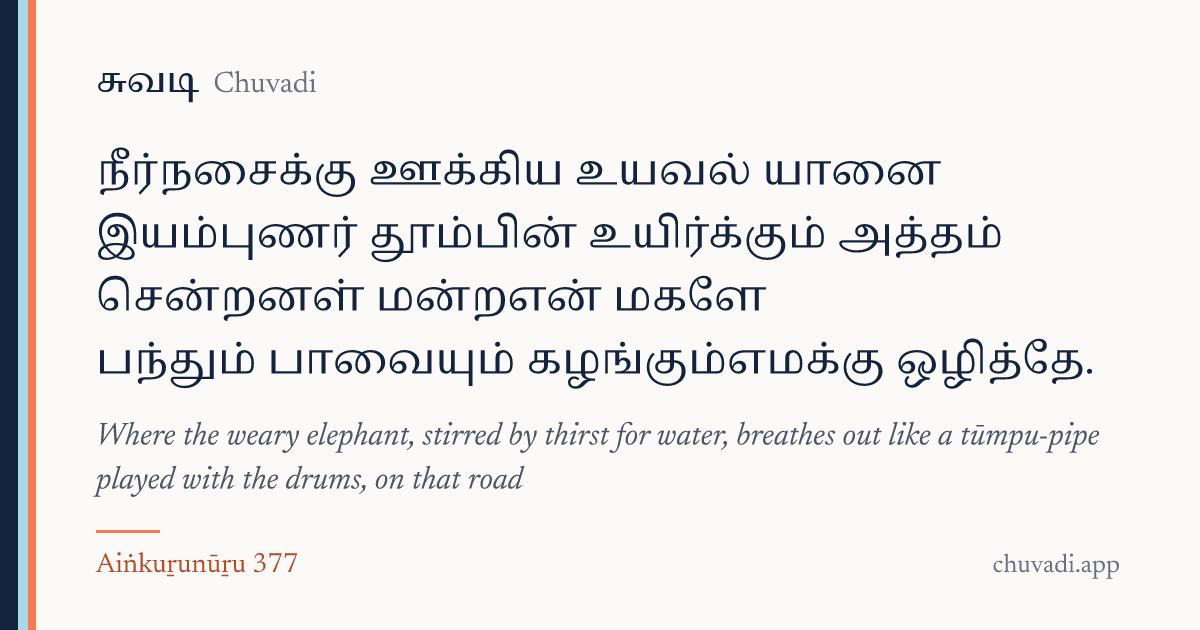

ஐங்குறுநூறு 377 · மகட் போக்கிய வழித் தாயிரங்கு பத்து
பாடல் · The poem
Tap a word to see where else it occurs.
பொருள் · Meaning in TamilAI
நீரைத் தேடும் வேட்கையால் உந்தப்பட்ட, வருந்திய யானை, பிற இசைக்கருவிகளோடு சேர்ந்து ஒலிக்கும் தூம்பு என்ற இசைக்கருவியைப் போலப் பெருமூச்சு விடும் வழியில், பந்தையும் பாவையையும் கழங்கையும் எங்களுக்கு விட்டுவிட்டு, என் மகள் உண்மையாகவே சென்றுவிட்டாள்.
உடன்போக்குச் சென்ற மகளை நினைத்து நற்றாய் இரங்குவது; பாலைத் திணை. நீர் இல்லாது வருந்தும் யானை வழியின் வறட்சியைக் காட்டுகிறது. அவள் விட்டுச் சென்ற விளையாட்டுப் பொருள்கள் அவளுடைய இளமையை நினைவூட்டித் தாயின் துயரை மிகுவிக்கின்றன.
ஆங்கிலம் · English translationAI
Translation
- Where the weary elephant, stirred by thirst for water,
- breathes out like a tūmpu-pipe played with the drums, on that road
- she has surely gone, my daughter,
- leaving us her ball, her doll and her kaḻaṅku pebbles.
What the poem says
The mother pictures the road her daughter took. A tired elephant, desperate for water, breathes so loudly that it sounds like the tūmpu, a long hollow wind instrument played together with other instruments (iyam). It is a picture of drought and exhaustion.
Against that sound the poem sets the girl's playthings, left behind for the family: her ball, her doll, and the kaḻaṅku, small seeds or pebbles used in a children's game of tossing and catching. The child's world stays at home while the child herself walks the wasteland.
Maṉṟa, "surely", in the third line, carries the sense of a fact the mother must finally accept.