



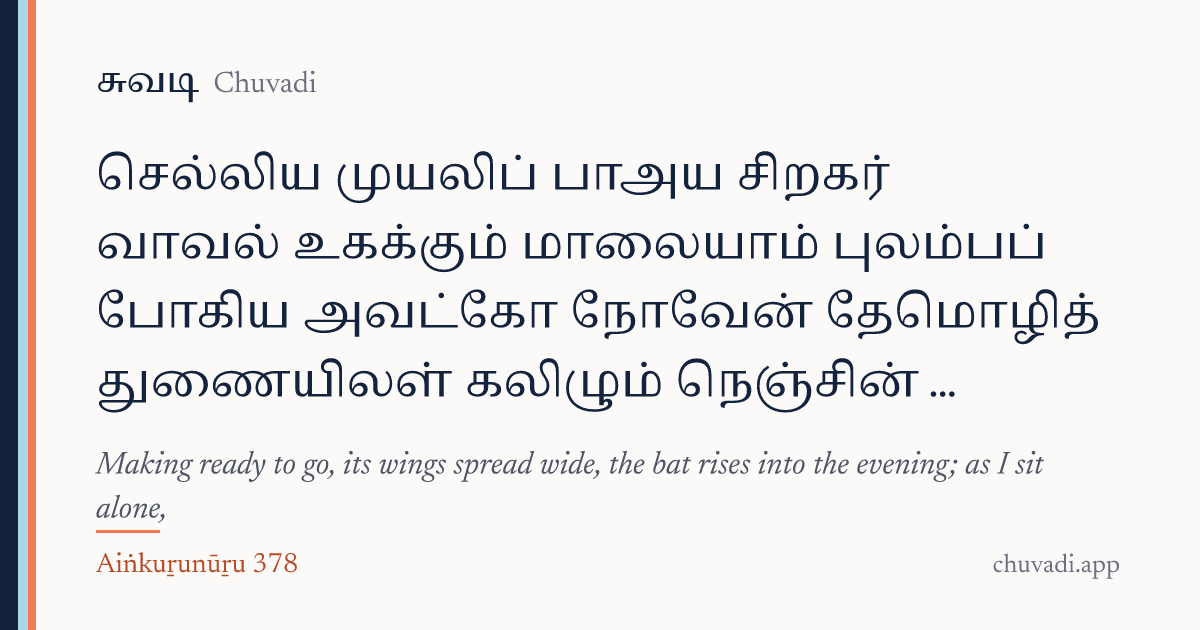

ஐங்குறுநூறு 378 · மகட் போக்கிய வழித் தாயிரங்கு பத்து
பாடல் · The poem
Tap a word to see where else it occurs.
பொருள் · Meaning in TamilAI
புறப்படத் தயாராகித் தன் சிறகுகளை விரித்து, வௌவால் உயரப் பறக்கும் மாலைப் பொழுதில் நான் தனித்து வருந்துகிறேன். சென்றுவிட்ட அவளுக்காகவா நான் வருந்துகிறேன்? இல்லை; இனிய சொல் பேசும் தன் தோழியை இழந்து, நெஞ்சம் கலங்கி அழும், இணையான அழகிய மையுண்ட கண்களை உடைய இவளுக்காகவே நான் வருந்துகிறேன்.
உடன்போக்குக்குப் பின் நற்றாயோ செவிலியோ கூறுவது; பாலைத் திணை. மாலைப் பொழுதும் பறந்து செல்லும் வௌவாலும் தனிமையையும் பிரிவையும் குறிக்கின்றன. "தேமொழித் துணையிலள்" என்ற தொடரின் பொருள் உறுதியாகத் தெரியவில்லை; தலைவியை இழந்த தோழியைக் குறிப்பதாகக் கொள்ளப்பட்டது.
ஆங்கிலம் · English translationAI
Translation
- Making ready to go, its wings spread wide,
- the bat rises into the evening; as I sit alone,
- is it for her who has gone that I grieve? No — without her honey-voiced
- companion, her heart weeping,
- her matched, lovely kohl-dark eyes — for this one, my grief.
What the poem says
The speaker is the mother, or perhaps the foster-mother, at dusk, when bats leave their roosts and the house feels empty. She asks herself whom she is grieving for. Not, she decides, for the girl who left, since she went by her own choice with the man she loves; her pain is for the girl's companion who stays behind, weeping, her beautiful eyes full of tears.
The dusk image sets the mood. Evening is the hour of loneliness in akam poetry, and the bats flying off suggest departure.
The reading of the third and fourth lines is not certain. Tēmoḻit tuṇaiyilaḷ is taken as "she who has lost her sweet-voiced companion", describing the friend. It might instead mean "she of honeyed speech, now companionless". The general sense, grief turned towards the one left behind, is clear.