




ஐங்குறுநூறு 392 · மறுதரவுப் பத்து
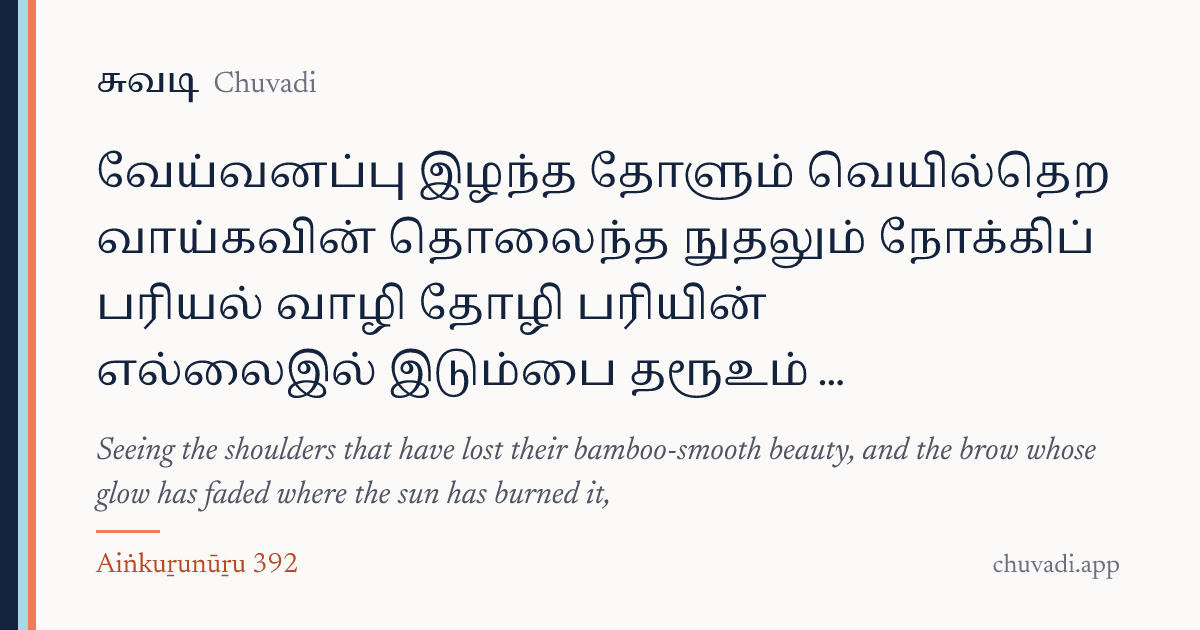
பாடல் · The poem
Tap a word to see where else it occurs.
பொருள் · Meaning in TamilAI
மூங்கிலின் அழகை இழந்த தோள்களையும், வெயில் சுட்டதால் இயற்கையான அழகு மங்கிப்போன நெற்றியையும் பார்த்து, தோழி, நீ வாழ்க, வருந்தாதே! நீ வருந்தினால் அது எல்லையற்ற துன்பத்தைத் தரும். அவள் நல்ல மலைநாட்டை உடையவனோடு திரும்பி வந்துவிட்டாள் அல்லவா!
உடன்போக்கிலிருந்து தலைவனோடு திரும்பிய தலைவியைக் கண்டு வருந்தும் தோழியிடம் ஒருவர் கூறுவது; பாலைத் திணை. கூறுபவர் செவிலியாக இருக்கலாம், உறுதியாகத் தெரியவில்லை. "தொநந்த" என்பது "தொலைந்த" என்பதன் பிழையாகக் கொள்ளப்பட்டது.
ஆங்கிலம் · English translationAI
Translation
- Seeing the shoulders that have lost their bamboo-smooth beauty, and the brow
- whose glow has faded where the sun has burned it,
- do not grieve, friend, long may you live; if you grieve,
- it will bring sorrow without end —
- for she has come back with the man of the good mountains.
What the poem says
The girl has returned with her lover, worn by the journey: her shoulders, once smooth as bamboo, have lost their beauty, and the sun has dulled the glow of her forehead. Someone tells the heroine's friend not to be distressed at the sight, because grief now would only bring endless trouble. She has come back with the man of the hills, and that is what matters.
The speaker is not certain; it may be the foster-mother consoling the friend, or one of the household. The addressee, tōḻi, is the girl's companion, who grieved when she left.
The edition's toṉanta is read as tolainta, "faded, lost". The phrase vāy kaviṉ, "true beauty" or "the beauty that belonged to it", describes the brow's natural loveliness. The hero is called naṉvarai nāṭaṉ, "man of the land of good mountains", a kuṟiñci title.