




ஐங்குறுநூறு 393 · மறுதரவுப் பத்து
பாடல் · The poem
Tap a word to see where else it occurs.
பொருள் · Meaning in TamilAI
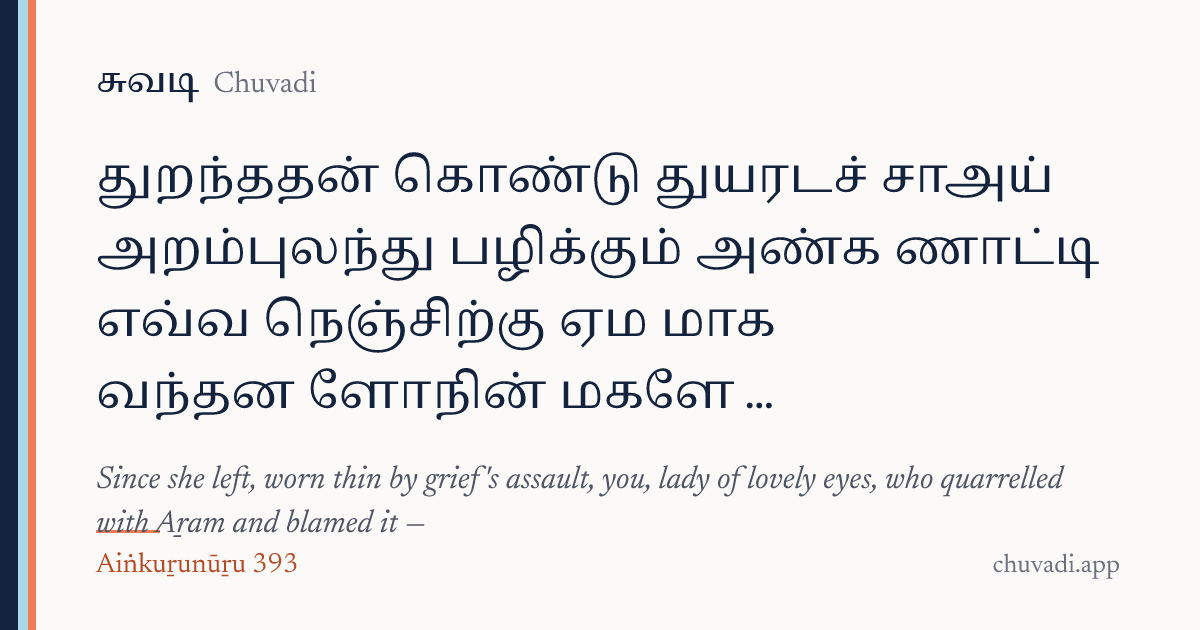
அவள் உன்னைப் பிரிந்து சென்ற நாள் முதல், துயரம் வாட்டியதால் மெலிந்து, அறக்கடவுளோடு பிணங்கி அதைப் பழித்த அழகிய கண்களை உடைய பெண்ணே! துன்பம் நிறைந்த உன் நெஞ்சத்துக்குக் காவலாக, கொடிய வலிமையும் வெள்ளிய வேலும் உடைய இளைஞன் முன்னே நடந்துவர, உன் மகள் வந்துவிட்டாளோ!
உடன்போக்குச் சென்ற மகள் திரும்பியதைச் செவிலியோ வீட்டுப் பெண் ஒருத்தியோ நற்றாயிடம் கூறுவது; பாலைத் திணை. இளைஞன் முன்னே நடந்து வருவது, அவன் வெளிப்படையாக மணமகனாக வருவதைக் குறிக்கும். "அண்கணாட்டி" என்ற சொல்லின் பொருள் உறுதியாகத் தெரியவில்லை; "அழகிய கண்ணை உடையவள்" என்று கொள்ளப்பட்டது.
ஆங்கிலம் · English translationAI
Translation
- Since she left, worn thin by grief's assault,
- you, lady of lovely eyes, who quarrelled with Aṟam and blamed it —
- as a safeguard for your aching heart,
- has she come, your daughter,
- with the young man of fierce might and white spear walking ahead?
What the poem says
Someone, probably the foster-mother or a woman of the household, speaks to the girl's mother with the good news. Ever since the daughter left, the mother has wasted with grief and quarrelled with Aṟam, the moral order, blaming it for letting this happen. Now the girl has come home, a safeguard (ēmam) for her troubled heart, with the young man walking in front.
The detail that the young man leads (muntuṟa) suggests that he is bringing her back openly, as a husband would, ready to face the family.
The phrase aṇkaṇāṭṭi is unclear. It is taken as amkaṇ āṭṭi, "lady of lovely eyes", addressed to the mother. The first line's tuṟantataṉ koṇṭu, "from the time she left", is likewise compressed but its sense is reasonably secure.