



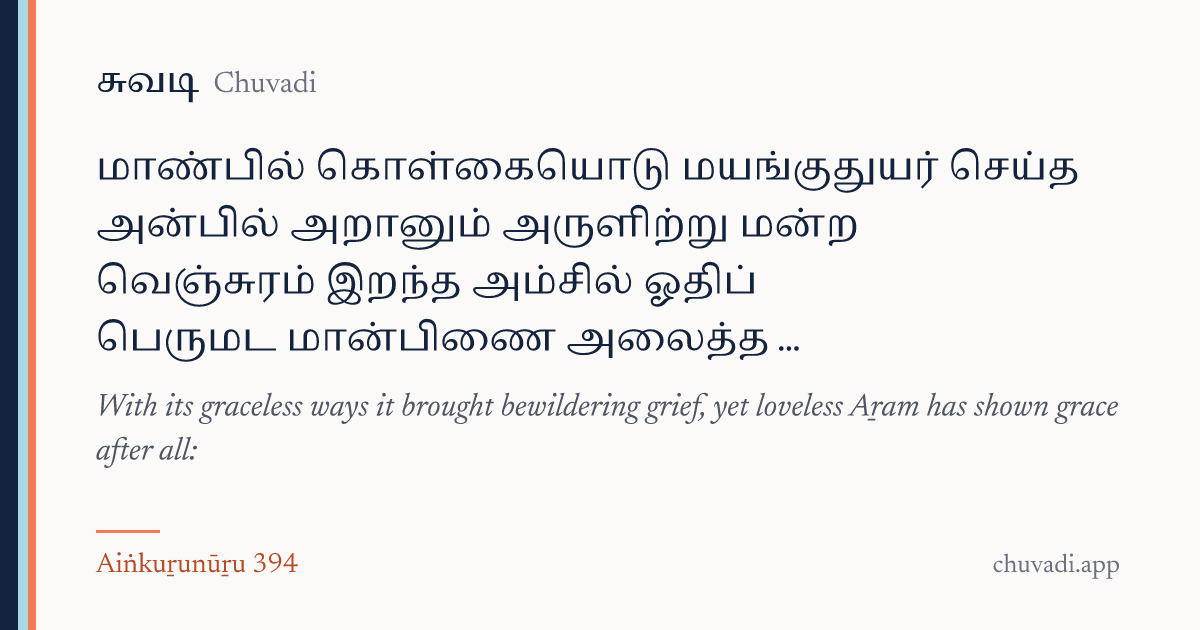

ஐங்குறுநூறு 394 · மறுதரவுப் பத்து
பாடல் · The poem
Tap a word to see where else it occurs.
பொருள் · Meaning in TamilAI
மாண்பற்ற செயல்களால் மயக்கம் தரும் துயரத்தைச் செய்த அன்பில்லாத அறமும் உண்மையில் அருள் செய்துவிட்டது. கொடிய சுரத்தைக் கடந்து சென்ற, அழகிய மென்மையான கூந்தலை உடைய, பெரிய இளம் பெண்மானையும் தோற்கடிக்கும் சிறிய நெற்றியுடைய இளமகளை அது நமக்குக் காட்டிவிட்டது; வந்து பாருங்கள்!
உடன்போக்குச் சென்ற மகள் திரும்பியதைக் கண்டு நற்றாயோ செவிலியோ மகிழ்ந்து கூறுவது; பாலைத் திணை. முன்பு பழிக்கப்பட்ட அறம் இப்போது அருள் செய்ததாகப் போற்றப்படுகிறது. "மான்பிணை அலைத்த" என்பது கண்ணழகால் மானை வென்றவள் என்று கொள்ளப்பட்டது; "காட்டிய வம்மே" என்ற தொடரின் பிரிப்பு உறுதியாகத் தெரியவில்லை.
ஆங்கிலம் · English translationAI
Translation
- With its graceless ways it brought bewildering grief,
- yet loveless Aṟam has shown grace after all:
- she of the soft, fine locks who crossed the burning wasteland,
- the little girl of the small brow who outdid the great, innocent doe,
- it has shown her to us — come and see!
What the poem says
The speaker, likely the mother or foster-mother, calls others to come and see: the girl is back. The same Aṟam (dharma, or the moral order of the world) that seemed loveless and cruel when she left has turned out to be gracious after all.
The poem answers 393, where the mother was said to have blamed Aṟam. Here the blame is withdrawn. The girl is again described by her soft hair and small forehead, marks of youth.
Peru maṭa māṉpiṇai alaitta, "who troubled the great innocent doe", is taken as praise of her eyes, so lovely that they put the doe to shame. It could also be read literally, as a girl who used to chase the deer in play. The final kāṭṭiya vammē is understood as kāṭṭiyatu, vammē, "it has shown; come!", though the division is not certain.