




ஐங்குறுநூறு 395 · மறுதரவுப் பத்து
பாடல் · The poem
Tap a word to see where else it occurs.
பொருள் · Meaning in TamilAI
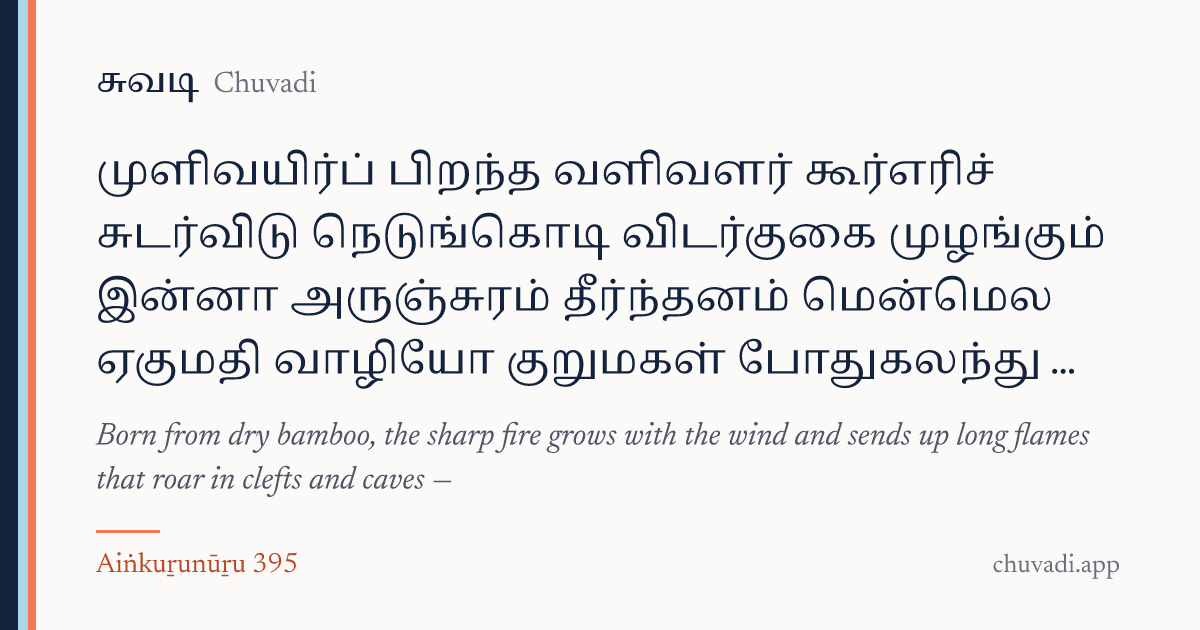
காய்ந்த மூங்கிலில் பிறந்து, காற்றால் வளர்ந்த கூரிய நெருப்பு, ஒளிவீசும் நீண்ட சுடர்களோடு மலைப்பிளவுகளிலும் குகைகளிலும் முழங்கும் கொடிய அரிய சுரத்தைக் கடந்துவிட்டோம். இளமகளே, நீ வாழ்க, இனி மெல்ல மெல்ல நடப்பாயாக. மலர்கள் கலந்து, முழங்கும் ஓசையோடு அருவி வீழும், ஒளிரும் கரிய சோலைகளை உடைய நம் மலைநாடு இதோ!
உடன்போக்கிலிருந்து திரும்பும்போது தலைவன் தலைவியிடம் கூறுவது; பாலைத் திணை. கொடிய பாலை நிலத்திலிருந்து குளிர்ந்த குறிஞ்சி நிலத்துக்கு வருவதே பாதுகாப்பையும் வீடு திரும்புதலையும் குறிக்கிறது.
ஆங்கிலம் · English translationAI
Translation
- Born from dry bamboo, the sharp fire grows with the wind
- and sends up long flames that roar in clefts and caves —
- that cruel, hard wasteland we have left behind; gently, gently
- walk on, long may you live, little one; mingled with blossoms
- the loud-voiced waterfall comes tumbling down
- in the shining dark groves of our mountain country.
What the poem says
The young man speaks to the girl as they come home together. The terrible part of the road is over. He recalls it in two vivid lines: fire starting in dry bamboo, fed by the wind, its flames roaring in the rock clefts and caves. Now she can slow down and walk gently, because ahead lies their own hill country, where a waterfall full of flowers comes crashing down into dark, gleaming groves.
The poem moves from pālai into kuṟiñci, from burning wasteland to cool mountain, and the change of landscape is itself the sign of homecoming and safety.
Bamboo fires that start by friction in hot wind are a recurring image of the dry season in Tamil poetry. Pōtu kalantu, "mixed with flowers", describes the waterfall carrying blossoms from the slopes above.