



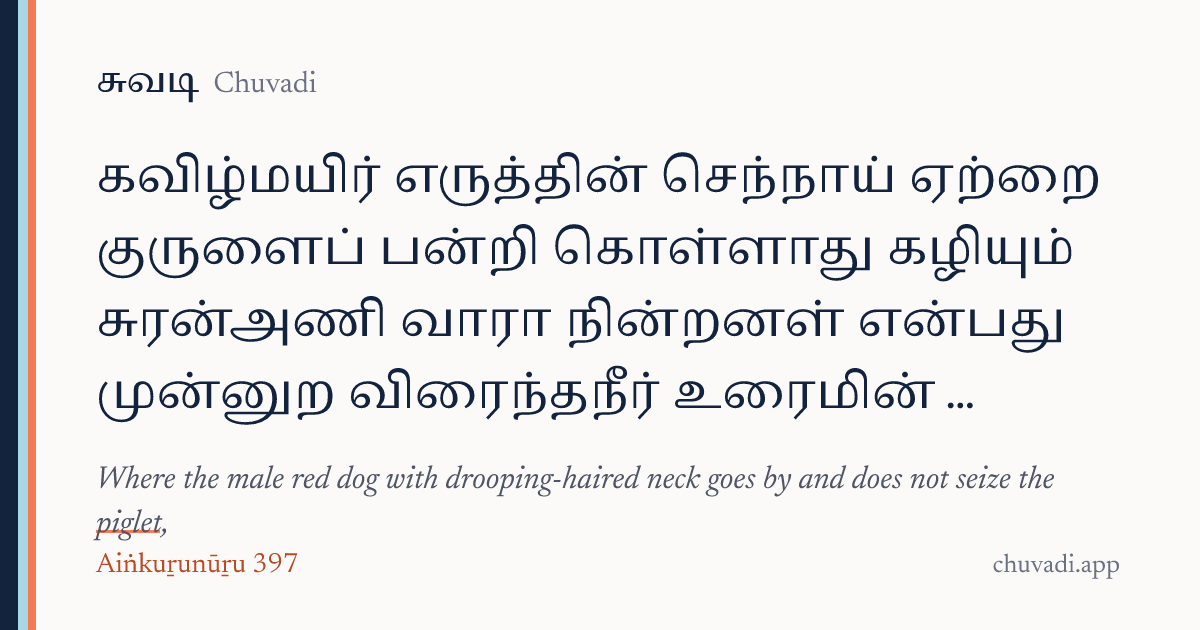

ஐங்குறுநூறு 397 · மறுதரவுப் பத்து
பாடல் · The poem
Tap a word to see where else it occurs.
பொருள் · Meaning in TamilAI
தொங்கும் மயிரை உடைய கழுத்தைக் கொண்ட ஆண் செந்நாய், பன்றிக் குட்டியைப் பிடிக்காமல் கடந்து போகும் சுர வழியே அவள் வந்துகொண்டிருக்கிறாள் என்ற செய்தியை, எங்களுக்கு முன்னே விரைந்து செல்லும் நீங்கள், இனிய நகையும் புன்முறுவலும் உடைய என் தோழியரிடம் சொல்லுங்கள்.
உடன்போக்கிலிருந்து திரும்பும் தலைவி வழிப்போக்கரிடம் கூறுவது; பாலைத் திணை. குட்டியைக் கொல்லாமல் விடும் செந்நாய், வழி இரக்கமுடையதாகி அவள் நலமாகத் திரும்புவதைக் குறிக்கும் இறைச்சி. தலைவன் கூறுவதாகவும் கொள்ள இடமுண்டு; கூற்று முழு உறுதியாக இல்லை. "விரந்த" என்பது "விரைந்த" என்பதன் பிழை.
ஆங்கிலம் · English translationAI
Translation
- Where the male red dog with drooping-haired neck
- goes by and does not seize the piglet,
- along that wasteland she is coming — this,
- you who hurry on ahead, go and tell
- my companions of the sweet, smiling laughter.
What the poem says
On the way back, the girl asks travellers who are going ahead faster to tell her friends at home that she is coming. She speaks of herself in the third person, "she is coming", as she did in 384, which makes the message sound like news from outside.
The wasteland is described with the same kind of picture as 354: a male wild dog passes a young boar and does not take it. Again this is iṟaicci. Even the predator spares the young in this country; the road is fierce but has turned merciful, and she returns safe.
The speaker could also be read as the young man, sending word to "my companions", but the phrase "my companions of sweet smiles" most naturally belongs to the girl and her group of friends. The edition's virantha is a slip for viraintha, "hurrying".