




ஐங்குறுநூறு 398 · மறுதரவுப் பத்து
பாடல் · The poem
Tap a word to see where else it occurs.
பொருள் · Meaning in TamilAI
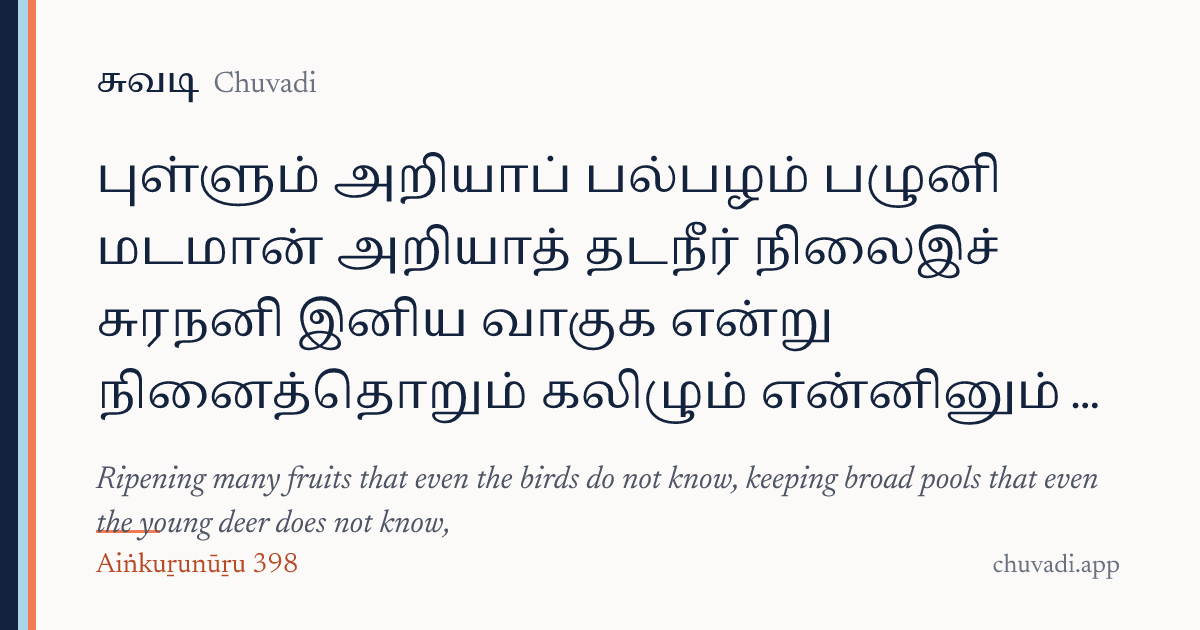
பறவைகளும் அறியாத பல பழங்கள் பழுத்து, இளமானும் அறியாத அகன்ற நீர்நிலைகள் நிலைபெற்று, சுரம் மிகவும் இனியதாக ஆகட்டும் என்று நினைக்கும்போதெல்லாம் நான் அழுதேன். ஆனாலும் இப்போது, தோழி, நம் ஊர் மிகப் பெரிதும் தனிமை நீங்கியிருக்கிறது.
உடன்போக்குச் சென்ற மகள் திரும்பிய பின் செவிலியோ நற்றாயோ கூறுவது; பாலைத் திணை. மகள் சென்ற வழியில் உணவும் நீரும் கிடைக்க வேண்டும் என்று வேண்டிய தாயின் அன்பு வெளிப்படுகிறது. "புலம்பின்று" என்பதைப் "புலம்பு இன்று" (தனிமை இல்லை) என்று கொள்ளப்பட்டது; "புலம்பிற்று" என்றும் படிக்க இடமுண்டு, பொருள் முழு உறுதியாக இல்லை.
ஆங்கிலம் · English translationAI
Translation
- Ripening many fruits that even the birds do not know,
- keeping broad pools that even the young deer does not know,
- may the wasteland be truly pleasant, so I said,
- and each time I thought of her I wept; and yet
- now, so very greatly, our town is no longer lonely, friend.
What the poem says
The speaker, probably the foster-mother or the mother, looks back on the time of absence. While the girl was away, she used to pray for the wasteland to be kind: full of fruit that not even birds had found, with pools of water unknown to the deer, so that her girl would not go hungry or thirsty. Every time she thought of her, she wept.
Now everything has changed. The last line says the town is no longer lonely; the girl has returned and the emptiness is gone. The addressee, tōḻi, is a companion of the speaker's own, not certain.
The final word pulampiṉṟu is taken as pulampu iṉṟu, "has no loneliness". It could also be read as pulampiṟṟu, "has become lonely", but with the contrast of eṉṉiṉum, "and yet", the happier reading fits the decade of the return. The prayer echoes 371 closely.