




ஐங்குறுநூறு 399 · மறுதரவுப் பத்து
பாடல் · The poem
Tap a word to see where else it occurs.
பொருள் · Meaning in TamilAI
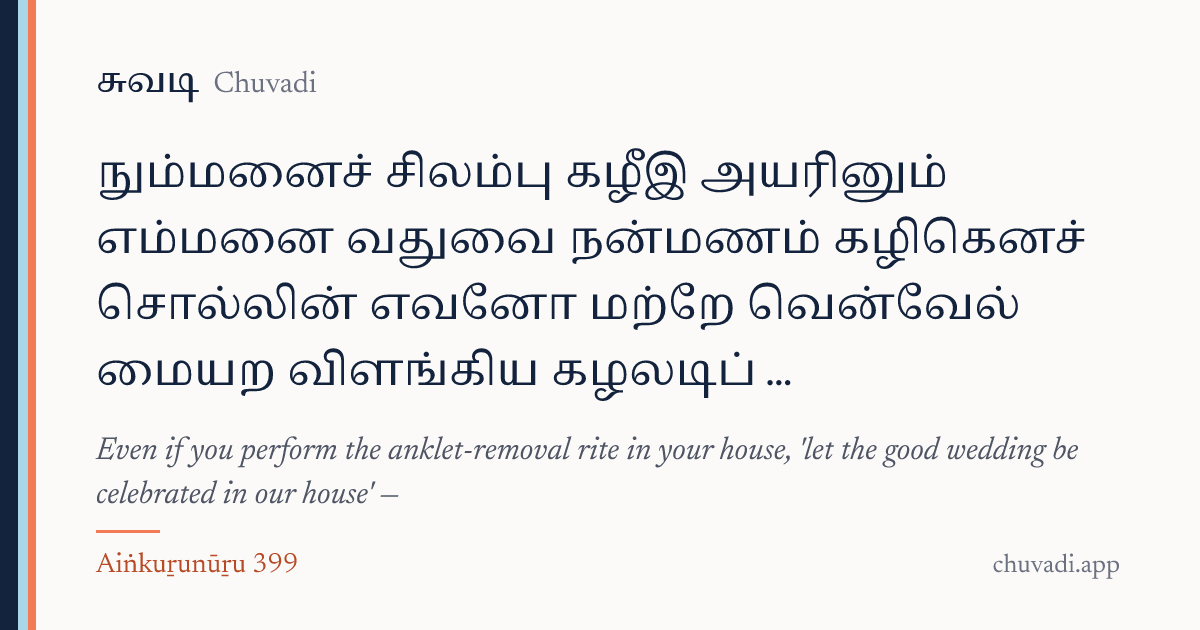
"உங்கள் வீட்டில் சிலம்பு கழிக்கும் சடங்கைச் செய்தாலும், நல்ல மணவிழா எங்கள் வீட்டில் நடக்கட்டும்" என்று, வெற்றி தரும் வேலையும் குற்றமின்றி விளங்கும் கழல் அணிந்த அடியையும் உடைய, பொய் சொல்வதில் வல்ல அந்த இளைஞனைப் பெற்ற தாயிடம் சொன்னால் என்ன குற்றம்?
உடன்போக்கிற்குப் பின் மணம் நிகழும் இடத்தைப் பற்றி நற்றாயோ செவிலியோ கூறுவது; பாலைத் திணை. சிலம்பு கழி நோன்பு தலைவன் வீட்டில் நடந்தாலும், மணவிழாவைத் தன் வீட்டில் நடத்த விரும்புகிறாள். "பொய்வல் காளை" என்பது பழியுரை அன்று; தங்களை ஏமாற்றி மகளைக் கொண்டு சென்றவன் என்ற அன்புக் கேலி.
ஆங்கிலம் · English translationAI
Translation
- Even if you perform the anklet-removal rite in your house,
- 'let the good wedding be celebrated in our house' —
- what harm would there be in saying it, then — conquering spear,
- anklet shining on the foot without a stain —
- to the mother who bore that young man so skilled at lies?
What the poem says
The speaker, probably the girl's mother or foster-mother, sends a message to the family of the young man. After an elopement, the bride's anklets were ceremonially removed (cilampu kaḻittal) before the wedding. The mother accepts that this rite may be held in the young man's house, but asks: what harm would it do if his mother agreed to let the wedding itself be celebrated in ours?
The young man is called poyval kāḷai, "the young man skilled at lies". This is affectionate teasing rather than an accusation: he deceived the family to win the girl away. Beside it he is praised as a warrior with a conquering spear and a bright anklet.
The addressee in the first line, num maṉai, "your house", is presumably someone from his side or a messenger; the poem does not name them. The rite of anklet removal is attested in Sangam poetry, though its details are not described here.