



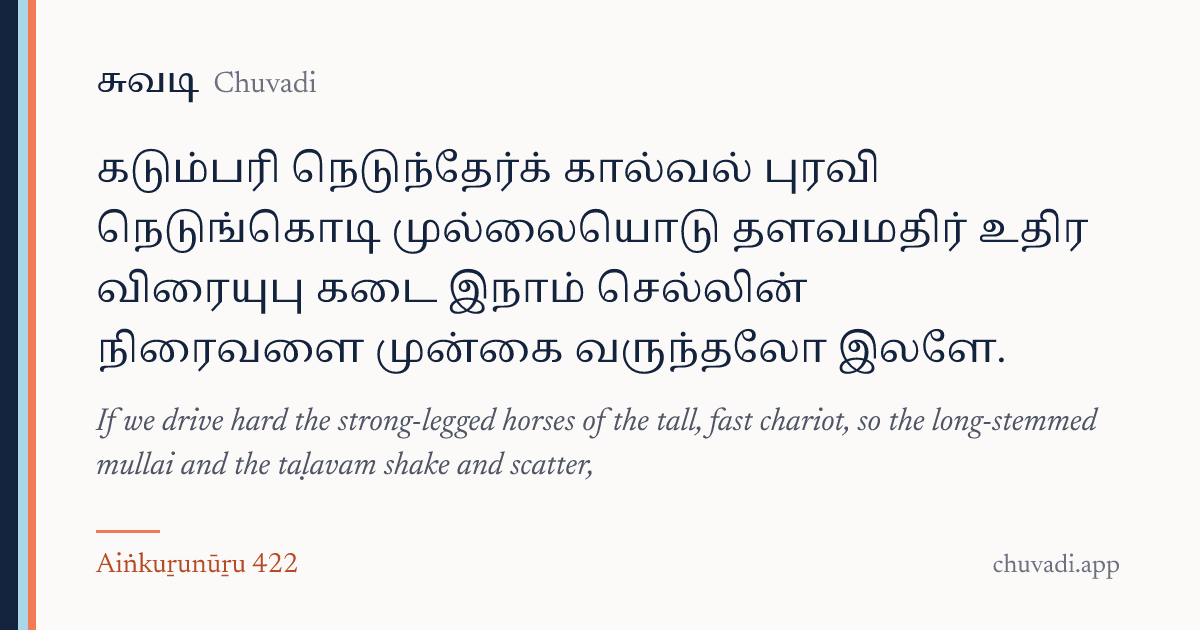

ஐங்குறுநூறு 422 · விரவுப் பத்து
பாடல் · The poem
Tap a word to see where else it occurs.
பொருள் · Meaning in TamilAI
விரைந்து ஓடும் நெடிய தேரில் பூட்டிய வலிய கால்களை உடைய குதிரைகளை, நீண்ட கொடியை உடைய முல்லையும் தளவமும் அதிர்ந்து உதிரும்படி விரைவாகச் செலுத்தி நாம் சென்றால், வரிசையாக வளையல்கள் அணிந்த முன்கையை உடையவள் வருந்தமாட்டாள்.
முல்லைத் திணை; வினைமுடிந்து திரும்பும் தலைவன் தேர்ப்பாகனிடம் கூறுவது. முல்லையும் தளவமும் பூக்கும் கார்காலமே அவன் திரும்புவதாகக் கூறிய பருவம். வளையல் நெகிழாமல் இருப்பது தலைவி பிரிவுத் துயரம் இன்றி இருப்பதைக் குறிக்கிறது.
ஆங்கிலம் · English translationAI
Translation
- If we drive hard the strong-legged horses of the tall, fast chariot,
- so the long-stemmed mullai and the taḷavam shake and scatter,
- urging them on in haste, and go,
- she with rows of bangles on her forearms will not suffer.
What the poem says
The hero speaks to his charioteer. He is hurrying home, and he wants the horses driven so fast that the flowering vines by the road tremble and shed their petals. If they reach her quickly, his wife will be spared the pain of waiting. Bangles in rows on her forearm are a sign she is well. In absence, a grieving woman grows thin and her bangles slip.
In Sangam poetry the man urging his charioteer to make haste on the way home is a common mullai situation. The mullai and taḷavam flowers by the roadside mark the rainy season, the time he promised to return. The form kaṭaii, 'driving', is written in the edition with a break at the metrical boundary.