




ஐங்குறுநூறு 423 · விரவுப் பத்து
பாடல் · The poem
Tap a word to see where else it occurs.
பொருள் · Meaning in TamilAI
பெருமேகம் இடிஇடித்து மழையைப் பொழிந்துள்ளது. அந்த நேரத்தில் இவளுடைய ஒளிவீசும் நெற்றி பசலை படரும்படி நீ பிரிந்து செல்லத் தயாராகிவிட்டாய். நீ எங்களை விட்டுப் பிரிந்தால் நாங்கள் அமைதியாக இருக்க மாட்டோம்; அழகிய மலர் போன்ற இவளுடைய மைதீட்டிய கண்களும் கண்ணீரால் நிறைந்துவிட்டன.
முல்லைத் திணை; தோழி தலைவனிடம் கூறுவது. தலைவன் திரும்ப வேண்டிய கார்காலத்திலேயே பிரிய முயல்வதைத் தோழி தடுக்கிறாள். பாடத்தில் மாமலை என்று இருப்பது மாமழை என்பதன் பிழையாகத் தெரிகிறது.
ஆங்கிலம் · English translationAI
Translation
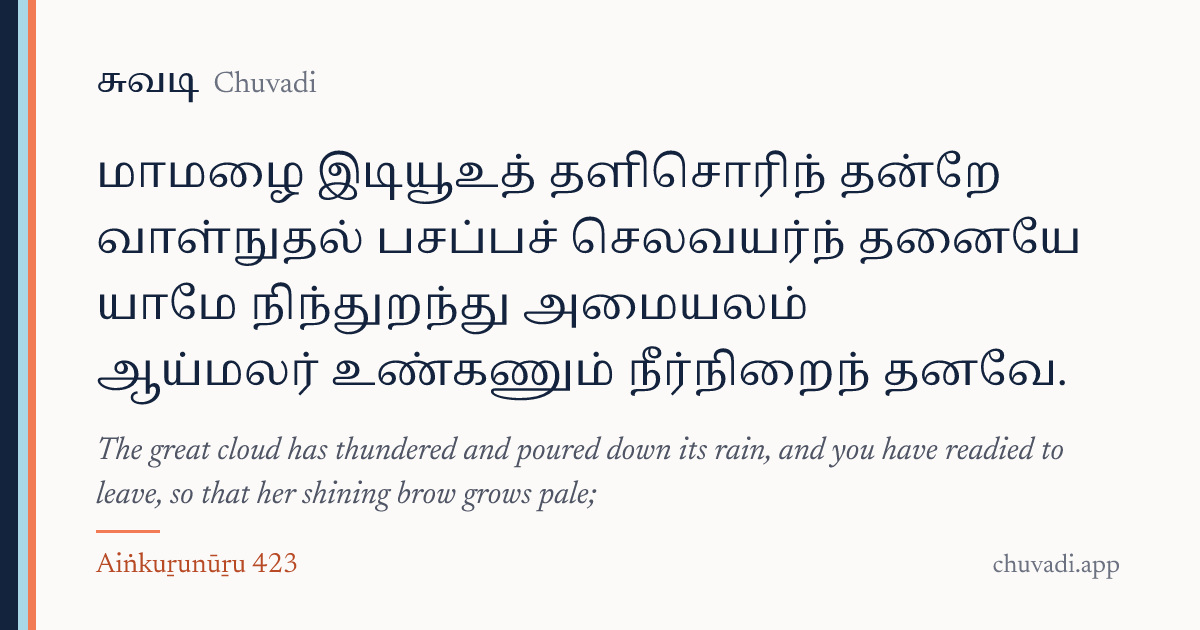
- The great cloud has thundered and poured down its rain,
- and you have readied to leave, so that her shining brow grows pale;
- we cannot rest content once you have left us;
- her kohl-lined eyes, like choice flowers, have filled with tears.
What the poem says
The heroine's friend (tōḻi) speaks to the hero, who is preparing to leave just as the rains begin. It is the very season when men are expected to come home, not go away. The pallor (pacappu) spreading over the woman's brow is the conventional sign of love-sickness at a lover's absence. The friend uses 'we' for herself and the heroine together, as the tōḻi often does.
The opening word is printed māmalai, 'great mountain', but the thunder and pouring rain point to māmaḻai, 'great cloud', and the line is translated that way. The edition also has nintuṟantu for niṉ tuṟantu, 'leaving you' or 'left by you'.