




ஐங்குறுநூறு 445 · பாசறைப் பத்து
பாடல் · The poem
Tap a word to see where else it occurs.
பொருள் · Meaning in TamilAI
நெஞ்சே, புகழ் நிறைந்த சிறப்பினை உடைய காதலி தனிமையில் வருந்தும்படி அவளை விட்டு, அரிய போர்த்தொழில் நடக்கும் இந்தப் பாசறைக்கு வந்தாய். இப்போது நல்ல காளைகளோடு சேர்ந்து இளம் பசுக்கள் வீடு திரும்பும் மாலைப் பொழுதில், அவளை நினைக்கும்போதெல்லாம் கலங்கி அழுகிறாய்; என்னையும் விரைவாகத் திரும்பிச் செல்லத் தூண்டுகிறாய்.
முல்லைத் திணை; பாசறையில் தலைவன் தன் நெஞ்சோடு கூறுவது. மாலையில் பசுக்கள் காளைகளோடு வீடு திரும்புவது, துணையைப் பிரிந்திருக்கும் தலைவனின் ஏக்கத்தை மிகுவிக்கிறது. இறுதி அடியின் பொருள் சற்று ஐயத்திற்குரியது.
ஆங்கிலம் · English translationAI
Translation
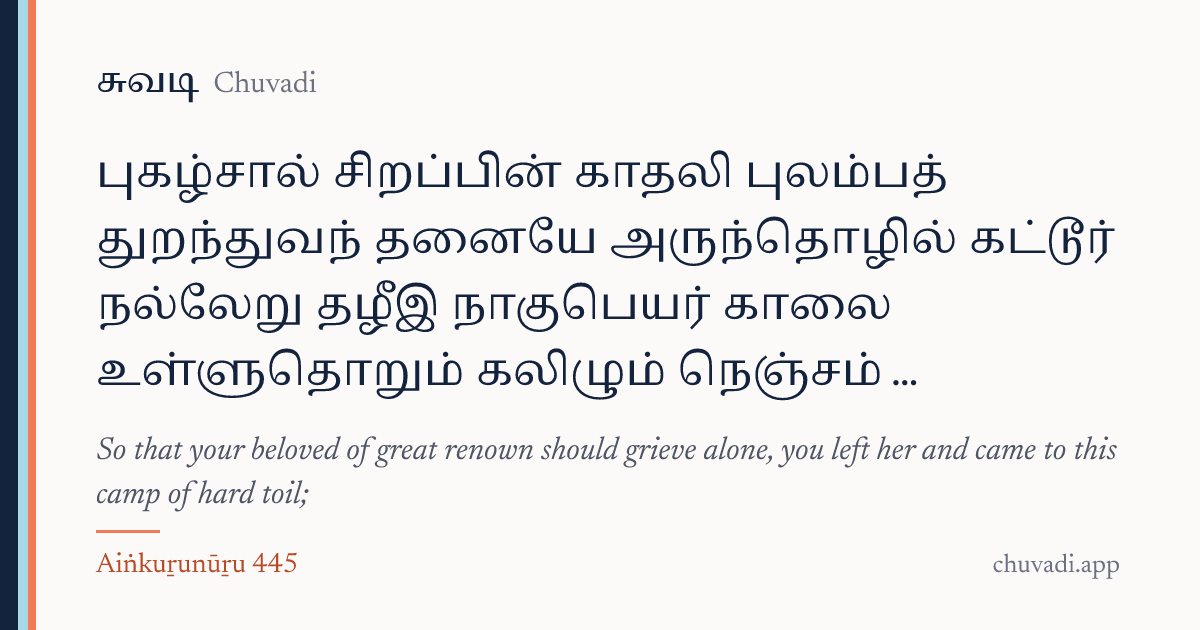
- So that your beloved of great renown should grieve alone,
- you left her and came to this camp of hard toil;
- now, at the hour when heifers go home beside the fine bulls,
- heart, weeping each time you remember,
- you urge me too to hurry and go back.
What the poem says
The hero turns on his own heart, the conventional addressee of a lover's self-reproach. The heart chose to leave the wife and come to the war camp. Now, at dusk, when the cattle head home in pairs, it weeps every time it remembers her and pushes him to return at once.
The evening return of the herds is the standard hour of longing in mullai poetry. The image of heifers walking home with the bulls (nalēṟu taḻīi nākupeyar kālai) is pointed, because every creature goes back to its mate at that hour except him. The edition's turāntu stands for tuṟantu, 'having left', and uḷlūtoṟum for uḷḷutoṟum, 'whenever remembering'. The last line, varavu iḻaintaṉai, is taken to mean 'you desired that we come back', with the sense somewhat stretched.