



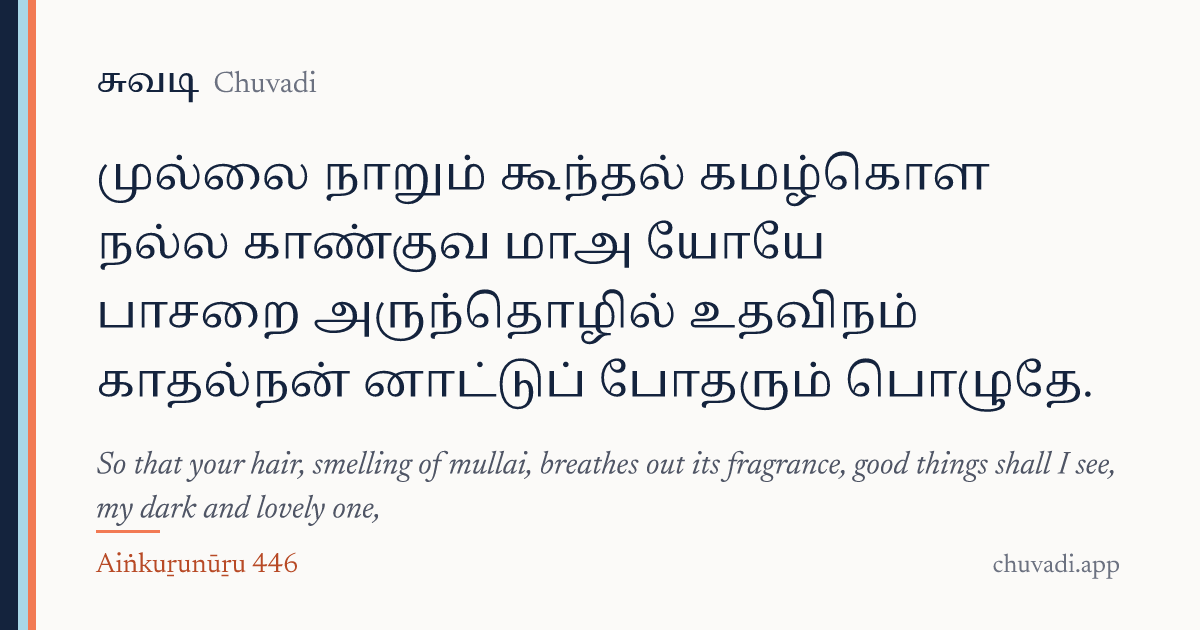

ஐங்குறுநூறு 446 · பாசறைப் பத்து
பாடல் · The poem
Tap a word to see where else it occurs.
பொருள் · Meaning in TamilAI
முல்லை மணம் கமழும் உன் கூந்தல் மேலும் மணக்கும்படி, மாநிறம் உடையவளே, நாம் நல்லவற்றைக் காண்போம். பாசறையில் நடக்கும் அரிய போர்ப்பணிக்கு உதவிவிட்டு, நம் அன்பான நல்ல நாட்டுக்கு நான் திரும்பி வரும் பொழுது அது நிகழும்.
முல்லைத் திணை; பாசறையில் இருக்கும் தலைவன், தொலைவில் உள்ள தலைவியை விளித்துக் கூறுவது. முல்லை சூடுதல் கற்புக்கும் கூடல் மகிழ்ச்சிக்கும் அடையாளம். பாடத்தில் கம்ழ்கொள என்று இருப்பது கமழ்கொள என்பதன் பிழை.
ஆங்கிலம் · English translationAI
Translation
- So that your hair, smelling of mullai, breathes out its fragrance,
- good things shall I see, my dark and lovely one,
- when, having helped with the hard work of the camp,
- I come home to our dear and pleasant land.
What the poem says
In the camp, the hero speaks to his absent wife as if she could hear him. He addresses her as māayōy, 'dark one'. A dark complexion is a mark of beauty in Sangam poetry. He promises that when his duty in the camp is done and he returns home, they will have good days together, with her hair fragrant with mullai.
Wearing mullai flowers is a sign of a faithful wife and of the joy of reunion. Her hair 'smelling of mullai' pictures her ready to receive him. The edition's kamḻkoḷa stands for kamaḻkoḷa, 'so as to be fragrant'. The verb kāṇkuva, 'we shall see', is in the first person, and may include her.