



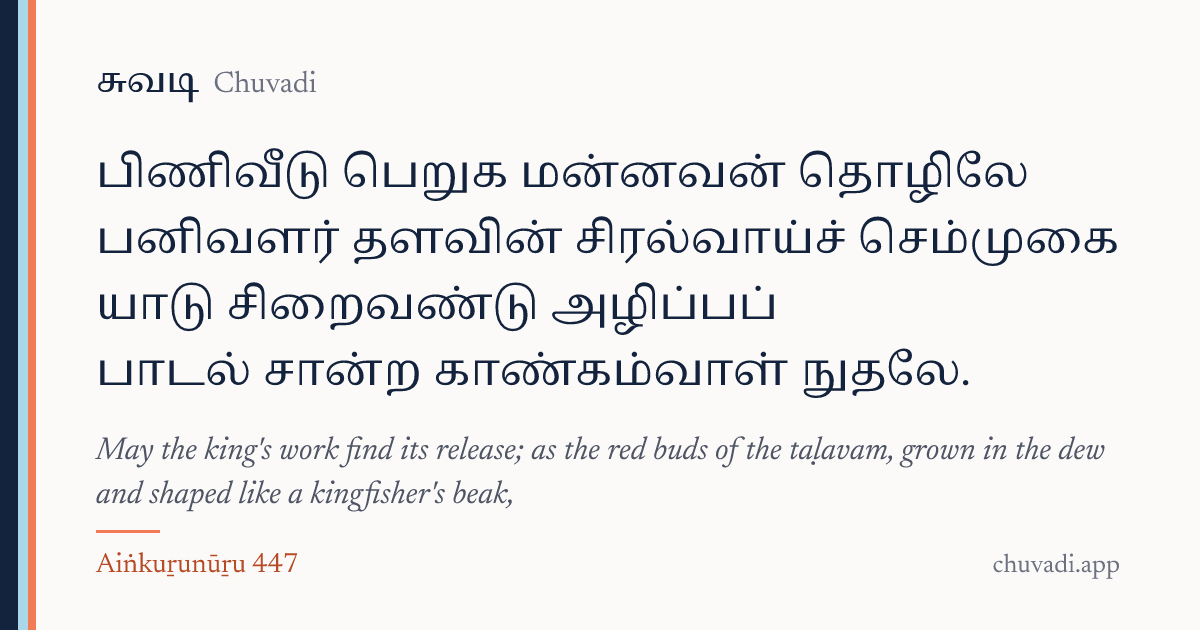

ஐங்குறுநூறு 447 · பாசறைப் பத்து
பாடல் · The poem
Tap a word to see where else it occurs.
பொருள் · Meaning in TamilAI
மன்னனின் போர்த்தொழில் கட்டுக்களிலிருந்து விடுபடுவதாக! பனியில் வளர்ந்த தளவத்தின் மீன்கொத்திப் பறவையின் அலகைப் போன்ற சிவந்த மொட்டுகளை, அசையும் சிறகுகளை உடைய வண்டுகள் மலர்த்தும் இப்பொழுதில், பாடலில் போற்றத்தக்க அவளுடைய ஒளிவீசும் நெற்றியைக் காண்போமாக.
முல்லைத் திணை; பாசறையில் இருக்கும் தலைவன் கூறுவது. பனிக்காலத்தில் மலரும் தளவம், கூடுவதற்குரிய பருவம் கடந்து செல்வதைக் குறிப்பாக உணர்த்தலாம். வண்டு மொட்டை மலர்த்துவது அவன் விரும்பும் கூடலையும் நினைவூட்டுகிறது.
ஆங்கிலம் · English translationAI
Translation
- May the king's work find its release;
- as the red buds of the taḷavam, grown in the dew and shaped like a kingfisher's beak,
- are broken open by bees with beating wings,
- let me see that shining brow, worthy of song.
What the poem says
The hero prays for the campaign to end, so that he may see his wife's bright brow, which deserves to be praised in song. The phrase piṇivīṭu, 'release from a bond', pictures the king's war as something that holds the man tied.
In between comes a picture of the season. The red buds of the taḷavam, pointed like a kingfisher's beak, have grown in the cold dew, and bees force them open. Taḷavam flowers in the cool months, so the image may suggest that time is passing and the season of union is going by without him. The bees opening the buds may also stand for the union he longs for. The edition's yāṭu stands for āṭu, 'moving'.