



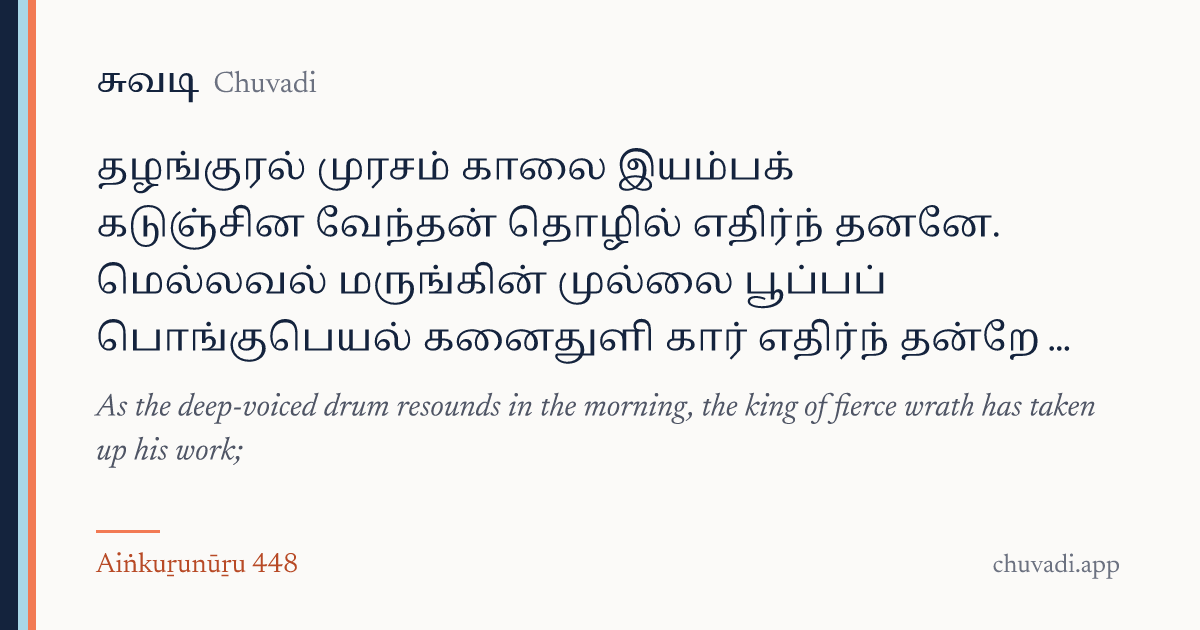

ஐங்குறுநூறு 448 · பாசறைப் பத்து
பாடல் · The poem
Tap a word to see where else it occurs.
பொருள் · Meaning in TamilAI
காலைப் பொழுதில் முழங்கும் ஒலியுடைய முரசு ஒலிக்க, கடுங்கோபம் கொண்ட வேந்தன் போர்த்தொழிலை எதிர்கொண்டான். மென்மையான வயல்களின் ஓரத்தில் முல்லை பூக்கும்படி, பொங்கும் மழையும் செறிந்த துளிகளும் கொண்ட கார்காலம் வந்துவிட்டது. அழகிய மெல்லிய கூந்தலை உடையவளை நினைக்கும்போதெல்லாம், தூக்கமின்றி மனம் சுழன்று வருந்தும் நிலையை நான் அடைந்தேன்.
முல்லைத் திணை; பாசறையில் இருக்கும் தலைவன் கூறுவது. எதிர்ந்தனன், எதிர்ந்தன்று, எதிர்ந்தனம் என்று ஒரே வினை மூன்று முறை வருகிறது. வேந்தனின் போரும் கார்காலமும் ஒருசேரத் தொடங்கியதே தலைவனின் துயரத்துக்குக் காரணம்.
ஆங்கிலம் · English translationAI
Translation
- As the deep-voiced drum resounds in the morning,
- the king of fierce wrath has taken up his work;
- while mullai flowers along the soft fields,
- the monsoon, surging rain in thick drops, has set in;
- and as I think, again and again, of her with the lovely fine hair,
- sleepless and restless, I have fallen into torment.
What the poem says
This six-line poem is built on three uses of the same verb, etir, 'to meet' or 'to take on'. The king has taken up battle at the morning drum. The monsoon has arrived over the flowering fields. And the hero, thinking of his wife, has met with sleeplessness and anguish. The English uses three different verbs to keep each line natural, but the pattern in the Tamil is deliberate.
The king's war and the monsoon begin together, and that is the hero's trouble. The rains are the season he should be at home, yet duty keeps him at the camp. Am cil ōti, 'of lovely, fine (or few) tresses', is a standard phrase for a young woman's hair. The edition's uḷlutoṟum stands for uḷḷutoṟum.