




ஐங்குறுநூறு 452 · பருவங்கண்டு கிழத்தி யுரைத்த பத்து
பாடல் · The poem
Tap a word to see where else it occurs.
பொருள் · Meaning in TamilAI
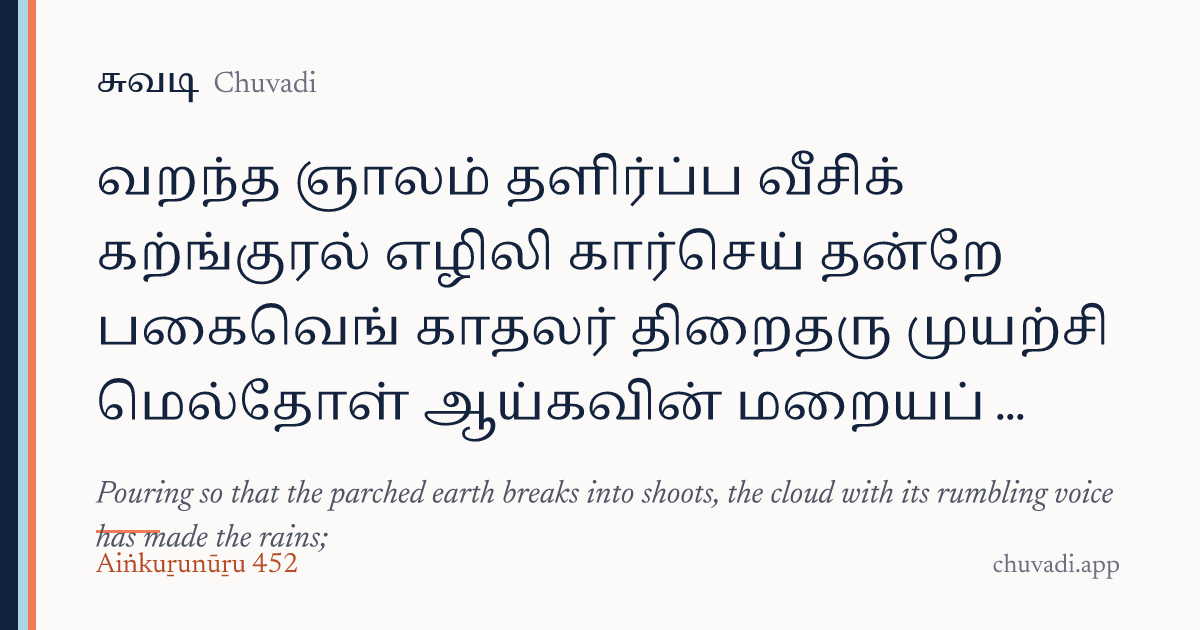
வறண்டு கிடந்த நிலம் தளிர்க்கும்படி மழையைப் பொழிந்து, முழங்கும் குரலுடைய மேகம் கார்காலத்தை உண்டாக்கிவிட்டது. பகைவருக்குக் கொடியவரான என் காதலர், அவர்களிடம் திறை பெற முயலும் முயற்சியோ, என் மென்மையான தோள்களின் அழகு மறையும்படி, பொன்னிறப் பீர்க்கம்பூப் போன்ற பசலையைப் பூக்கச் செய்துவிட்டது.
முல்லைத் திணை; தலைவி கூற்று. மேகம் நிலத்தைத் தளிர்க்கச் செய்ய, கணவனின் போர்முயற்சி அவள் உடலில் பசலையைப் பூக்கச் செய்கிறது என்று இரண்டையும் ஒப்பிடுகிறாள். அலர் என்ற சொல் ஊர்ப்பேச்சையும் குறிப்பதால், ஊரார் பழிச்சொல்லும் குறிப்பாகச் சுட்டப்படலாம்.
ஆங்கிலம் · English translationAI
Translation
- Pouring so that the parched earth breaks into shoots,
- the cloud with its rumbling voice has made the rains;
- my lover, fierce to his foes, in his labour to bring in tribute,
- so that the fine beauty of my soft shoulders fades,
- has made a blooming like the gold-hued pīram.
What the poem says
The heroine sets two kinds of 'making' side by side. The cloud has 'made the rains', and the dry earth sprouts green. Her husband, busy forcing enemies to pay tribute, has 'made a blooming' on her: the pallor (pacalai) of lovesickness, yellow like the gold flowers of the pīram, the ridge-gourd vine.
The word alar, 'blossoming', is also the ordinary word for gossip, so the line may hint that her pale shoulders have set the village talking. The earth is renewed by the season while she is drained by it, a reversal that is common in mullai poems.
The edition's spellings வற்ந்த and கற்ங்குரல் are slips for வறந்த and கறங்குகுரல்; the sense is clear.