




ஐங்குறுநூறு 453 · பருவங்கண்டு கிழத்தி யுரைத்த பத்து
பாடல் · The poem
Tap a word to see where else it occurs.
பொருள் · Meaning in TamilAI
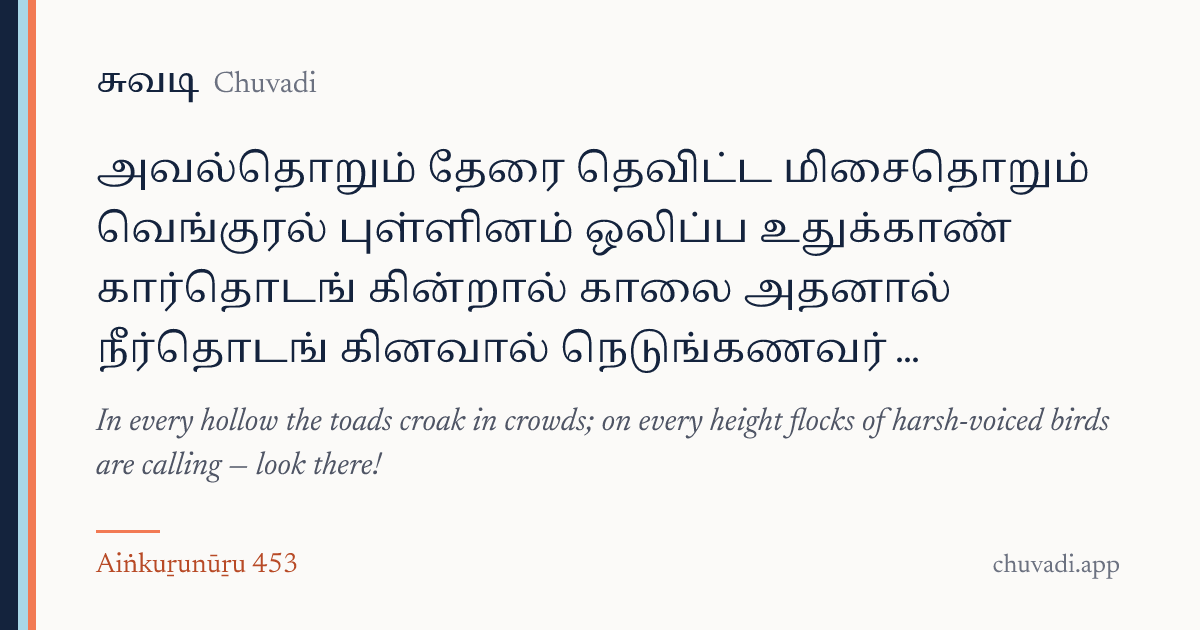
பள்ளங்கள்தோறும் தேரைகள் கூடி ஒலிக்கின்றன; மேடுகள்தோறும் கடுமையான குரலுடைய பறவைக்கூட்டங்கள் கூவுகின்றன. அதோ பார்! கார்காலம் தொடங்கிவிட்டது. அதனால் என் நீண்ட கண்கள் நீர் சொரியத் தொடங்கிவிட்டன; அவருடைய தேரும் நம்மை நோக்கிப் புறப்படத் தொடங்கிவிட்டது.
முல்லைத் திணை; தலைவி தோழியிடம் கூறியது. மழை தொடங்கியது, கண்ணீர் தொடங்கியது, தேர் புறப்பட்டது என்று மூன்றையும் ஒரே சொல்லால் இணைக்கிறாள். அவன் உண்மையில் புறப்பட்டுவிட்டான் என்ற நம்பிக்கையா, ஆசையா என்பதைப் பாடல் தெளிவாகச் சொல்லவில்லை.
ஆங்கிலம் · English translationAI
Translation
- In every hollow the toads croak in crowds; on every height
- flocks of harsh-voiced birds are calling — look there!
- The rains have begun, the season; and so
- my long eyes have begun to flow; his
- chariot has begun its journey toward us.
What the poem says
The poem is built on a triple refrain of 'has begun': the rains have begun, her tears have begun, his chariot has begun its way home. The first two lines set the scene of the first rains, with toads filling the low hollows and birds crying on the high ground.
The turn in the last line is open to two readings. She may be sure he has set out, because the season he named has come, and her tears are tears of longing that is about to end. Or the line may be a hope spoken as a certainty. The verse does not decide between them. The edition's நெடுங்கணவர் is read as நெடுங்கண், அவர் ('long eyes; his').