



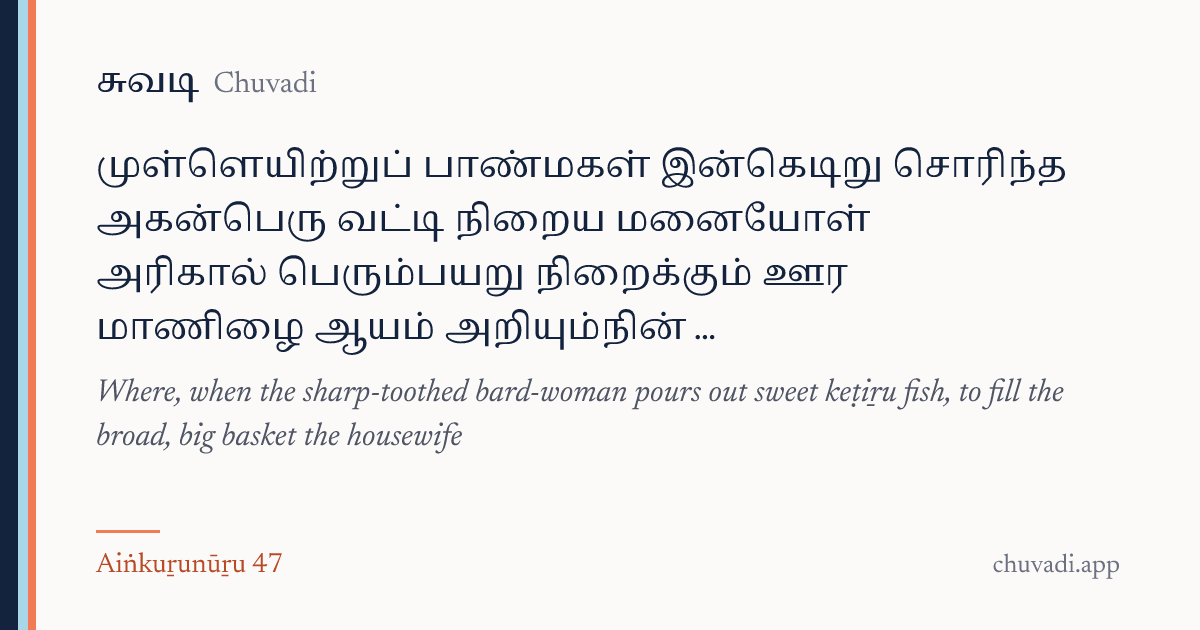

ஐங்குறுநூறு 47 · புலவிப் பத்து
பாடல் · The poem
Tap a word to see where else it occurs.
பொருள் · Meaning in TamilAI
கூர்மையான பற்களை உடைய பாணர் மகள் இனிய கெடிறு மீன்களைக் கொட்டிய அகன்ற பெரிய கூடை நிறைய, மனைவி அறுத்த தாளிலிருந்து எடுத்த பெரிய பயற்றை நிரப்பித் தரும் ஊரைச் சேர்ந்தவனே, உன் பாணனைப் போலவே நீயும் பலமுறை பொய் சொல்வதை, சிறந்த அணிகலன் அணிந்த எங்கள் தோழியர் கூட்டம் நன்றாக அறியும்.
மருதத் திணை; தலைவியோ தோழியோ தலைவனிடம் கூறுவதாகக் கொள்ளலாம். மீனுக்குப் பயறு என்ற நேர்மையான பண்டமாற்று, சொன்னதைச் செய்யாத தலைவனின் பொய்யோடு வேறுபட்டு நிற்கிறது. பதிப்பில் உள்ள "மாணிமழை" என்பது "மாணிழை" என்பதன் பிழையாகத் தோன்றுகிறது.
ஆங்கிலம் · English translationAI
Translation
- Where, when the sharp-toothed bard-woman pours out sweet keṭiṟu fish,
- to fill the broad, big basket the housewife
- heaps it with large gram from reaped stalks — O man of that town,
- the finely jewelled companions know how you
- lie again and again, just like your bard.
What the poem says
The heroine, or her friend, speaks to the hero. Everyone among the finely jewelled women of the household knows that he lies as often as his bard does.
The opening shows village barter. The bard's wife or daughter (pāṇmakaḷ) brings fish, and the housewife pays by filling the same basket with pulses. The bard's household, shown in this decade fishing as well as singing, supplies the hero's go-betweens in marutam. The scene of fair exchange may set off, by contrast, the hero's dealings, in which promises are given and nothing true comes back. That reading is suggested, not stated.
The edition's மாணிமழை is evidently corrupt for மாணிழை, 'finely jewelled'. Keṭiṟu is a kind of fish; 'reaped stalks' (arikāl) is the usual reading of the phrase.