




ஐங்குறுநூறு 48 · புலவிப் பத்து
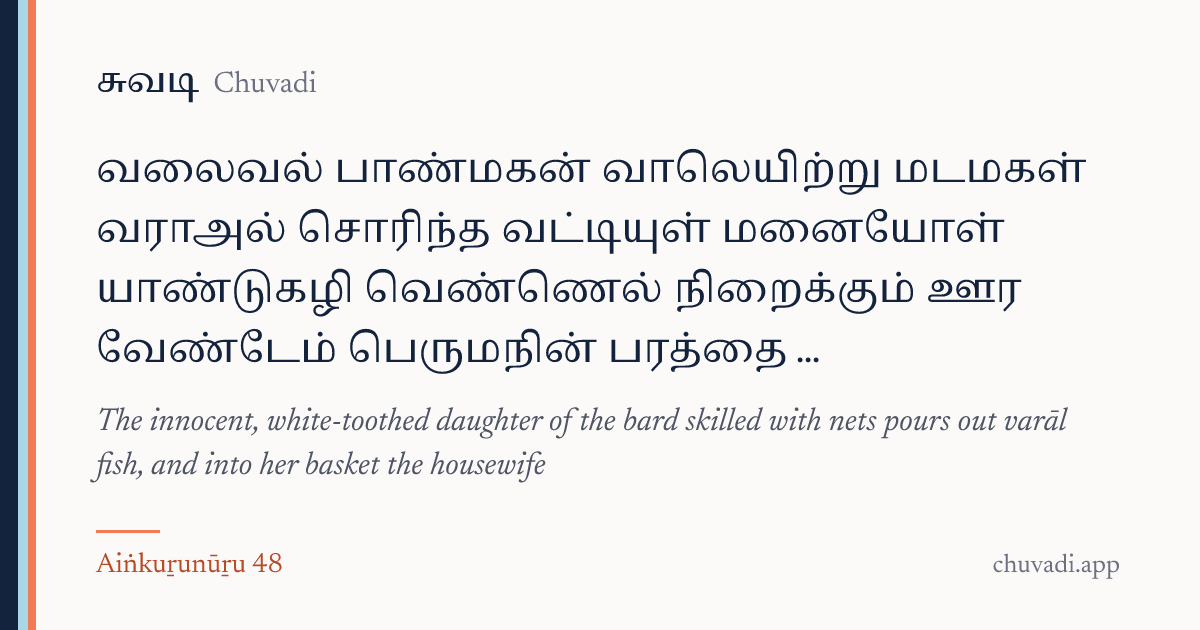
பாடல் · The poem
Tap a word to see where else it occurs.
பொருள் · Meaning in TamilAI
வலை வீசுவதில் வல்ல பாணனின் வெண்மையான பற்களை உடைய அறியாப் பருவ மகள் வரால் மீனைக் கொட்டிய கூடையில், மனைவி ஓராண்டு கழிந்த வெண்ணெல்லை நிரப்பித் தரும் ஊரைச் சேர்ந்தவனே, பெருமானே, உன் பரத்தை அங்கே உன் மேல் உண்டாக்கிய அடையாளங்களோடு நீ இங்கே வருவதை நாங்கள் விரும்பவில்லை.
மருதத் திணை; தலைவி தலைவனிடம் ஊடிக் கூறுவதாகக் கொள்ளலாம். பரத்தையோடு கூடியதன் அடையாளங்களுடன் வீட்டுக்கு வருவதை அவள் மறுக்கிறாள். மீனுக்கு நெல் என்ற பண்டமாற்று முந்தைய பாடலைப் போலவே வருகிறது. பதிப்பில் உள்ள "அஒரிந்த" என்பதைச் "சொரிந்த" என்று படிக்க வேண்டும்.
ஆங்கிலம் · English translationAI
Translation
- The innocent, white-toothed daughter of the bard skilled with nets
- pours out varāl fish, and into her basket the housewife
- heaps white paddy a year old — O man of that town,
- we want none of it, lord: that, with your courtesan's
- marks made there upon you, you should come here.
What the poem says
The second barter scene in a row: the bard's daughter brings varāl fish (a murrel), and the housewife fills the emptied basket with well-aged white paddy. Then the speaker, probably the heroine, turns on the hero.
'We do not want it, lord,' she says: they do not want him coming home still bearing the marks his courtesan (parattai) made on him over there. Marks of the courtesan's embrace, such as scratches, sandal paste or crushed garlands, are a stock way in marutam poetry of showing where the hero has been.
The phrasing 'there … here' (yāṇṭu … īṇṭu) contrasts the two households, as in poem 46. The edition's அஒரிந்த should be read சொரிந்த, 'poured'.