




ஐங்குறுநூறு 49 · புலவிப் பத்து
பாடல் · The poem
Tap a word to see where else it occurs.
பொருள் · Meaning in TamilAI
அழகிய மெல்லிய கூந்தலையும் அசைந்த நடையையும் உடைய பாணர் மகள், சில மீன்களைக் கொட்டிக் கொடுத்து நிறைய நெல்லைப் பெற்றுச் செல்லும் செழிப்பான ஊரைச் சேர்ந்தவனே, உன் பாணன் இனி யாருடைய அழகு அழியும்படி பொய் சொல்லப் போகிறானோ?
மருதத் திணை; தலைவியோ தோழியோ தலைவனிடம் கூறுவதாகக் கொள்ளலாம். சிறிது கொடுத்து மிகுதியாகப் பெறும் பண்டமாற்று, எதையும் இழக்காமல் பொய் சொல்லி ஆதாயம் தேடும் பாணனின் செயலைக் குறிக்கும் உள்ளுறை. பதிப்பில் உள்ள "சிதய" என்பதைச் "சிதைய" என்று படிக்க வேண்டும்.
ஆங்கிலம் · English translationAI
Translation
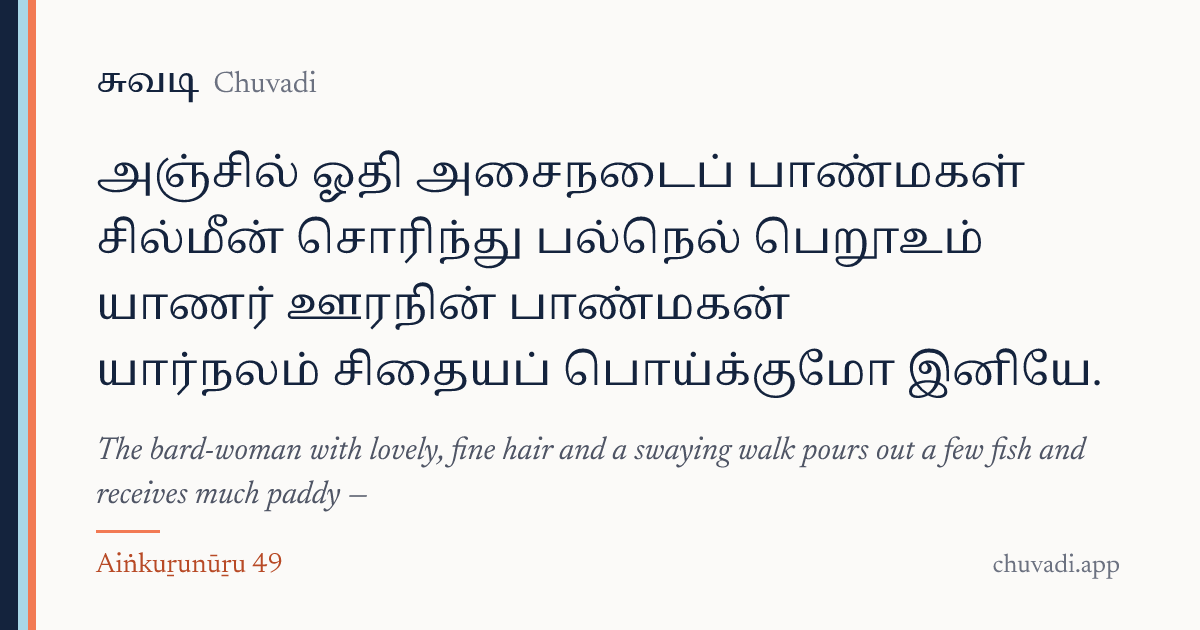
- The bard-woman with lovely, fine hair and a swaying walk
- pours out a few fish and receives much paddy —
- O man of that thriving town, your bard,
- whose beauty will he lie to ruin now?
What the poem says
The third barter scene of the decade, and the most pointed. The bard-woman gives a few fish and gets plenty of paddy in return. Little given, much received: that is exactly the bargain of the bard's lies, which cost him nothing and gain the hero a great deal.
The speaker, probably the heroine or her friend, asks the hero whose beauty his bard will now destroy with his lies. A woman's beauty (nalam) is 'ruined' when she trusts the hero, is left, and wastes away. The bard, by coaxing women with false promises on the hero's behalf, shares the blame.
The edition's சிதய should be read சிதைய, 'to be ruined'.