



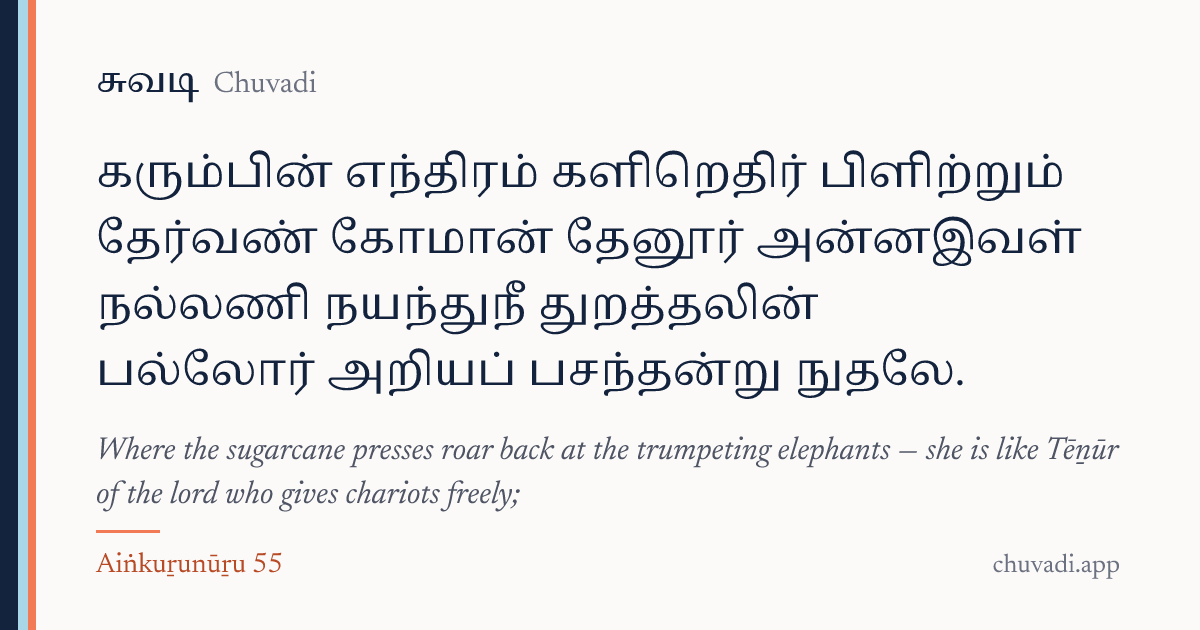

ஐங்குறுநூறு 55 · தோழி கூற்றுப் பத்து
பாடல் · The poem
Tap a word to see where else it occurs.
பொருள் · Meaning in TamilAI
கரும்பு பிழியும் ஆலைகள் யானைகளின் பிளிறலுக்கு எதிராக முழங்கும், தேர்களை வாரி வழங்கும் அரசனின் தேனூரைப் போன்றவள் இவள். இவளுடைய நல்ல அழகை விரும்பி அடைந்த நீ இப்போது இவளைக் கைவிட்டதால், பலரும் அறியும்படி இவளுடைய நெற்றி பசலை படர்ந்து நிறம் மாறிவிட்டது.
மருதத் திணை; தோழி தலைவனிடம் கூறியது. முன்பு விரும்பியவளை இப்போது புறக்கணிப்பதை இடித்துரைக்கிறாள். நெற்றியில் பசலை தோன்றுவது பிரிவுத் துயரத்தின் அடையாளம்; அது பலருக்கும் தெரிந்துவிட்டது என்பதால் ஊரின் பழிச்சொல்லும் குறிப்பாகச் சுட்டப்படுகிறது.
ஆங்கிலம் · English translationAI
Translation
- Where the sugarcane presses roar back at the trumpeting elephants —
- she is like Tēṉūr of the lord who gives chariots freely;
- you desired her fine beauty, and now you abandon her, and so
- for many to see, her brow has turned pale.
What the poem says
The friend reproaches the hero once more, using the same comparison with Tēṉūr as the previous poem. Here the town is pictured through its noise: the sugarcane presses groan so loudly that they seem to answer the trumpeting of elephants. The king who owns it is praised for giving away chariots, a standard mark of generosity.
The charge is direct. The hero once longed for this woman's beauty, and now he has turned away from her. Her brow has gone pale (pacappu), the conventional sign of love-sickness, and it is visible to "many". So the grief is no longer private but a matter for gossip, which hurts the hero's good name as well as hers.